
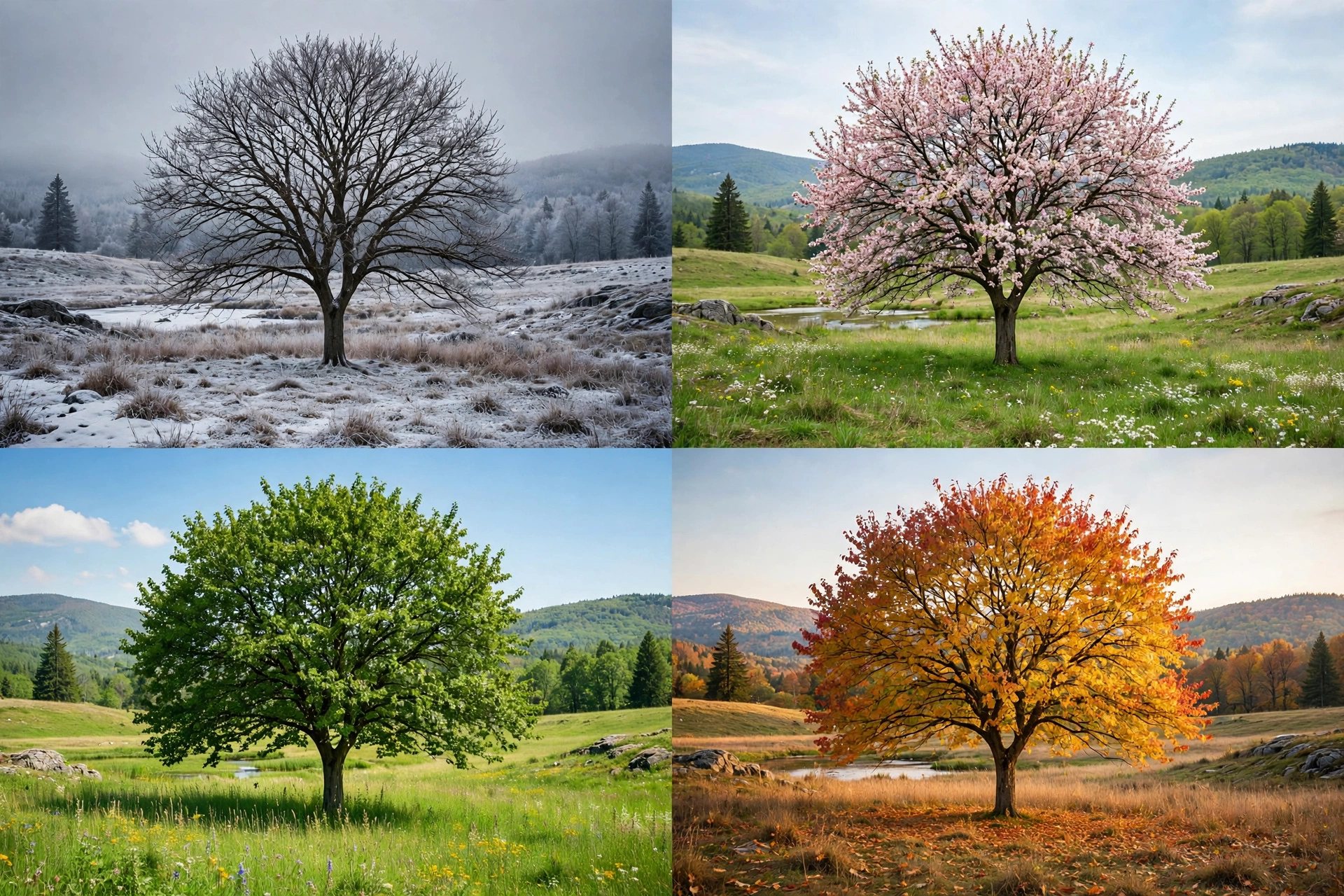
A tree you pass every day can look like four different trees over a year. In winter it is bare and sculptural. In spring it bursts into blossom and fresh leaves. In summer it is dense and green. In autumn it turns gold and red before shedding its leaves. Understanding that cycle — and what happens in each month — makes tree identification easier and makes every walk more interesting.
This month-by-month guide follows a typical deciduous tree through the seasons in a temperate climate. Timings shift with latitude, altitude, and weather, but the sequence stays broadly the same.
Try it: Use the Tree Researcher on aitreeidentier.site — look up a tree species to learn its seasonal changes in detail.
Winter: January to February — Rest and Structure
In deep winter, deciduous trees are dormant. Leaves are gone, growth has stopped, and energy is stored in roots and trunk. This is when bark, buds, and branch structure are easiest to see. Buds are tight and protected by scales, waiting for spring.
For gardeners, winter is the time for major pruning of many deciduous trees and for planting bare-root trees while they are dormant.
Early Spring: March to April — Bud Burst and Blossom
As days lengthen and temperatures rise, sap starts to flow and buds swell. Some trees flower before their leaves appear — cherry, magnolia, hawthorn, and blackthorn are classic examples. Others, such as oak and ash, are late to leaf, often not opening until late April or May.
New leaves are soft, often bronze or reddish, and vulnerable to late frosts.
Late Spring: May to June — Full Leaf and Growth
By May, most trees are in full leaf. Leaves expand, harden, and turn green as chlorophyll builds up. Growth is fast: shoots extend, and trees put on height and canopy. Many trees flower in May and June, including horse chestnut, lime, and rowan, attracting bees and other pollinators.
Summer: July to August — Maturity and Fruit
In summer, growth slows and leaves reach full size. Trees focus on photosynthesis, building energy reserves, and developing fruit and seeds. Apples, plums, cherries, and nuts swell through summer, while oaks and beeches develop acorns and mast.
Heat and drought are the main summer challenges. Trees may shed some leaves early in a dry summer to conserve water.
Early Autumn: September to October — Colour and Harvest
As days shorten, trees begin to withdraw nutrients from leaves and prepare for dormancy. Chlorophyll breaks down, revealing yellows and oranges, while some species produce red pigments. Fruit ripens and falls, and seeds are dispersed by wind, birds, and animals.
This is harvest time for many fruit and nut trees, and the best time to plant new trees, as warm soil helps roots establish before winter.
Late Autumn: November — Leaf Fall
Leaves fall, often after the first frosts. Some trees, such as beech and oak, hold brown leaves into winter — a habit called marcescence. Leaf fall returns nutrients to the soil and reduces water loss through winter, when frozen soil makes water hard to absorb.
December: Dormancy Returns
By December, most deciduous trees are bare, buds are set for next spring, and the tree is conserving energy.
How to Follow One Tree Through the Year
Pick a tree near your home and photograph it once a month from the same spot. Note the date, the buds, leaves, flowers, fruit, and bark. Within a year you will have a personal record of its cycle — and you will notice changes you would otherwise miss. Repeating this for two or three different species teaches you how much timing varies between trees.
Common Mistakes When Reading Seasonal Change
Assuming all trees change at the same time. Oak and ash leaf late; birch and cherry leaf early. Species, not the calendar alone, sets the timing.
Mistaking stress for seasonal change. Early leaf drop, browning, or yellowing in summer often signals drought or disease, not autumn.
Forgetting that climate shifts timing. A warm spring brings blossom weeks early; a cold spring delays it. Compare with the same tree last year, not with a fixed date.
Frequently Asked Questions
Why do some trees keep their leaves in winter? Evergreens keep leaves or needles year-round, while some deciduous trees, such as beech and oak, hold dead leaves into winter. Both strategies help the tree in different ways.
When do trees grow the most? Most height and shoot growth happens in spring and early summer, when leaves are new and water is available. Growth slows in late summer as the tree prepares for autumn.
Do trees grow in winter? Above ground, growth largely stops in winter. Roots can still grow slowly in unfrozen soil, which is why autumn planting works well.
Why do leaves change colour? As days shorten, trees stop making green chlorophyll and withdraw nutrients from leaves. Hidden yellow and orange pigments appear, and some trees make extra red pigments in cool, sunny weather.
Conclusion
Trees are never still — they are always preparing for the next season, even in the depths of winter. By following buds, leaves, flowers, fruit, and bark month by month, you learn to read a tree's cycle and to identify species with far more confidence. Pick a tree, watch it for a year, and you will never see it as just a green shape again.
Safety note: Never eat or use any part of a tree or plant based on AI identification alone. Always consult a local expert for confirmation.