
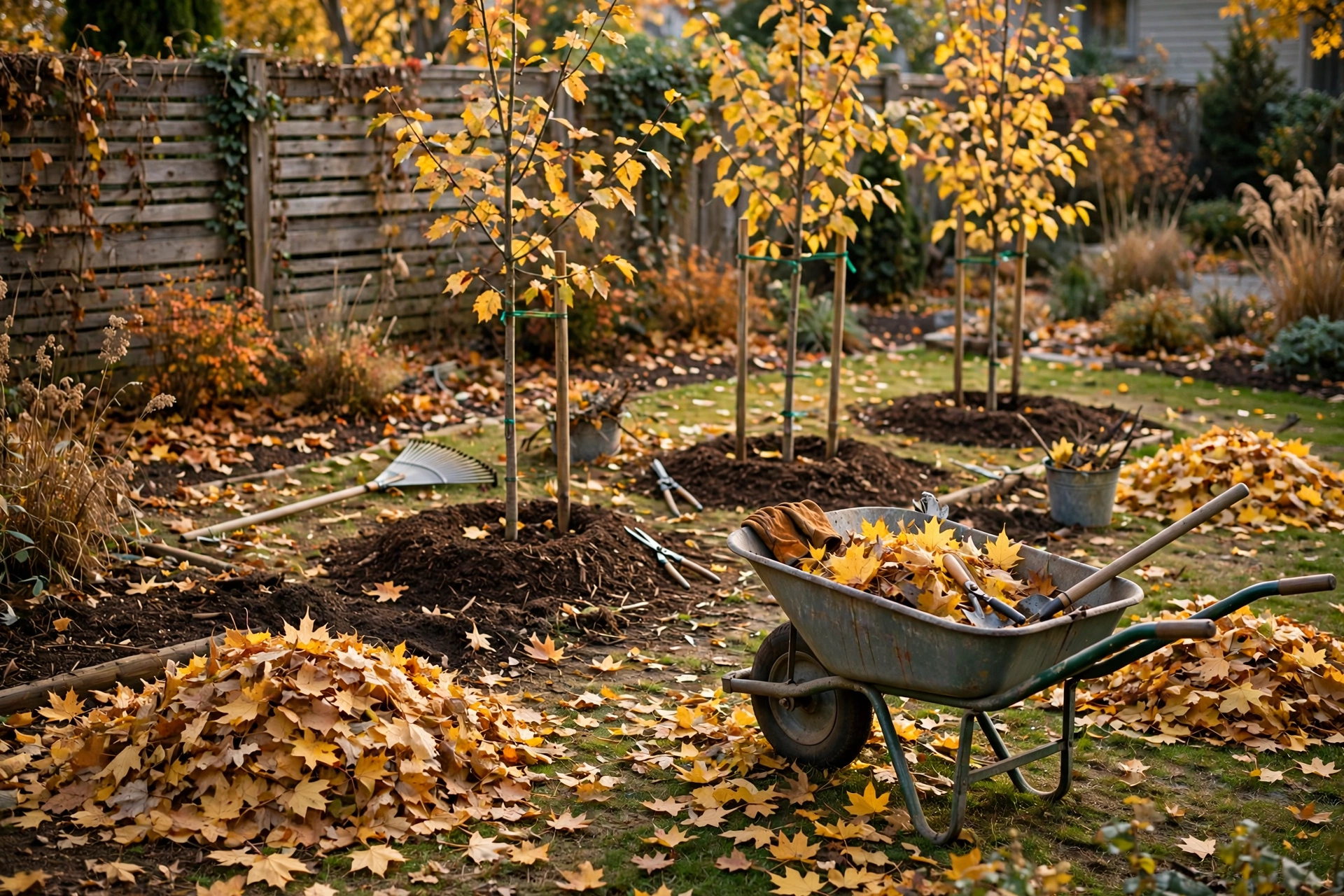
Fall garden cleanup is not just about tidying up — it helps plants and trees survive winter and come back stronger in spring. Done well, it reduces pests and disease and protects roots from frost, but done too thoroughly it can remove shelter for wildlife.
This guide shows you what to clean up in fall, what to leave alone, and how to prepare plants and trees for winter step by step.
Try it: Use the Garden Plant Identifier on aitreeidentier.site — photograph plants you are unsure about before cutting them back.
When to Start Fall Cleanup
Start after the first light frosts, when tender annuals have died back and most leaves have fallen, but before the ground freezes. In most temperate climates that means mid to late autumn. Work on dry days when you can, and tackle the garden in sections rather than trying to do everything in one weekend.
Step-by-Step: Fall Garden Cleanup
Step 1: Remove diseased and spent annuals
Pull up annual vegetables and flowers that have finished, especially any showing signs of disease. Do not compost diseased material — bag it and dispose of it with household waste or through your local green waste service, as home compost rarely gets hot enough to kill pathogens.
Step 2: Cut back perennials — selectively
Cut back perennials that have died down and look untidy, but leave some standing. Hollow stems provide shelter for beneficial insects over winter, and seed heads feed birds. A good rule is to cut back by about half: tidy the garden without stripping it bare.
Leave evergreen perennials and ornamental grasses until spring, when new growth appears.
Step 3: Rake leaves — and use them
Rake leaves off lawns and paths, where they can smother grass and become slippery. Use them as mulch on beds or add them to compost. Shredded leaves break down faster and make excellent leaf mould — a free, rich soil conditioner.
Step 4: Protect tender plants
Move tender potted plants into a greenhouse, cold frame, or sheltered spot. For tender plants in the ground, such as dahlias in cold areas, lift tubers after the first frost, dry them, and store them in a cool, frost-free place. Cover vulnerable plants with fleece if a frost is forecast.
Step 5: Mulch beds and young trees
After the soil has cooled but before it freezes, spread a 5–8 cm layer of mulch — compost, bark, or well-rotted manure — around perennials, shrubs, and young trees. Mulch insulates roots, retains moisture, and suppresses winter weeds. Keep mulch a few centimetres away from stems and trunks.
Step 6: Care for trees and shrubs
Check young trees for loose stakes and ties, and adjust them so they support without rubbing bark. Remove dead or damaged branches. Water young trees deeply before the ground freezes if autumn has been dry — roots still need moisture in winter.
Step 7: Tidy tools, pots, and water systems
Clean and oil tools before storing them. Empty pots and store them under cover so they do not crack in frost, and drain hoses and irrigation systems.
What to Leave Alone in Fall
Not everything needs cutting back. Leave seed heads on plants such as echinacea, teasel, and sunflowers for birds. Leave ornamental grasses — they look beautiful in frost and protect the crown of the plant. Leave fallen leaves in beds and under shrubs, where they feed the soil. And avoid heavy pruning in fall — save major pruning for late winter, except for removing dead or hazardous wood.
A slightly untidy garden in winter is a healthier garden in spring.
Common Fall Cleanup Mistakes
Cleaning up too thoroughly. Stripping every stem and leaf removes wildlife habitat and exposes soil. Leave some cover.
Composting diseased plants. Disease can survive in a cool compost heap and return next year. Dispose of diseased material separately.
Pruning heavily in autumn. Fresh cuts heal slowly and are vulnerable to frost. Prune lightly in fall and save major work for winter.
Forgetting to water before winter. Dry roots are more vulnerable to frost damage. Water young trees and shrubs well before the ground freezes if autumn has been dry.
Piling mulch against trunks. Mulch volcanoes cause rot. Keep mulch away from stems and trunks.
Frequently Asked Questions
Should I cut back all perennials in fall? No. Cut back those that have died down and look untidy, but leave evergreens, ornamental grasses, and plants with seed heads that feed birds until spring.
When should I stop mowing the lawn? Mow until growth slows, usually in late autumn, and leave the grass slightly longer for the last cut. Rake leaves off the lawn regularly.
Do I need to protect young trees in winter? Young trees benefit from mulch, a sturdy stake, and a trunk guard against animals. Water them before the ground freezes if the autumn has been dry.
Can I plant in fall? Yes — fall is an excellent time to plant trees, shrubs, and spring bulbs, as soil is still warm and roots can establish before winter.
Conclusion
Fall garden cleanup is about balance: remove disease, tidy what needs tidying, protect what is vulnerable, and leave enough cover for wildlife and soil health. Mulch beds and young trees, store tools properly, and water before the ground freezes. Do those simple things well, and your garden will wake up in spring healthier, cleaner, and ready to grow.
Safety note: Never eat or use any part of a plant based on AI identification alone. Always consult a local expert before consuming or using any plant.