
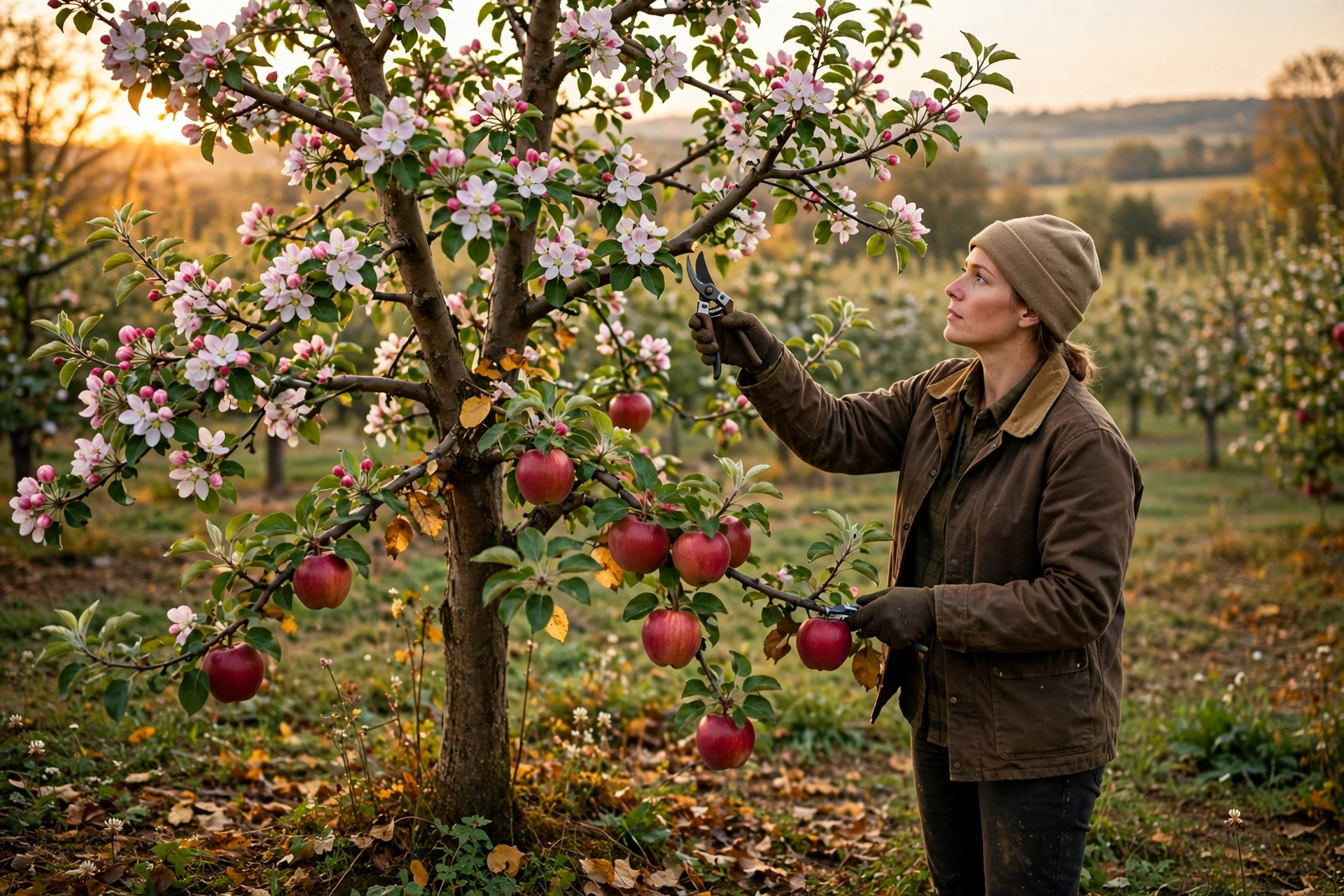
A fruit tree rewards seasonal care with blossom in spring, fruit in summer, and a harvest in autumn. But each season asks something different of the gardener: protecting blossom from frost, thinning fruit so branches do not break, watering in dry weather, and pruning at the right time. Get the timing right, and even a small garden tree can produce reliably year after year.
This guide follows fruit trees through the year, season by season, with practical steps for each stage.
Try it: Use the Fruit Identifier on aitreeidentier.site — photograph fruit or blossom to help confirm the variety you are growing.
Spring: Blossom and Pollination
Spring is the most hopeful — and most fragile — season for fruit trees. Blossom opens, bees pollinate, and tiny fruits begin to form. A late frost can destroy blossom overnight, especially on early-flowering trees such as apricots, plums, and cherries.
If frost is forecast, cover a small tree with fleece overnight and remove it in the morning so bees can reach the flowers.
Feed in early spring if growth was poor last year, and avoid spraying insecticides during blossom so bees can pollinate. Most fruit trees need a compatible pollination partner nearby, or a self-fertile variety — check this when you buy.
Summer: Fruit Growth and Thinning
In summer, fruits swell and ripen. This is when watering matters most. A dry summer can cause fruit to drop early, stay small, or split. Water deeply during dry spells, especially for young trees and trees in containers, and mulch to retain moisture.
Thinning is one of the most useful summer jobs. If a branch carries too many fruits, they will be small, the branch may break, and the tree may produce little next year. Thin apples and pears to one fruit per cluster, spaced 10–15 cm apart. Summer is also the time to prune stone fruits such as cherries and plums after fruiting.
Autumn: Harvest and Preparation
Autumn is harvest time. Pick fruit when it is ripe — apples should come away easily with a gentle twist, pears are picked slightly under-ripe and ripened indoors, and plums should be soft and sweet. Taste a few before picking the whole crop.
Handle fruit gently, store only unblemished fruit, and clear fallen fruit and leaves from under the tree to reduce disease. Autumn is also a good time to plant new fruit trees and to mulch.
Winter: Dormancy and Pruning
In winter, fruit trees are dormant. This is the main pruning season for apples and pears: remove dead, diseased, and crossing branches and open the centre to light and air. Do not prune stone fruits in winter — leave them until summer — and avoid pruning in hard frost.
Step-by-Step: A Year of Fruit Tree Care
1. Late winter: Prune apples and pears. Check stakes, ties, and guards. 2. Early spring: Mulch and feed if needed. Protect blossom from frost. 3. Late spring: Check pollination and fruit set. Water if dry. 4. Early summer: Thin fruit. Water deeply in dry weather. Net cherries if needed. 5. Late summer: Harvest early varieties. Prune cherries and plums after fruiting. 6. Autumn: Harvest main crop. Clear fallen fruit. Plant new trees. Mulch. 7. Winter: Prune apples and pears. Plan next year's varieties and care.
Common Fruit Tree Mistakes
Skipping thinning. Overloaded branches produce small fruit, break, and lead to a poor crop next year.
Pruning stone fruit in winter. This invites disease. Prune cherries and plums in summer.
Overwatering or underwatering. Fruit trees need consistent moisture in summer, but waterlogged soil causes root problems. Water deeply and check soil moisture.
Ignoring pollination. A single tree with no compatible partner may flower beautifully and produce almost no fruit. Check pollination needs before planting.
Leaving fallen fruit under the tree. Rotting fruit harbours disease and pests over winter. Clear it up in autumn.
Frequently Asked Questions
Why does my fruit tree flower but not produce fruit? The most common reasons are lack of a pollination partner, frost damage to blossom, poor bee activity in cold or wet weather, or a tree that is still too young to fruit reliably.
When should I pick apples? Pick when the fruit comes away easily with a gentle lift and twist, the seeds are brown, and the flavour is sweet. Taste one first — colour alone is not a reliable guide.
How often should I water a fruit tree in summer? Water deeply once or twice a week in dry weather, more for young trees and container trees. Check soil moisture before watering again.
Do fruit trees need feeding every year? Not always. If growth is healthy and fruiting is good, a spring mulch of compost may be enough. Feed if growth is weak, leaves are pale, or yields are falling.
Conclusion
Seasonal fruit tree care is a rhythm: protect blossom in spring, thin and water in summer, harvest carefully in autumn, and prune in winter. Each season's work makes the next season easier. Start with one tree, learn its cycle, and keep notes on blossom dates, thinning, and harvest. Within a few years, you will know your tree — and it will reward you with a reliable harvest.
Safety note: Never eat fruit from a tree based on AI identification alone if you are unsure of the species. Always consult a local expert before eating fruit from an unknown tree.