
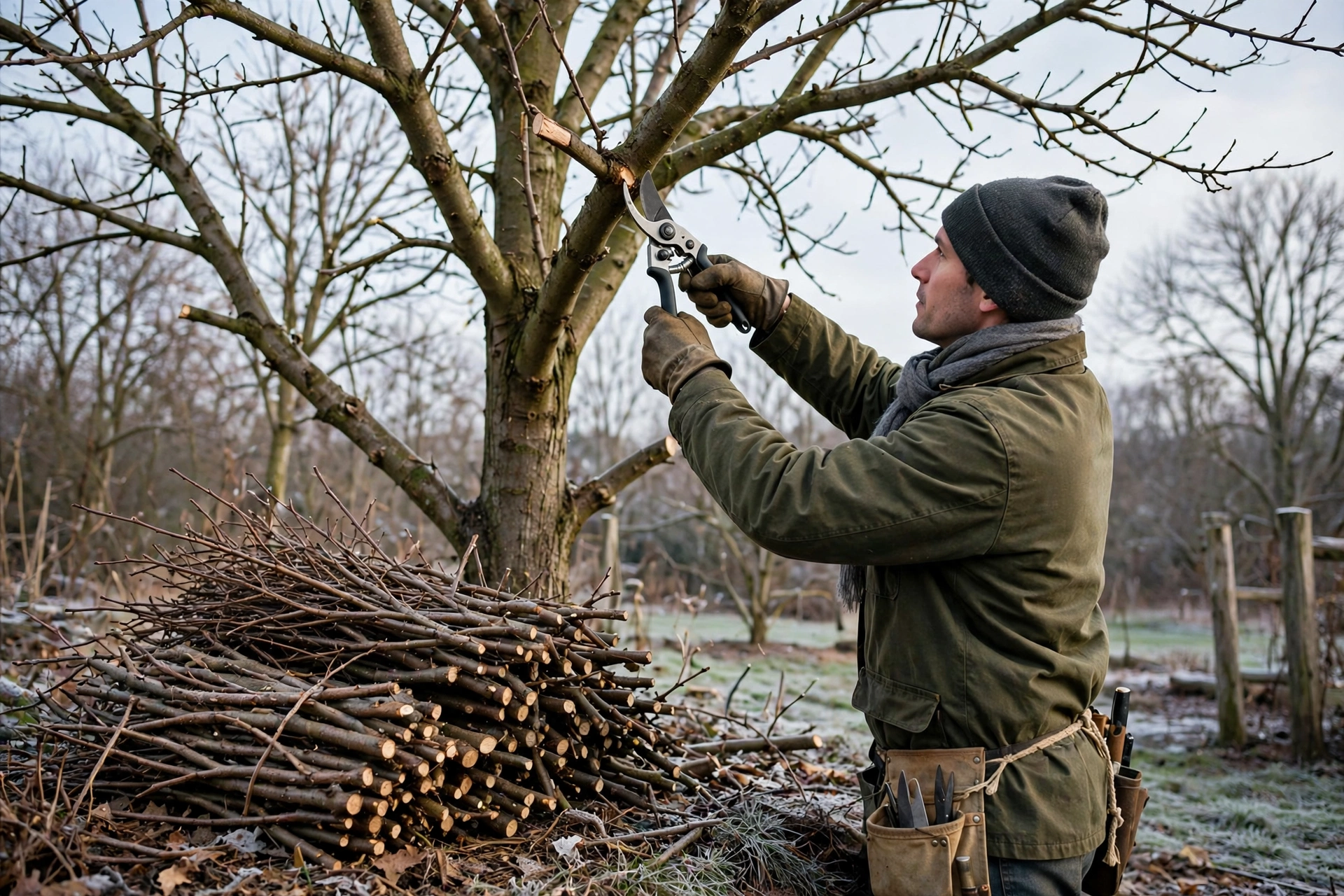
Pruning at the wrong time can remove next year's flowers, invite disease, or weaken a tree. Pruning at the right time, on the other hand, improves shape, encourages healthy growth, and keeps plants safe and productive. The key is not to prune everything at once, but to match each plant to its season.
This seasonal pruning calendar explains when to prune trees and shrubs, what to prune in each season, and how to do it safely.
Try it: Use the Tree Identifier on aitreeidentier.site — confirm the species before pruning, as timing varies by tree type.
Why Timing Matters
Plants respond differently to pruning depending on whether they are dormant, actively growing, flowering, or fruiting. Pruning a spring-flowering shrub in late winter removes the flower buds it formed last year. Pruning a maple or birch in spring can cause heavy sap bleeding. Pruning in wet weather can spread fungal disease through fresh cuts.
The Seasonal Pruning Calendar
Winter: Late winter, while dormant
Winter is the main pruning season for many deciduous trees and shrubs, when leaves are gone and structure is visible.
Prune in winter: Apples, pears, roses (in late winter), deciduous hedges, and most deciduous trees that are not prone to sap bleeding. Remove dead, damaged, crossing, or crowded branches.
Avoid in winter: Spring-flowering shrubs such as forsythia, lilac, and mock orange — they flower on last year's wood, so winter pruning removes the coming flowers. Also avoid pruning in hard frost, when wood is brittle.
Spring: After flowering, not before
Spring pruning is mostly about tidying and removing winter damage, plus pruning early-flowering shrubs once they have finished blooming.
Prune in spring: Forsythia, lilac, and other spring-flowering shrubs immediately after flowering. Also remove frost-damaged growth and shape evergreen shrubs as new growth begins.
Avoid in spring: Heavy pruning of maples and birches, which bleed sap when cut in spring. Leave them until midsummer if they need work.
Summer: Light pruning and maintenance
Summer is for light, corrective pruning rather than major reshaping. It is also the right time for some fruit trees and for trees that bleed sap in spring.
Prune in summer: Cherries and plums after fruiting, to reduce the risk of disease. Maples and birches, if needed, in midsummer when sap flow has slowed. Remove water shoots, suckers, and any dead or diseased wood you spot.
Avoid in summer: Heavy pruning in a heatwave or drought, when the tree is already stressed. Remove only what is necessary.
Autumn: Minimal pruning
Prune in autumn: Only dead, damaged, or hazardous branches. Tidy lightly if needed, but save major work for winter.
Avoid in autumn: Large cuts, reshaping, and pruning of tender plants that need their foliage for winter protection.
Step-by-Step: How to Prune Well
Step 1: Identify the plant
Confirm the species before you cut. Timing, technique, and how much to remove all depend on the plant. When in doubt, prune less and check guidance for that species.
Step 2: Use clean, sharp tools
Use secateurs for small branches, loppers for medium branches, and a pruning saw for larger limbs. Clean blades between plants to avoid spreading infection.
Step 3: Remove the three Ds first
Start with dead, damaged, and diseased wood, then remove crossing branches and branches growing inward.
Step 4: Cut in the right place
Cut just above an outward-facing bud or branch junction, at a slight angle. Do not leave long stubs, and do not cut flush to the trunk — leave the branch collar, which helps the wound heal.
Step 5: Step back and stop
Prune a little, step back, and look at the shape. Rarely remove more than a quarter of a tree's canopy in one year.
Common Pruning Mistakes
Pruning spring-flowering shrubs in winter. You will lose a year's flowers. Wait until just after flowering.
Topping a tree. Cutting the top off a tree creates weak, fast regrowth and a poor shape. Reduce height gradually or consult an arborist.
Leaving stubs or flush cuts. Both heal poorly. Cut to the branch collar or to a healthy bud.
Pruning in wet weather. Wet conditions spread fungal spores. Choose a dry day.
Using blunt or dirty tools. Ragged cuts heal slowly and invite disease. Keep tools sharp and clean.
Frequently Asked Questions
When is the best time to prune fruit trees? Apples and pears are usually pruned in late winter while dormant. Stone fruits such as cherries and plums are pruned in summer after fruiting to reduce disease risk.
Can I prune a tree in autumn? Only lightly — remove dead or hazardous branches. Save major pruning for late winter or the season recommended for that species.
How much can I safely remove at once? For most trees, no more than a quarter of the canopy in a single year. Young trees and shrubs tolerate more shaping; mature trees need a gentler approach.
Do I need to seal pruning cuts? Usually not. Most trees heal best when cuts are left open to the air, so focus on making clean cuts in the right place.
Conclusion
Good pruning is less about cutting and more about timing. Learn whether a plant flowers on old or new wood, prune in its recommended season, and remove dead and crossing wood first. Keep tools sharp, work on a dry day, and call a professional for large trees or work near power lines.
Safety note: Never eat or use any part of a tree or plant based on AI identification alone. For large trees or work near power lines, consult a qualified arborist.