
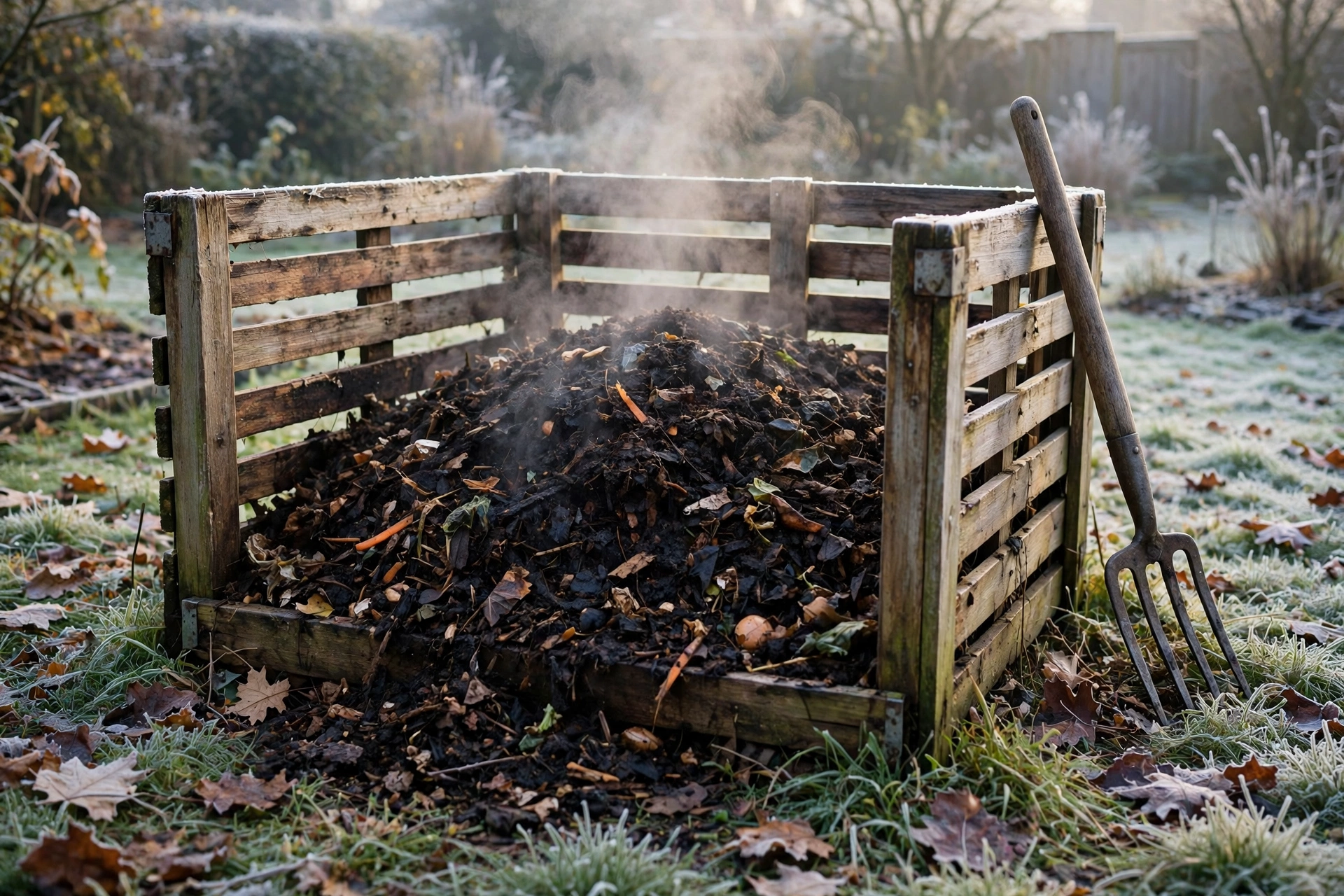
When the first frosts arrive and the garden slows down, many gardeners assume the compost heap stops too. It is easy to see why: the pile looks still, the leaves stop falling, and the kitchen scraps seem to sit unchanged for weeks. Yet winter composting is not only possible, it is one of the most useful jobs you can do in the cold months. A heap that keeps working through winter will reward you with rich, dark compost ready for spring sowing, while a heap left to freeze and soak will give you little more than a soggy mess.
Why Composting Slows Down in Winter
The microbes that do the work of composting are most active between about 15 and 60 degrees Celsius. In summer, a well-built heap easily reaches the middle of that range and can feel hot to the touch. In winter, cold air, rain and short days all work against you. Cold air cools the outside of the heap, heavy rain soaks it and drives out the air the microbes need, and there is less fresh green material coming from the garden to feed them. Smaller heaps suffer most, because they lose heat quickly.
What Happens Inside a Cold Compost Heap
Even when the outside of the heap is frozen, the centre often stays surprisingly warm. Decomposition itself generates heat, and a heap of at least a cubic metre can hold that heat in its core for weeks. If you push your hand into the middle of a winter heap, you may find it warm and steaming on a frosty morning, while the outer layer is cold and stiff. That warm core is where the real work happens, and your job is to protect it.
Choosing the Right Spot and Bin for Winter
Before winter arrives, think about where your heap sits. A compost bin tucked into a sheltered corner, out of the worst of the wind and rain, will perform far better than one standing exposed in the middle of the lawn. A spot against a fence or wall, or under the shelter of an evergreen hedge, gains a little protection from wind chill. It should still be easy to reach with a wheelbarrow on wet winter days, because a heap you cannot reach is a heap you will not feed.
The bin itself matters too. A wooden slatted bin or a sturdy plastic compost bin holds heat better than an open heap, and a lid is essential in winter to keep out heavy rain. If you use an open heap, cover it with a piece of old carpet, a tarpaulin, or a thick layer of straw. The cover keeps rain off, traps heat, and stops the top layer from freezing solid. Make sure the base still has contact with the soil, so worms and microbes can move in and excess water can drain away.
The Winter Compost Recipe: Greens, Browns and Balance
Good compost needs a balance of green, nitrogen-rich material and brown, carbon-rich material, roughly in equal volumes. In winter, browns are plentiful and greens are scarce, so you need to plan for the shortage. Kitchen scraps become your main source of green material: vegetable peelings, fruit cores, tea leaves, coffee grounds and eggshells all count. Save them in a small lidded caddy by the back door and add them to the heap every few days.
Shredding or chopping everything you add is the single most effective trick for winter composting. Small pieces have a much larger surface area for microbes to attack, and they pack together in a way that holds heat. Woody stems, thick cabbage stalks and corn cobs should be chopped or shredded before they go in, or they will still be recognisable in spring. A pair of secateurs by the compost bin is all you need, and a few minutes of chopping now saves months of waiting later.
Keeping the Heap Warm Through the Cold Months
Size is your best friend in winter. A heap smaller than about a cubic metre will struggle to hold heat, while a heap of that size or larger can keep a warm core all winter. If your heap is small, consider combining two small heaps into one, or building the heap up with a good mix of material in one go rather than adding a little at a time. A heap built in one big session heats up far more quickly than one assembled in dribs and drabs.
Turning the heap in winter is a judgement call. In summer, turning adds oxygen and speeds everything up. In winter, turning a warm heap can release all its stored heat in one go, and the heap may take days to warm up again. A better approach is to turn it only once, in late winter, when the weather begins to improve. If you do turn it, add a bucket of fresh green material and a little water if it looks dry, then cover it again quickly to trap the heat.
What to Add to the Heap in Winter
Winter is a good time to add many materials that are in plentiful supply. Fallen leaves, shredded and mixed with greens, are excellent. Spent bedding plants, dead annuals, and the tops of vegetables you have harvested can all go in. Woody prunings should be shredded first. Wood ash from a fire or wood burner can be added in small amounts, as it adds potash and helps balance acidity, but use it sparingly, a shovelful at a time, because too much makes the heap alkaline.
Troubleshooting Common Winter Compost Problems
If your heap has stopped changing and looks exactly as it did a month ago, it is probably too cold, too dry or short of nitrogen. Check the centre with a fork: if it is dry and dusty, water it lightly and add kitchen scraps or manure, then cover it and leave it alone for a few weeks. If it is wet and slimy and smells sour, it is waterlogged and airless. Fork in dry brown material such as shredded cardboard or straw, and turn it gently to let air in. The smell should improve within days.
Using Your Finished Compost in Spring
By early spring, the material you added in autumn should be well on its way to becoming finished compost: dark, crumbly and smelling pleasantly of earth. Sieve it before use to remove any twiggy bits, which can go back into the new heap. Spread it as a mulch around shrubs and roses, dig it into vegetable beds before sowing, or mix it into potting compost for containers. Any material that is not quite finished can be used as a mulch, where it will continue to break down on the soil.
Frequently Asked Questions
Can I start a new compost heap in winter? Yes, you can start one at any time of year, but a heap started in winter will take longer to get going than one started in summer. Build it as large as you can in one session, with a good mix of greens and browns, water it lightly if dry, and cover it well. It may sit quietly until spring, then heat up quickly as temperatures rise.
Should I keep adding kitchen scraps to the compost heap in winter? Yes, keep adding them regularly, as they are your most important source of nitrogen in winter. Bury each addition in the middle of the heap rather than leaving it on top, where it will freeze or attract rats. Chop large pieces small so they break down faster, and mix them with a handful of shredded leaves or cardboard.
Does compost freeze in winter? The outer layers often freeze, but the centre of a well-built heap usually stays warm enough to keep working. If the whole heap freezes, the microbes simply go dormant and resume when it thaws, so nothing is lost. Keeping the heap covered and of a good size greatly reduces freezing.
Conclusion
Winter composting is not about fighting the cold, but about working with it. Keep the heap big, covered and balanced, feed it with kitchen scraps through the lean months, and leave the warm heart of the pile alone to do its work. The microbes will slow down, but they will not stop, and by spring you will have dark, crumbly compost ready for the new growing season. A little attention in winter pays for itself many times over when the first seeds are sown.
If you are unsure what a plant or tree in your garden is, or whether its leaves or prunings are safe to compost, Try the plant identifier at aitreeidentier.site and identify it in seconds before it goes on the heap.