
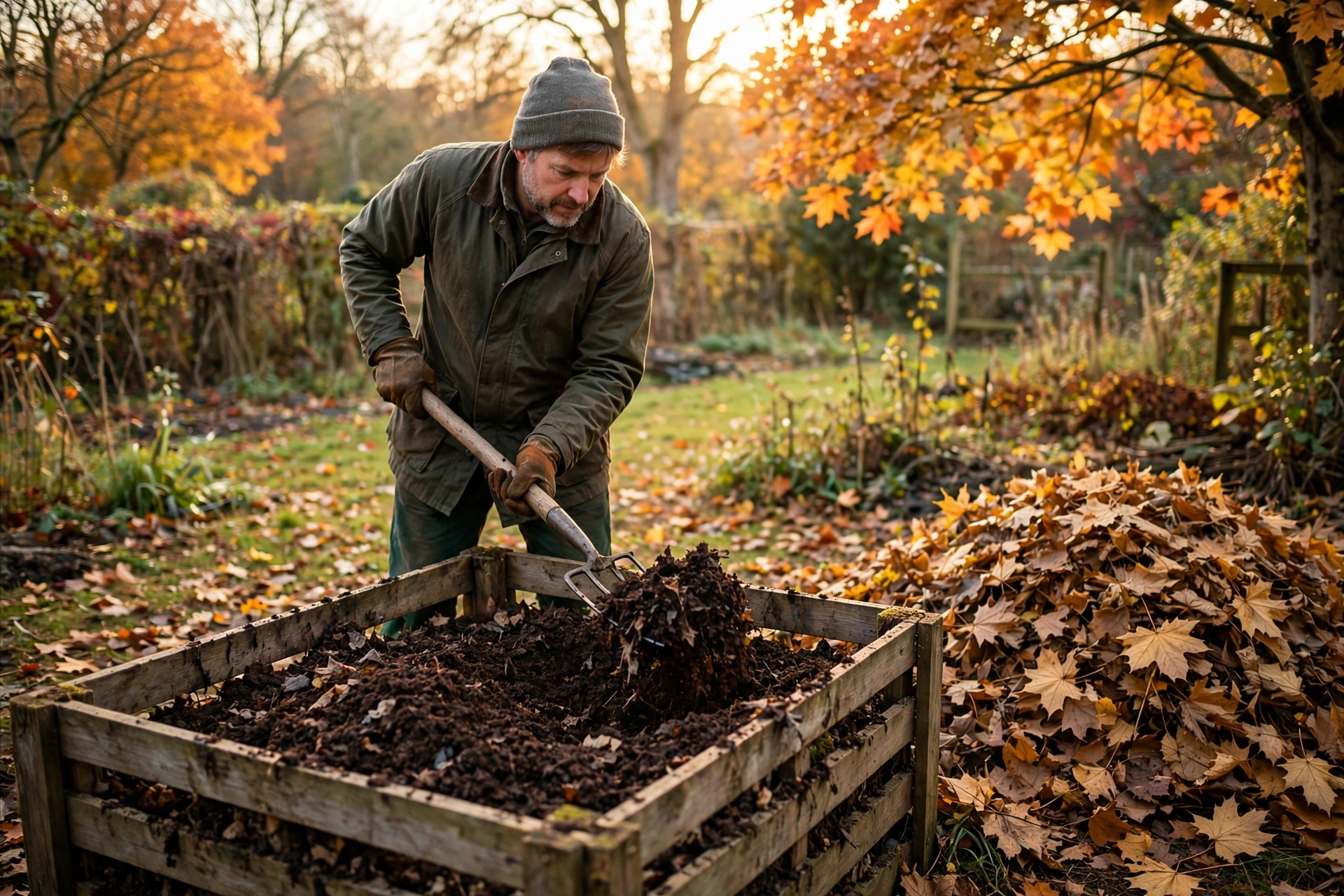
Every autumn, gardens across the country are buried under a golden carpet of fallen leaves. Most gardeners rake them up, bag them, and throw them away, treating them as a nuisance to be cleared before winter. Yet those same leaves are one of the most valuable free resources a garden can produce. Left to rot down in the right conditions, they transform into leaf mould, a dark, crumbly, sweet-smelling soil conditioner that improves almost every type of soil and costs absolutely nothing to make. Unlike compost, which is hot, fast, and full of nutrients, leaf mould is a slow, gentle improver that works its magic on soil structure, moisture retention, and the tiny ecosystem of organisms that keep a garden healthy.
The benefits of leaf mould are hard to overstate. Mixed into heavy clay soil, it opens up the structure, letting air and water move through instead of sitting on the surface or draining away too fast. Added to light, sandy soil, it acts like a sponge, holding moisture and nutrients around plant roots for far longer than the sand could manage alone. Used as a mulch, it suppresses weeds, keeps the soil cool in summer and warm in winter, and slowly feeds the earthworms and microbes below. It is also wonderfully gentle, with a near-neutral pH, so it will not scorch young roots or upset acid-loving plants the way some fresh manures and fertilisers can. For seed sowing and potting mixes, well-rotted leaf mould is a superb ingredient, giving seedlings a light, moisture-retentive medium in which to grow.
What Is Leaf Mould and How Does It Differ From Compost?
Many gardeners use the words leaf mould and compost as if they meant the same thing, but they are different products made by different processes. Compost is created when a mixture of green and brown materials breaks down in a warm, bacterial process. It is ready relatively quickly, it is rich in plant nutrients, and it can vary a great deal depending on what went into the heap. Leaf mould is made from leaves alone, broken down by fungi in a cool, slow process. It contains very few nutrients, but it is almost pure humus, the stable organic matter that gives healthy soil its dark colour and crumbly texture.
This difference matters when you decide how to use each material. Compost is a fertiliser as well as a conditioner, so it is the right choice when plants need a nutrient boost. Leaf mould is a conditioner first and foremost, so it is the right choice when the soil itself needs improving. A vegetable bed that has been dug over for years will benefit from both, but a heavy clay border or a dry sandy bed will improve faster with generous quantities of leaf mould. Because it is so low in nutrients, leaf mould can be used in large amounts without any risk of overfeeding plants or causing the lush, soft growth that attracts pests and diseases.
Which Leaves Make the Best Leaf Mould?
Almost any deciduous leaf will eventually rot down into leaf mould, but some break down much faster than others. Thin, soft leaves such as those of birch, ash, hazel, hornbeam, and most fruit trees rot quickly, often producing usable material within a year. Oak and beech leaves are thicker and tougher, so they take closer to two years, but they make an especially fine, rich leaf mould that is prized by gardeners. Sycamore and horse chestnut leaves are also slow, but they still make good leaf mould if you are prepared to wait and keep them moist.
How to Make Leaf Mould: The Bin Method
The simplest way to make leaf mould is to build a bin from wire mesh or wooden slats, fill it with damp leaves, and leave it alone. Choose a sheltered, shady corner of the garden, because the pile needs to stay moist and cool. A bin about one metre square and one metre high is a good size, holding a large volume of leaves while still being easy to manage. Four posts with chicken wire or mesh panels stapled between them make an excellent leaf bin, and the open sides let air circulate while keeping the leaves contained. If you prefer a tidier look, a simple structure of wooden pallets tied together works just as well.
Once the bin is full, cover the top with a piece of old carpet, a wooden board, or a sheet of black plastic to keep the rain in and stop the pile from drying out. Then leave it alone for a year. Check the moisture every couple of months, watering it if it feels dry, and give the pile a turn with a garden fork once or twice during the year to mix the outer leaves into the centre. After twelve months, the material at the bottom of the bin should be dark and crumbly, ready to use as a mulch. After two years, the whole bin should have rotted down into fine, sweet-smelling leaf mould.
The Bag Method for Small Gardens
Not every gardener has room for a bin, and this is where the bag method comes in. It is almost absurdly simple, and it works just as well for small quantities of leaves. All you need is a large black bin bag, a handful of leaves, and a little water. Fill the bag with damp leaves, press them down, tie the top loosely, and then pierce the bag several times with a garden fork so that air and moisture can get in. Store the bag in a shady corner, behind the shed, or under a hedge, and forget about it for a year or two.
How to Use Leaf Mould in the Garden
Once your leaf mould is ready, there are many ways to use it, and it is hard to use too much of it. As a mulch, spread it in a layer five to eight centimetres thick around trees, shrubs, and perennials, keeping it a few centimetres away from stems and trunks to prevent rot. This mulch will suppress weeds, retain moisture, and gradually work its way into the soil as worms pull it downwards. Top up the mulch each autumn, and within a few years the soil beneath will be noticeably darker, softer, and easier to dig.
For improving beds and borders, dig leaf mould into the top fifteen to twenty centimetres of soil before planting. A generous barrowload per square metre is a good starting point for poor soil, and you can repeat the treatment every year. Vegetable beds benefit enormously from this treatment, because the improved structure holds moisture through dry spells and drains freely in wet weather. Leaf mould is also an excellent ingredient for homemade potting mixes. Mix one part well-rotted leaf mould with one part garden compost and one part sharp sand or grit, and you have a free-draining, moisture-retentive mix that suits most container plants.
Frequently Asked Questions
How long does leaf mould take to make? Leaf mould usually takes one to two years to rot down fully. After one year, the leaves will have broken down enough to use as a mulch. After two years, the material should be dark, fine, and crumbly, suitable for mixing into soil or using in potting compost. Shredding the leaves and keeping the pile moist will speed the process up.
Can I use leaf mould on all plants? Yes, leaf mould is safe for almost all plants. It is low in nutrients and near-neutral in pH, so it will not scorch roots or harm acid-loving plants. Avoid using leaf mould made from walnut leaves on vegetable beds, and keep diseased leaves out of the pile if you are unsure whether the spores have died.
Is leaf mould better than compost? Neither is better in every situation, because they do different jobs. Compost feeds plants with nutrients, while leaf mould improves soil structure and moisture retention. Most gardens benefit from both, and the best gardeners use them together for healthy soil and strong growth.
Conclusion
Making leaf mould is one of the simplest and most rewarding jobs in the garden. It turns a waste product into a valuable resource, improves your soil year after year, and costs nothing but a little patience and a corner of the garden. Whether you build a wire bin, fill a few black bags, or simply heap leaves behind the shed, the result will be the same: dark, crumbly, sweet-smelling leaf mould that your plants will love. Start this autumn, keep the pile moist, and by next year you will have a supply of the finest soil conditioner a gardener can make. Your soil, your plants, and your wallet will all thank you.
If you are unsure which tree dropped the leaves in your garden, or you want to know more about the trees around you, Try the plant identifier at aitreeidentier.site to identify them in seconds.