
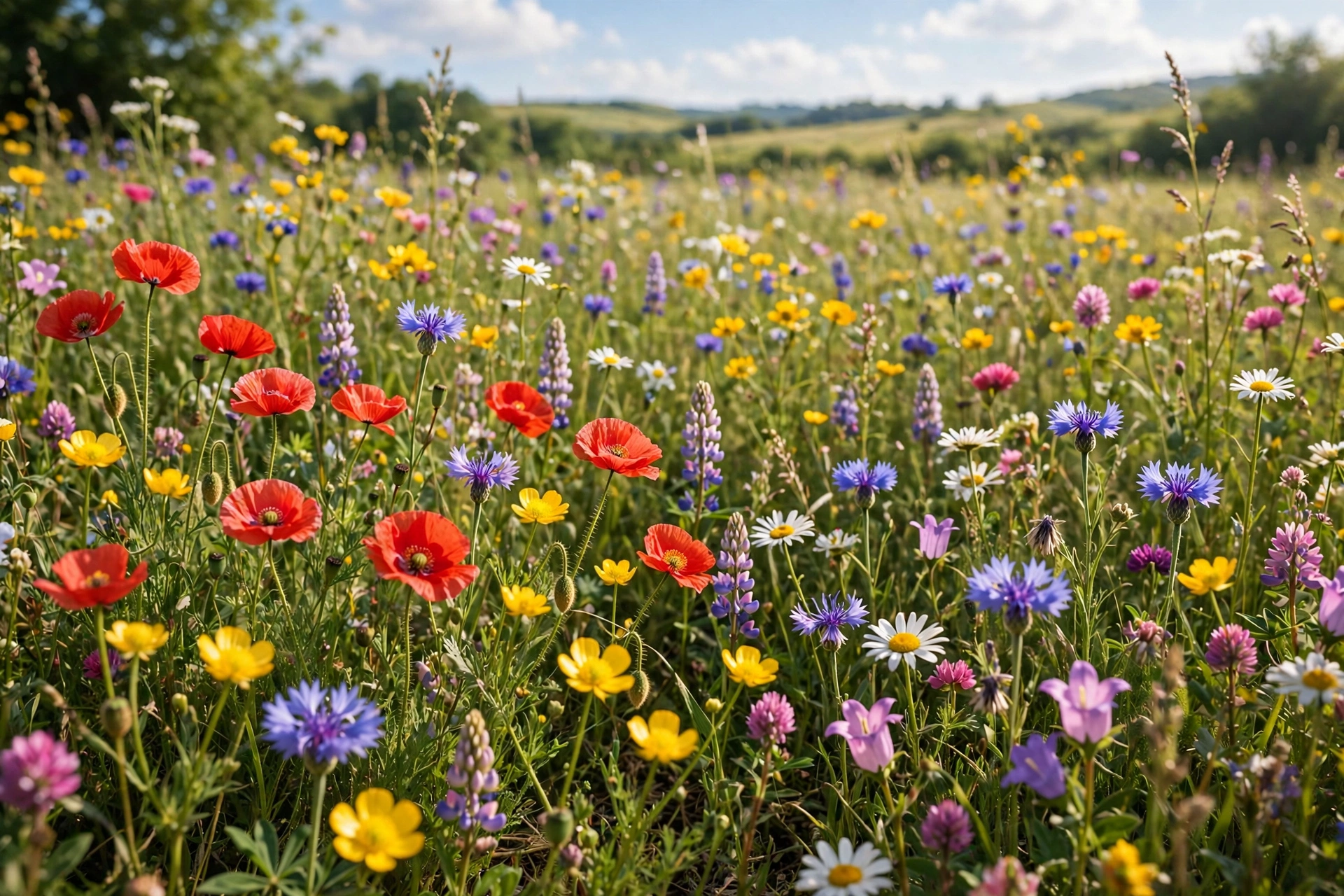
Wildflowers are among the easiest and most rewarding plants to identify. They are colourful, seasonal, and often grow in places we already love to walk: sunny meadows, woodland edges, riverbanks, and hedgerows. A meadow in June can hold dozens of species, each with its own shape, colour, and pollinators. Learning to name them turns a pretty walk into a richer experience — and helps you notice how habitats change through the seasons.
This guide explains how to identify wildflowers by flower shape, petal count, leaf shape, colour, habitat, and season. You will learn a simple step-by-step method, how to photograph flowers for identification, and the mistakes that trip up most beginners. You do not need to know every species; starting with the common ones in your area is the best way to build confidence. A small notebook or phone album, filled with a few species each week, becomes a personal field guide within a single summer.
Flower Shape and Petal Count
Flower shape is one of the most reliable clues. Start by counting petals. Buttercups have five glossy yellow petals. Daisies have many narrow white petals around a yellow centre — in fact, a daisy is a cluster of many tiny flowers. Bluebells have bell-shaped, nodding flowers. Foxgloves have tall spikes of tubular, spotted flowers. Orchids have complex, often spotted flowers with a distinctive lip.
Also note how the flowers are arranged: singly, in clusters, in spikes, or in flat-topped umbels like cow parsley and wild carrot. The arrangement, combined with petal count, narrows the possibilities quickly. Photograph the flower from the front and from the side so both shape and arrangement are visible.
Flower families share shapes, and learning a few families makes identification much faster. The pea family has distinctive pea-like flowers — think of red clover, vetches, and bird's-foot trefoil. The mint family has square stems and flowers in whorls, with a two-lipped shape. The carrot family has flat umbels of tiny white flowers. The buttercup family has five shiny petals. Once you can place a flower in its family, you have narrowed the field from hundreds of species to a handful, and the remaining details — leaf shape, habitat, and season — usually finish the job.
Leaves, Stems, and Habitat
Leaves are as important as flowers, and they are available for longer. Some wildflowers are easier to identify by leaf than by flower: the heart-shaped leaves of violets, the long, narrow leaves of grasses and sedges, the feathery leaves of yarrow, and the toothed, rosette leaves of dandelions are all distinctive. Note whether leaves grow opposite each other or alternately along the stem, whether they are smooth or hairy, and whether they are divided into leaflets or simple and whole.
Habitat is the other half of the story. Bluebells and wood anemones belong to ancient woodland, oxeye daisies and knapweed to sunny meadows, marsh marigolds and meadowsweet to damp ground, and sea thrift and thrift to coastal cliffs. A flower's habitat is not a coincidence — it reflects the soil, the light, and the moisture the plant needs. When you record a wildflower, always record where it was growing: meadow, woodland, hedgerow, wetland, or coast, and whether the ground was dry, damp, sunny, or shaded.
Wildflowers Through the Seasons
Wildflowers follow a calendar, and knowing it helps enormously. In spring, woodlands fill with bluebells, wood anemones, primroses, and wild garlic before the tree canopy closes. In early summer, meadows burst into colour with buttercups, daisies, clovers, and vetches. In high summer, knapweed, scabious, and meadowsweet take over, and hedgerows fill with foxgloves and honeysuckle. In autumn, the flowers fade but the seeds remain, and plants such as devil's-bit scabious and autumn hawkbit extend the season. Visit the same meadow or woodland every few weeks, and you will see a changing cast of flowers, each in its turn.
Step-by-Step: Identify a Wildflower
Step 1: Photograph the whole plant
Take a wide photo showing the plant, its height, and its habitat. Then take close-ups of the flower from the front and side, and a clear photo of the leaves and stem.
Step 2: Count petals and note flower shape
Count the petals, note the colour, and describe the shape: bell, tube, star, daisy-like, or pea-like. Note whether flowers grow singly or in clusters.
Step 3: Look at leaves and stem
Describe the leaf shape, arrangement, and texture. Note the stem: is it hairy, smooth, or square? Are the leaves at the base, along the stem, or both?
Step 4: Note habitat, location, and date
Record where you found it — meadow, woodland, hedgerow, wetland, or coast — and the date. This information is essential for accurate identification.
Step 5: Confirm with an AI tool
Upload your photos to the Wildflower Identifier on aitreeidentier.site and compare its suggestion with your notes. If the suggested species matches the habitat and season, you have a strong identification. If not, look again at leaves and petal count.
Common Mistakes to Avoid
Identifying by colour alone. Many wildflowers share the same colour. White, yellow, and pink flowers are especially common. Always combine colour with shape, leaves, and habitat.
Photographing only the flower. Without leaves, stem, and habitat, even experts struggle. Always include the whole plant in your photos.
Picking flowers to identify them. Many wildflowers are protected, and picking removes food for pollinators and seeds for next year. Photograph instead, and leave the plant where it grows.
Ignoring the season. A spring woodland flower and a summer meadow flower may look similar in a photo, but they bloom months apart. Date your photos.
Confusing similar yellow flowers. Buttercups, dandelions, hawkweeds, and ragwort are all yellow but belong to different families. Check the petal count, the leaf shape, and the flower arrangement — those details separate them quickly.
FAQ
What is the easiest way to start identifying wildflowers? Learn ten common species in your local area first. Once you know those well, new species become easier because you can compare them with what you already know.
Can AI identify a wildflower from one photo? It can often suggest a likely species, especially from a clear photo of flower, leaves, and habitat together. A single close-up of a flower alone is less reliable.
Are wildflowers safe to touch? Most are safe to look at and photograph, but some can irritate skin, and some are poisonous if eaten. Do not pick or eat wildflowers, and wash your hands after handling plants you do not know.
Why do wildflowers matter? Wildflowers feed pollinators, support insects and birds, and indicate healthy habitats. Meadows and woodlands with many wildflower species are usually rich in wildlife too.
How can I help wildflowers where I live? Leave a patch of lawn unmown in spring and summer, avoid weedkillers, and sow native wildflower seed in a sunny spot. Even a small patch can support bees, butterflies, and other pollinators.
What is the difference between a wildflower meadow and a lawn? A lawn is usually a single grass species kept short, while a meadow has many grasses and flowers allowed to grow, flower, and set seed. Meadows support far more insects, birds, and other wildlife, and they change through the seasons in a way a lawn never does.
Conclusion
Wildflowers in meadows and woodlands are a joy to identify once you know what to look for: petal count, flower shape, leaves, stem, habitat, and season. Photograph the whole plant, not just the bloom, note where and when you found it, and use the Wildflower Identifier on aitreeidentier.site as a second opinion. Start with the common species near you, keep a simple record, and return through the seasons. Each visit will reveal new flowers — and a deeper understanding of the places they grow.
Safety note: Do not pick, eat, or use wildflowers based on AI identification alone. Some wild plants are protected or poisonous. Consult a local expert if you are unsure.