
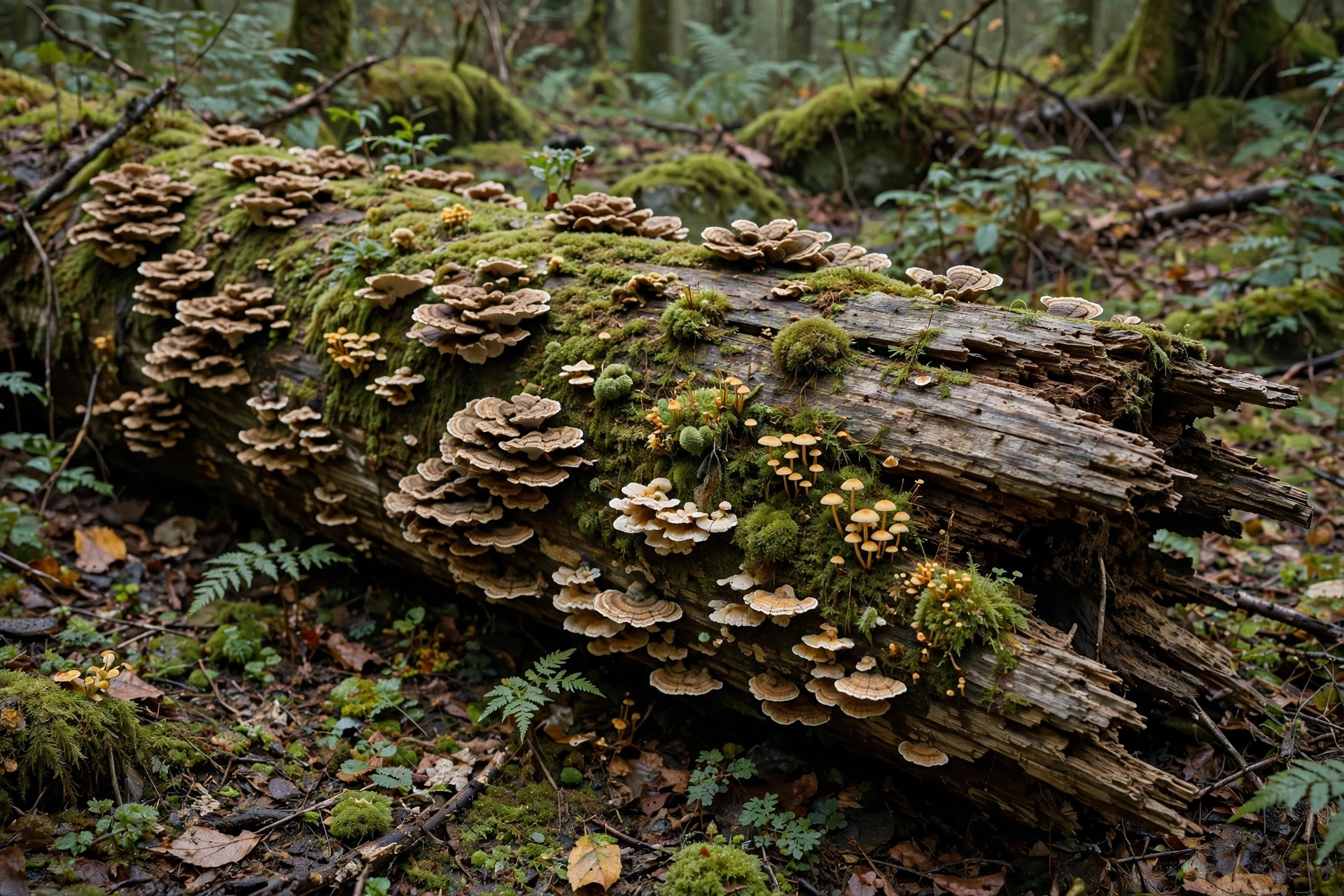
A fallen tree can look like a mess — broken branches, peeling bark, and soft, crumbling wood. Yet it may be the busiest place in the forest. Deadwood habitats support a huge share of woodland wildlife, from tiny beetles and fungi to woodpeckers, bats, and badgers.
This guide explains what deadwood is, who lives in it, and how it changes over time, and how to explore it safely and respectfully. In a natural woodland, deadwood can make up a large share of the wood itself — sometimes a fifth or more of all the timber in a forest is dead. That is not a sign of neglect. It is a sign of a forest that is working as it should, recycling nutrients and providing homes at the same time.
What Is Deadwood?
Deadwood is any dead woody material in a woodland: fallen trunks and branches, standing dead trees known as snags, stumps, and dead branches still attached to living trees. It comes in many sizes, from a twig to a fallen oak, and each size suits different creatures.
Deadwood is not waste. When a tree dies, deadwood slowly returns its carbon and nutrients to the forest: fungi and bacteria break the wood down, insects carry nutrients into the soil, and the softened wood becomes a nursery for the next generation of trees.
There are two main kinds of deadwood, and both matter. Standing deadwood — snags and dead branches on living trees — is drier and is used by woodpeckers, bats, and bees. Fallen deadwood — logs and branches on the forest floor — is damper and is used by fungi, beetles, amphibians, and small mammals. A woodland needs both, and a woodland that has only one kind is missing part of its wildlife.
Who Lives in Deadwood?
More than a thousand species in a typical temperate woodland depend on deadwood. Stag beetles and longhorn beetles lay eggs in rotting logs, and their larvae feed on the wood for years. Wood-boring bees and wasps nest in dry, standing dead wood, while bracket fungi grow from the decaying fibres.
Birds use deadwood too. Woodpeckers drill nest holes in soft snags, later used by nuthatches, tits, and owls. Bats roost behind loose bark and in hollow trunks, and hedgehogs, shrews, and toads shelter in log piles through winter. Mosses and lichens grow on the damp surfaces of fallen trunks.
The fungi are the key to it all. Without fungi, deadwood would not rot at all — fungi are the only organisms that can break down lignin, the tough substance that makes wood hard. Different fungi arrive at different stages of decay: some attack fresh wood, others prefer wood that is already soft, and their fruiting bodies — brackets, toadstools, and crusts — are often the most visible sign of the life inside a log. Look for bracket fungi on the side of a trunk, for jelly-like fungi in wet weather, and for the fine white threads of mycelium under loose bark.
How Deadwood Changes Over Time
A dead tree does not stay the same. In the first year or two, the bark loosens and bark beetles move in, followed by fungi that soften the wood. Over the next few years, the trunk becomes spongy and damp, attracting earthworms, centipedes, and woodlice, while mosses take root on its surface.
After a decade or more, the log may collapse into rich soil, feeding the seedlings on top of it. At every stage, different species find food and shelter.
This slow change is why deadwood needs to be left in place for years, not cleared away each season. A log that looks quiet in its first year may be full of stag beetle larvae by its fifth, and a snag that seems bare may be a woodpecker nest site by its third. The value of deadwood grows with time, and the oldest, softest logs are often the richest of all.
Step-by-Step: Explore a Deadwood Habitat
Step 1: Find deadwood without disturbing it
Look for fallen trunks, log piles, and standing dead trees along woodland paths, especially in damp, shaded areas. Watch for bracket fungi, woodpecker holes, and small piles of sawdust-like frass at the base of a log.
Step 2: Observe the surface life
Start with what you can see without touching anything: fungi, mosses, lichens, and the holes left by insects and birds. Photograph the fungi from the side and above; these clues tell you how far decay has progressed.
Step 3: Look for animal signs
Check the ground around the log for tracks, droppings, and feeding signs. Woodpecker holes, gnawed bark, and scratched leaf litter point to animals that use the log for food or shelter. If you see a hollow trunk, look for feathers or fur at the entrance, but never reach inside.
Step 4: Identify the tree and the habitat
Knowing the tree species helps you understand the habitat. Oak, beech, and ash logs decay slowly and support different fungi and insects from fast-rotting birch or willow. Photograph the bark and surrounding trees, and use the free Forest Identifier on aitreeidentier.site to confirm the species.
Step 5: Record what you find and leave it in place
Note the date, location, tree species, and wildlife you observed. A photo and a few lines in a notebook help you track how a log changes over the seasons. If you find something rare, such as a stag beetle, share it with a local wildlife group. Deadwood is fragile: rolling a log over destroys the damp underside where many creatures live, so leave everything as you found it.
Common Mistakes Beginners Make
- Clearing deadwood away as untidy. A tidy woodland is often a poor one for wildlife. Fallen trees are habitat, not rubbish.
- Rolling logs over to see what is underneath. This crushes the creatures living there and dries out the damp underside. Observe the surface instead.
- Taking deadwood home. Removing logs strips a woodland of food and shelter. Enjoy them where they are.
- Assuming dead trees are useless. A standing dead tree, or snag, can be more valuable to birds and bats than a living one.
- Visiting only in summer. Fungi appear in autumn, woodpeckers are easiest to hear in spring, and the soft, damp underside of a log shelters amphibians in winter. Return to the same log through the year to see how it changes.
FAQ
Is deadwood dangerous?
Fallen wood is usually safe to observe from the path, but standing dead trees can drop branches, so keep a sensible distance and never shelter under a snag in high winds. If a dead tree threatens a path or building, report it to the landowner.
How long does a fallen tree take to rot away?
It depends on the species and the climate. A soft birch log may break down in five to ten years, while a large oak trunk can take decades. Each stage of decay supports different wildlife.
Why do woodpeckers need dead trees?
Woodpeckers need soft, decaying wood to drill nest holes. Those holes are then reused by nuthatches, tits, bats, and bees, so one hole can support many species.
Can I create deadwood habitat in my garden?
Yes, easily. A log pile in a shady corner, a stump left in place, or a few thick branches stacked in a quiet spot will attract beetles, fungi, and other wildlife within a year. Use wood from your own garden, keep the pile undisturbed, and let it rot naturally.
Conclusion
Deadwood is one of the most important and most overlooked parts of a woodland. Fallen trees and standing snags feed the soil, shelter beetles, fungi, birds, and mammals, and support wildlife at every stage of decay. Next time you walk through a wood, pause at a fallen trunk and look closely — you will find a whole community living there. Leave it in place and let the dead tree go on doing its quiet, essential work.
Try it: Try the free Forest Identifier on aitreeidentier.site — upload a clear photo of the woodland or tree you are exploring for instant guidance.
Safety disclaimer: Never disturb wildlife, nests, roosts, or breeding sites; observe deadwood habitats from a safe distance and never climb on fallen trees or shelter under standing dead trees. AI identification is guidance only — consult a local wildlife expert before acting on a finding, especially near protected species or habitats.