
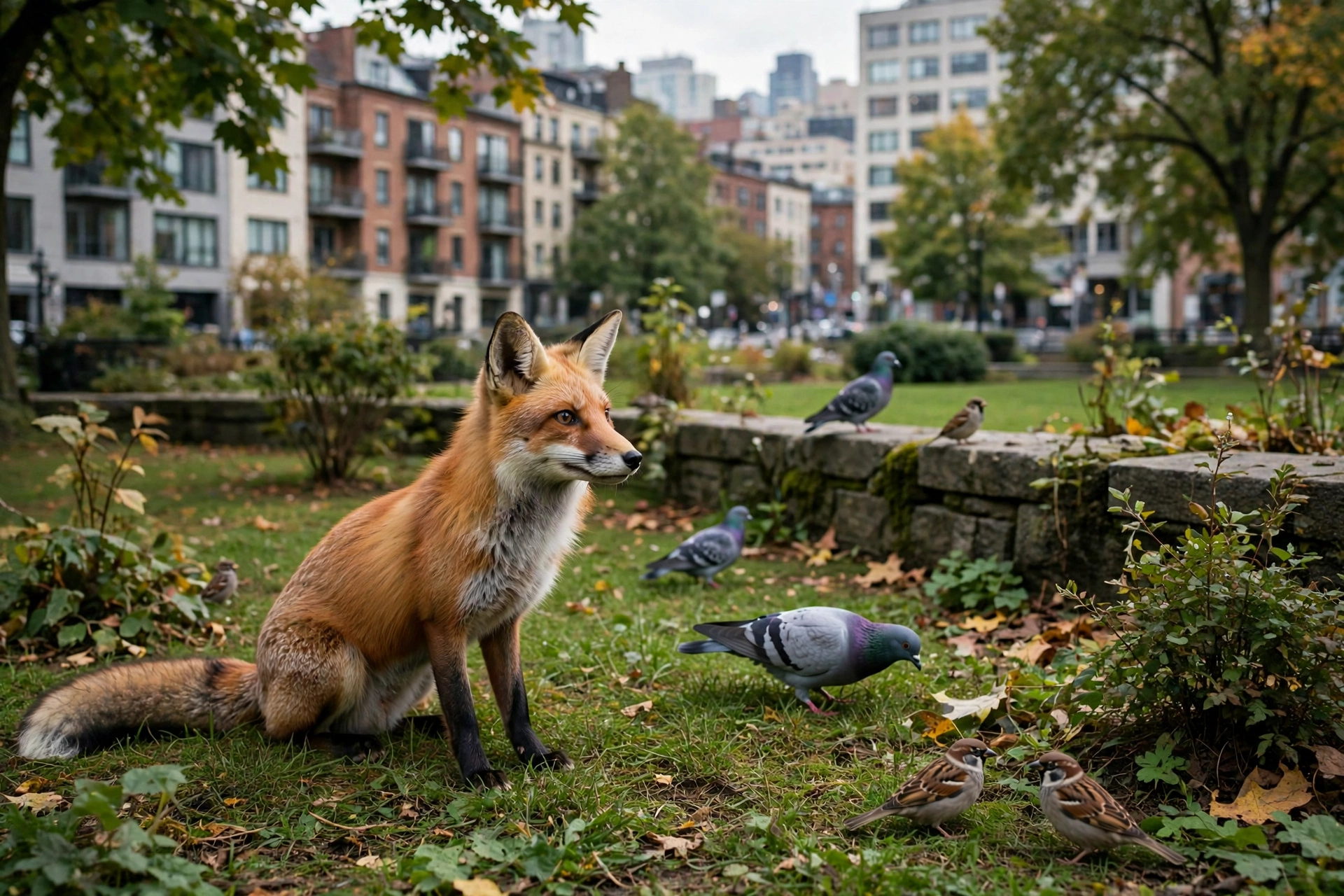
You do not need to leave the city to find wildlife. Foxes trot through suburbs at night, peregrine falcons nest on tall buildings, bees visit balcony flowers, and butterflies drift through parks and gardens. Cities are full of animals, birds, and insects that have adapted to urban life — and many of them are easier to see than their rural cousins because they live close to people.
This guide introduces the urban wildlife you are most likely to meet, how to identify it, and how to watch it safely and respectfully. You will learn which animals live in parks, gardens, rivers, and rooftops, what they eat, and where to look for them. Urban wildlife is a reminder that nature is not somewhere else — it is here, in the city, if you know where to look. The best time to start is early morning, when birds are singing and foxes are still out, or at dusk, when bats appear and hedgehogs begin to stir.
Urban Animals: Foxes, Squirrels, and Hedgehogs
Red foxes are the most famous urban animal in many cities. They are dog-sized, reddish-brown, with a pointed face, upright ears, and a bushy tail with a white tip. They are most active at dawn and dusk, and are often seen in gardens, parks, and quiet streets. They eat rodents, birds, insects, fruit, and food left out by people — although feeding them is not recommended.
Grey squirrels are common in parks and gardens, with grey fur, a bushy tail, and a habit of running along branches and fences. They eat nuts, seeds, and fungi, and bury food for winter. Hedgehogs are nocturnal and harder to see, but they visit gardens at night, snuffling for slugs, snails, and insects. They are round, spiky, and about the size of a small melon. If you see a hedgehog in daylight, it may need help — contact a local wildlife rescue service.
Rats and mice are less loved but very much part of urban wildlife, and they are an important food source for foxes, owls, and kestrels. Bats are another hidden urban mammal: pipistrelles are the most common city bats, and on a warm summer evening you can watch them fluttering around street lights and over ponds, catching insects in mid-air. They are small, fast, and silent to human ears, but a bat detector — a small device that makes their calls audible — reveals a surprising amount of activity above city streets.
Urban Birds: From Pigeons to Peregrines
City birds are a mix of the familiar and the spectacular. Pigeons, blackbirds, robins, magpies, and house sparrows are everyday sights, while gulls, starlings, and woodpigeons gather in parks and on rooftops. Look up, and you may see more: kestrels hovering over roadside verges, buzzards circling above the suburbs, and peregrine falcons — the fastest animals on Earth — nesting on tall buildings and hunting pigeons in mid-air. Peregrines have adapted so well to cities that many now live entirely urban lives, using skyscrapers as cliff faces.
Water brings more birds: mallards, moorhens, coots, and grey herons on rivers, canals, and park ponds, and kingfishers flashing along quieter stretches. Swifts scream overhead in summer, swallows and house martins nest under eaves, and in winter, city parks fill with visiting thrushes and waxwings. Note the time of year: a city bird list in January looks very different from one in June, and that change is part of the pleasure of watching urban wildlife through the seasons.
Urban Insects and Small Wildlife
Small wildlife is easy to miss, but it is everywhere in a city. Bees visit balcony flowers and window boxes, butterflies drift through parks, and hoverflies, ladybirds, and beetles work in gardens and green spaces. Moths come to lights at night — a simple white sheet and a light can reveal dozens of species in a single evening. Even a small patch of flowers on a balcony can support pollinators, and a window box of lavender can be visited by bees all summer. Look closely at flowers, leaves, and soil, and the city reveals a whole layer of life that most people walk past.
Step-by-Step: Identify Urban Wildlife
Step 1: Look in parks, gardens, and along rivers
Start where wildlife concentrates: parks, gardens, riverbanks, ponds, and green corridors. Visit at different times — dawn, midday, and dusk — to see different species.
Step 2: Photograph from a safe distance
Use zoom rather than approaching. Take a wide shot showing habitat and scale, a side view of the whole animal, and a close-up of distinctive markings if you can. Do not chase or feed wildlife for a photo.
Step 3: Note size, shape, colour, and behaviour
Describe the animal before you name it: size, shape, main colours, markings, and what it was doing. Was it feeding, flying, swimming, or resting? What was it eating?
Step 4: Check the time and location
Note the date, time of day, and exact location — park, garden, rooftop, or river. Urban wildlife follows patterns: foxes at dusk, gulls at midday, hedgehogs at night.
Step 5: Confirm with an AI tool
Upload your clearest photo to the Animal Identifier on aitreeidentier.site and compare its suggestion with your notes. Use it to learn the species name and more about its urban habits.
Common Mistakes to Avoid
Feeding urban wildlife. Feeding foxes, pigeons, and gulls can make them dependent, spread disease, and cause conflicts with neighbours. Let wildlife find its own food.
Assuming city animals are tame. Urban animals may seem used to people, but they are still wild. Keep a safe distance, do not try to touch them, and keep dogs on a lead near wildlife.
Identifying by colour alone. Male and female birds can look different, and juvenile animals often look different from adults. Combine colour with shape, size, and behaviour.
Ignoring small wildlife. Bees, butterflies, and beetles are easy to overlook, but they are vital pollinators and pest controllers. Look closely at flowers and leaves, not just at large animals.
Watching only in the middle of the day. Many urban animals are active at dawn, dusk, or night. A park that looks empty at noon can be full of foxes, bats, and hedgehogs a few hours later.
FAQ
What urban animals are most common? Foxes, grey squirrels, rats, mice, hedgehogs, and bats are common mammals. Pigeons, blackbirds, robins, magpies, and gulls are common birds. Bees, butterflies, ladybirds, and hoverflies are common insects.
Is urban wildlife safe to watch? Yes, from a safe distance. Keep away from wild animals, do not feed them, wash your hands after being outdoors, and keep children and pets close near wildlife.
Can I help urban wildlife? Yes. Plant native flowers, provide water, leave a log pile or long grass in a corner, avoid pesticides, and support local parks and green spaces. Small changes help a great deal.
Can AI identify urban wildlife from a photo? Yes, often well, if the photo is clear and shows the animal's side view, markings, and habitat. A sharp photo in good light gives the best result.
What should I do if I find an injured urban animal? Do not handle it yourself unless you know it is safe to do so. Keep a distance, keep pets away, and call a local wildlife rescue service or veterinarian for advice. Note the exact location and, if you can, take a photo from a distance to help the rescuers.
Conclusion
Urban wildlife is all around us: foxes at dusk, peregrines on rooftops, bees on balcony flowers, and butterflies in parks. Learning to identify it turns a city walk into a wildlife safari — and reminds us that nature adapts, survives, and thrives even in busy places. Observe from a safe distance, photograph without disturbing, and use the Animal Identifier on aitreeidentier.site to confirm what you saw. Protect the green spaces, gardens, and rivers that urban wildlife depends on, and the city will keep surprising you.
Safety note: Keep a safe distance from wild animals, do not feed or touch them, and never eat or use a wild plant or mushroom based on AI alone. Consult a local expert if you are unsure.