
Try it: Try the free Tree Identifier on aitreeidentier.site — identify the fallen tree from a photo before you start clearing up.
After a storm, a fallen tree can turn a familiar garden into a dangerous place. Branches may be hanging by a thread, roots may have lifted a mound of soil, and a trunk that looks stable can shift without warning. Rushing in to clear the mess is how most storm injuries happen.
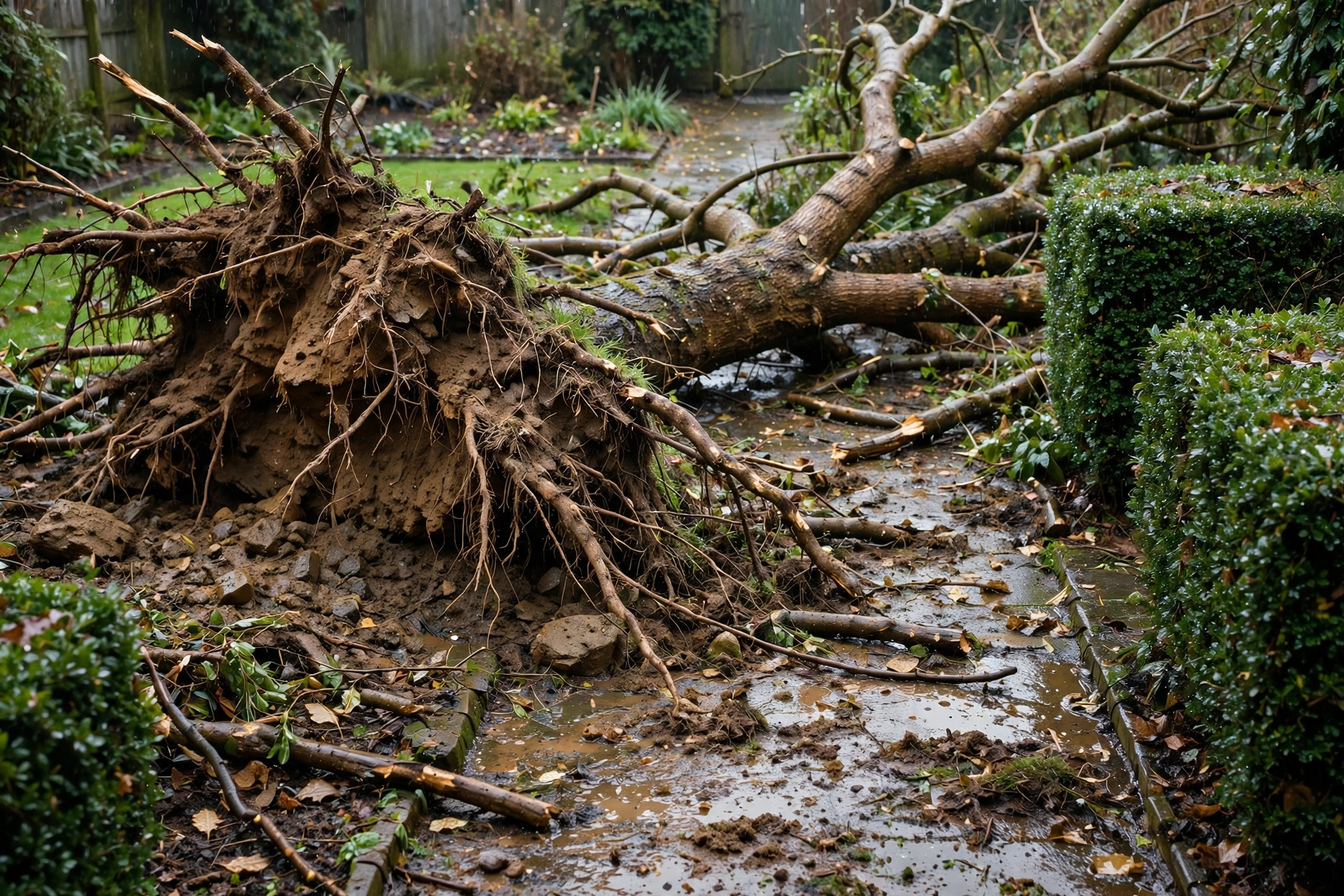
A fallen tree looks like a clearing-up job, and in part it is — but it is also a situation where hidden dangers are common. A tree that has fallen may still be under tension, its branches may be holding up other branches, and its roots may have lifted a slab of soil that can fall back. The safest approach is to treat every fallen tree as unpredictable until you have checked it carefully from a distance.
Handling a fallen tree safely is mostly about slowing down, looking carefully, and knowing which jobs belong to a professional. This guide walks you through that process.
First: Wait Until It Is Safe to Go Outside
Do not go out while the storm is still blowing. Branches can fall long after the worst of the weather has passed, especially from weakened trees. Wait until the wind has dropped and daylight is good enough to see clearly.
When you do go out, wear sturdy boots, gloves, and eye protection. The ground may be slippery, with hidden hazards under leaves and debris. Bring a phone, tell someone where you are, and do not work alone.
Assess the Damage from a Safe Distance
Before you touch anything, stand well back and look at the whole scene: what has fallen, where it landed, and what it is resting on.
Step 1: Check for power lines
Look up before you move closer. If a fallen tree is touching, or even near, an overhead power line, stop immediately. Do not touch the tree, the line, or anything in contact with them. Electricity can travel through wet wood and puddles. Call your electricity provider or emergency services.
Step 2: Check for structural damage
Has the tree damaged your roof, a wall, or a gas line? If you smell gas or hear hissing, leave the area and call the gas company or emergency services. Do not switch lights on or off. If the building looks unsafe, stay out until a professional has checked it.
Step 3: Look for hung-up branches and tension
Walk slowly around the tree at a safe distance, and look for branches bent or held under tension by other branches. These spring poles can whip back violently when cut. Also look at the root plate — the lifted disc of roots and soil. Never stand on, under, or behind it, as it can fall back into the hole.
What You Can Safely Clear Yourself
If the tree is small, fully on the ground, clear of power lines and buildings, and not under tension, you can usually clear it yourself with hand tools. Start with the smallest branches and work inward, using loppers or a handsaw, and always cut away from your body.
If you are unsure what kind of tree has fallen, the free Tree Identifier on aitreeidentier.site can help you identify it from a photo of its leaves or bark. Knowing the species helps you judge the wood — some trees are heavy, some are brittle, and some have irritating sap — and it helps when describing the tree to a professional or your insurer.
Work in short sessions and take breaks, because storm clear-up is tiring and tired people make mistakes.
When to Call a Professional
Call a qualified arborist if the tree is large, hung up in another tree, leaning against a building, blocking a road, or tangled with power lines. Also call one if the root plate is large or unstable, or the trunk has split.
Take photos of the damage for your insurer before clearing begins, but only from a safe distance. Note the date, keep receipts, and contact your insurer early.
Clearing Up and Checking the Rest of Your Garden
Once the fallen tree is dealt with, check the trees still standing for cracked branches, leaning trunks, lifted soil, and loose limbs. A tree that survived the storm may still be damaged. Dispose of debris safely, following local rules, and keep diseased wood separate from healthy compost.
Common Mistakes Beginners Make
- Rushing out during or just after the storm. Falling branches are still a risk after the wind drops.
- Touching a tree near a power line. Even a tree that looks close to a line can be live.
- Standing under a hung-up tree. It can slip and fall at any moment.
- Cutting a branch under tension. Bent branches can spring back violently.
- Standing on or behind the root plate. It can slam back into the ground.
- Working alone with a chainsaw. Storm-damaged trees are unpredictable.
Sorting and Using Fallen Wood After the Clear-Up
Once a fallen tree has been cleared safely, the wood does not have to go to waste — but it should not be used straight away either. Freshly fallen wood is wet, heavy, and difficult to burn or work with, and it may contain nails, wire, or fencing that the tree grew around. Check each piece for metal before you cut it further, and wear gloves and eye protection when handling it, since broken branches can have sharp, splintered ends.
If you want firewood, cut the wood to length, split it, and stack it in a dry, ventilated place to season for at least a year — longer for dense hardwoods. Smaller branches can be chipped for mulch or added to a compost heap in small amounts, and straight pieces can be kept for garden projects. Wood that is rotten, diseased, or treated should not be burned or used for food growing; dispose of it through the route your local service recommends.
Checking Neighbouring Trees and Fences After a Fall
A fallen tree is a warning about the trees around it. The same wind, wet soil, or disease that brought one tree down may have weakened its neighbours, even if they are still standing. Walk the garden and look at each nearby tree from a distance: has its lean changed, is there lifted soil at its base, are there new cracks or hanging branches? Photograph anything that looks different, and call an arborist if you are unsure.
Check fences, walls, and sheds that the tree may have pushed against, even if they look undamaged at first glance. A fence post can be loosened without falling, and a shed roof can be cracked under a branch that has since been removed. Note any damage with photos and the date, and tell your insurer promptly if a building or a neighbour's property was affected. A quick check now can prevent a second fall in the next storm.
FAQ
Can I move a fallen tree myself?
If it is small, fully on the ground, and clear of power lines, buildings, and tension, yes — with hand tools and help. Large trees should be left to a professional.
How do I know if a standing tree is still dangerous after a storm?
Look for a new lean, cracks in the trunk, lifted soil at the base, and hanging branches. Any of these signs means you should keep people away and get an arborist to inspect the tree.
Should I take photos before clearing up?
Yes. Photograph the damage from a safe distance before you start. This helps with insurance claims.
How long should I wait before clearing a fallen tree? Wait until the storm has fully passed, the wind has dropped, and any warnings have been lifted. Then check the tree from a distance for power lines, tension, and hanging branches before you approach it. If anything looks unsafe, wait for a professional.
Conclusion
Handling a fallen tree safely after a storm is about patience and judgement, not speed. Wait for safe conditions, check for power lines from a distance, clear only what is small and stable, and call a professional for anything large, hung up, or under tension.
Safety disclaimer: This article is guidance only. For fallen trees near power lines, buildings, or roads, hung-up trees, or any injury, call a qualified professional or emergency services. Never eat or use any plant based on AI identification alone.