
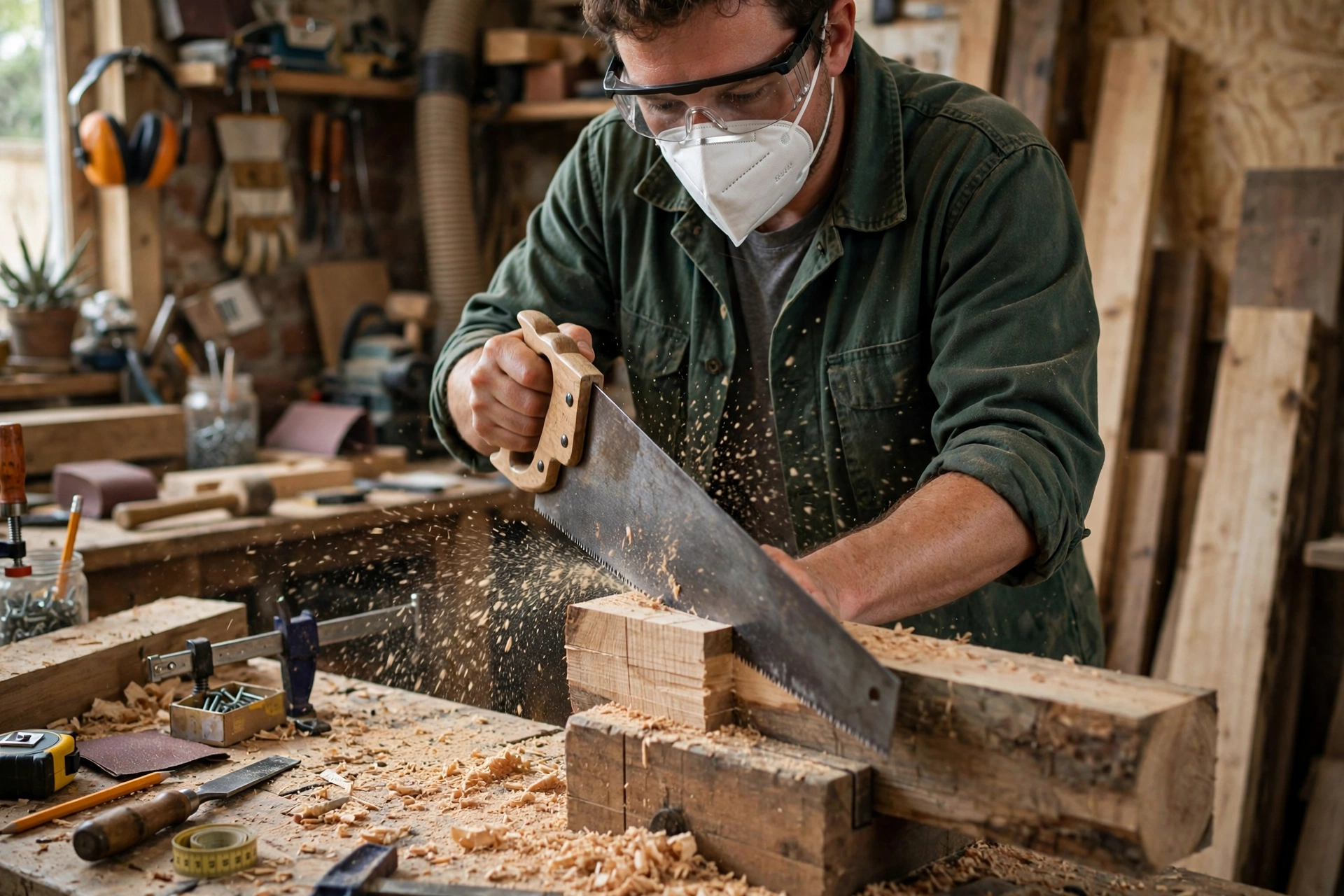
Woodwork is satisfying, whether you are pruning a tree, building a shelf, carving, or clearing fallen branches. It also brings risks that are easy to underestimate: fine dust in the air, sharp splinters, heavy timber, and tools that can injure in a second if used without care. Some woods can also irritate skin, eyes, or lungs, especially when sanded or burned, and some people are sensitive to particular species.
Wood feels familiar and harmless — it is a natural material, after all — but working with it carries real risks that are easy to overlook. Fine dust can irritate lungs, a splinter can become infected, and a heavy board can injure a foot or a back. Most of these risks are preventable with a few habits: knowing what wood you are handling, wearing the right protection, and keeping your workspace clean and tidy.
Try it: Try the free Wood Identifier on aitreeidentier.site — identify the wood you are cutting first, so you know whether it is dusty, splintery, or irritating before you start work.
Know Your Wood Before You Cut or Sand It
Different woods behave differently. Some are hard and dense, some are soft and resinous, some split easily, and some produce dust that irritates lungs or skin. Some woods are treated with chemicals, painted, or contaminated, and should not be burned or sanded without advice.
Before you work with an unknown piece of wood, photograph it, note its colour, grain, weight, smell, and where it came from, and use the Wood Identifier on aitreeidentier.site for a first clue about its type. Compare the result with a trusted wood guide, and ask a local timber merchant or woodworker if you need confirmation.
Splinters, Cuts, and Heavy Timber
Splinters are common but preventable. Wear gloves when handling rough, weathered, or thorny wood, and sand or smooth edges before you handle a finished piece. Inspect wood for nails, screws, and staples before you cut or sand it, as hidden metal can damage tools and cause injury.
Lift timber correctly: bend your knees, keep your back straight, hold the load close to your body, and ask for help with heavy or awkward pieces. Store timber flat and stable, so it cannot roll or fall. Keep your work area tidy, with tools put away when not in use, and keep walkways clear of offcuts and sawdust.
If you get a splinter, wash the area, remove the splinter with clean tweezers if it is near the surface, wash again, and cover with a clean dressing. Seek medical care if a splinter is deep, broken, or shows signs of infection, or if it is in a joint or the face.
Tool Safety Basics
Use the right tool for the job, and make sure it is sharp, clean, and in good condition. A blunt blade is more dangerous than a sharp one, as it needs more force and can slip. Read the manual for any power tool before you use it, and follow the manufacturer's safety instructions.
Step 1: Prepare your workspace. Work in good light, on a stable surface, with enough space. Keep children and pets away, and wear eye protection, gloves where appropriate, hearing protection for noisy tools, and a dust mask for sanding and sawing.
Step 2: Check the tool and the wood. Inspect the tool for damage, check that guards are in place, and check the wood for nails, knots, and cracks that could cause it to split or kick back.
Step 3: Secure the wood. Clamp the wood firmly before you cut, drill, or sand it. Never hold a small piece in your hand while you cut it with a power tool.
Step 4: Cut slowly and steadily. Let the tool do the work, keep your hands away from the blade, and never reach over a running blade. Switch off and unplug a power tool before you change a blade or clear a blockage.
Step 5: Clean up and store tools safely. Unplug power tools, clean off dust, store blades covered, and put tools away out of reach of children. Wash your hands and change dusty clothes after work.
Do not use a chainsaw, circular saw, or other high-risk power tool unless you are trained and equipped for it. If a job needs a tool you do not know how to use safely, hire a professional or ask a trained person to help.
Common Mistakes to Avoid
Working without eye and dust protection. Sawdust and chips can injure eyes in a second, and fine dust can irritate lungs. Wear protection every time, even for a quick cut.
Sanding treated or painted wood without advice. Treated, painted, or varnished wood can release harmful dust or fumes. Ask a local expert before you sand or burn it.
Holding wood by hand while cutting. Always clamp wood securely. Holding it by hand puts your fingers close to the blade and makes the wood harder to control.
Rushing a cut. Rushing causes slips, kickback, and mistakes. Work slowly, check your line, and stop if you feel tired or unsure.
Choosing and Storing Wood Safely
Not all wood behaves the same way. Some species produce fine, irritating dust, some splinter easily, and some contain natural chemicals that can irritate skin or lungs. Before you start a project, identify the wood and check whether it is known to be irritating or allergenic. If you are unsure, treat it with extra care: wear a mask and gloves, work in a ventilated space, and wash your hands and face afterwards. Avoid burning unknown or treated wood, which can release harmful smoke.
Storage matters too. Keep timber dry, flat, and off the ground, so it does not warp, rot, or grow mould. Stack boards with spacers so air can circulate, and keep heavy boards at a height where you can lift them without straining your back. Store offcuts tidily rather than in a pile on the floor, where they become a trip hazard, and keep sharp tools and sawn edges away from walkways.
Dust Control and Clean-Up After a Wood Project
Wood dust is the risk most people underestimate. Fine dust stays in the air long after sawing or sanding stops, and breathing it in regularly can irritate the nose, throat, and lungs. Work outdoors or in a well-ventilated space where you can, wear a proper dust mask rather than a thin paper one, and use dust extraction on power tools if you have it. Sweeping dry dust with a broom can throw it back into the air; a vacuum with a suitable filter, or damp sweeping, is better.
At the end of a session, clean up properly. Brush dust off your clothes outdoors, wash your hands and face, and change out of dusty clothes before going indoors. Keep food and drink away from the work area, and do not eat with dusty hands. A few minutes of cleaning at the end of each session protects your lungs far more than a single deep clean at the end of a project.
FAQ
Is wood dust dangerous? Wood dust can irritate eyes, nose, and lungs, and long-term exposure to some wood dusts carries more serious risks. Work in ventilated areas, wear a suitable mask and eye protection, and clean up dust with a vacuum or damp cloth.
How can I identify a wood type before I work with it? Photograph the wood, note its colour, grain, weight, smell, and source, use the Wood Identifier on aitreeidentier.site for a first clue, and confirm it with a local timber merchant or woodworker if needed.
Can I burn any wood in a fire or stove? No. Do not burn treated, painted, varnished, or unknown wood, as it can release harmful fumes. Use only dry, untreated wood that is suitable for your stove or fire, and follow local rules.
Is all wood dust harmful? All wood dust can irritate the airways, and some species are more irritating than others. Regular exposure matters most, so even occasional woodworkers should wear a mask and work in ventilated spaces, and anyone who works with wood often should take dust control seriously.
Conclusion
Working with wood safely is about preparation, protection, and patience. Identify the wood first, control dust with ventilation and a mask, wear eye protection and gloves, secure the wood before you cut, and use tools only if you are trained to use them safely. With those habits, woodwork stays enjoyable — and your lungs, eyes, and hands stay protected.
Safety Disclaimer: Never eat or use a plant, mushroom, or fruit based on AI identification alone. AI results can be wrong. Always consult a local expert before using unknown wood, especially for burning or food contact. This article is general information only and is not medical advice.