
Try it: Try the free Garden Plant Identifier on aitreeidentier.site — identify your garden plants so you can plan shade and care around the hottest part of the day.
Gardening on a sunny day feels wonderful — until the heat catches up with you. It is easy to lose track of time, and by the time you feel dizzy, sick, or burnt, the damage is already done. Heat and dehydration can affect anyone.
Gardening is often described as relaxing, and it can be — but working outdoors in strong sun is also physical work in heat, and the body can overheat faster than people expect. Unlike a walk, where you can stop at any moment, gardening tends to keep you bent over one more bed, finishing one more row. That steady, focused effort, combined with direct sun and a lack of shade, is why gardeners are at particular risk from heat and sunburn.
A few simple habits make gardening in the sun safe: working at the right time of day, drinking enough water, covering up, and knowing when to stop.
Why Gardening in the Sun Is Riskier Than It Looks
Gardening is real physical work. Digging, lifting, and bending raise your body temperature, and the sun adds heat on top of that. Gardening also keeps you in one sunny spot for a long time, often with your head down and your back exposed, so you may not notice how hot you are getting.
Heat risk is higher for older gardeners, young children, and anyone taking certain medicines or living with a heart or breathing condition. It is also higher on humid days, when sweat does not evaporate well. Even a mild day can be risky if you work hard for hours without water, shade, or breaks.
Plan Your Work Around the Sun
The simplest sun safety habit is timing. The sun is strongest from around 11am to 3pm. Plan heavy jobs — digging, mowing, and lifting — for the early morning or late afternoon, and use midday for light jobs in the shade.
Step 1: Check the forecast
Before you start, check the temperature, humidity, and UV level. If a heat warning is in place, keep outdoor work short or put it off altogether.
Step 2: Create shade where you work
If you have no natural shade, make some with an umbrella or gazebo. If you are unsure which plants can offer shade, the free Garden Plant Identifier on aitreeidentier.site can identify them from a photo.
Step 3: Pace yourself
Work in short blocks of 30 to 45 minutes, then rest in the shade for 10 to 15 minutes. Do the hardest work first, while you are fresh. If you feel hot, tired, or unwell, stop — the garden will still be there tomorrow.
Stay Hydrated: Drink Before You Feel Thirsty
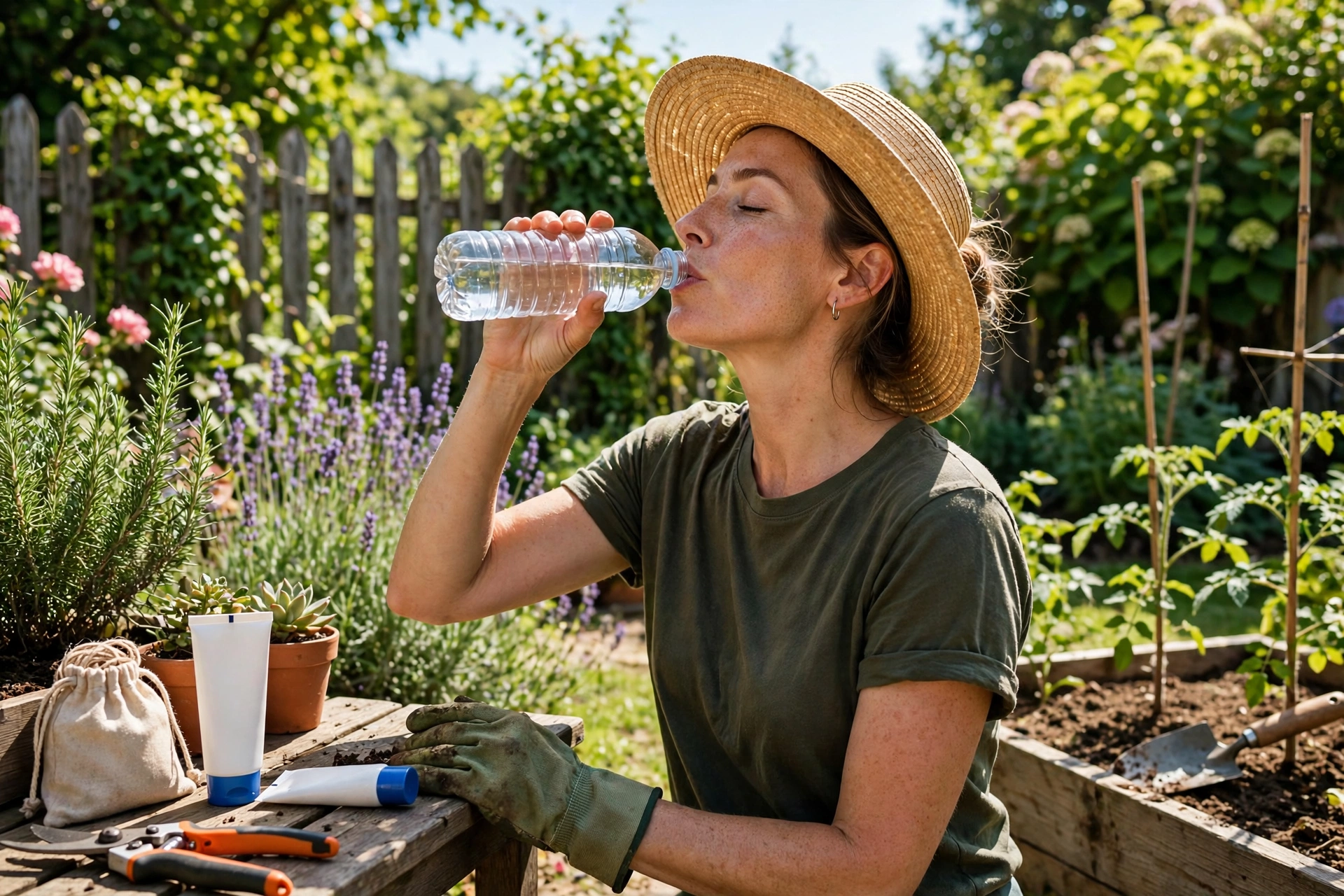
Dehydration creeps up slowly, and by the time you feel very thirsty, you are already dehydrated. Drink water regularly and keep a bottle within reach, taking a sip every 15 to 20 minutes.
Water is the best choice; sugary drinks and alcohol do not hydrate you as well. Eat a light meal before you start. Pale yellow urine is normal; dark yellow means you need more water.
Protect Your Skin from Sunburn
Sunburn can happen in as little as 15 to 20 minutes on a bright day, and it increases your risk of skin cancer over time. The most reliable protection is clothing: a wide-brimmed hat, a light long-sleeved shirt, long trousers, and sunglasses.
Use sunscreen on any uncovered skin, even on a cloudy day, because UV rays pass through cloud. Choose a broad-spectrum sunscreen with a factor of at least 30, apply it before you go out, and reapply every two hours.
Recognise the Warning Signs of Heat Illness
Heat illness develops in stages, and catching it early makes all the difference. Heat cramps are painful muscle cramps after sweating heavily — rest in the shade and drink water slowly.
Heat exhaustion is more serious: heavy sweating, cold and clammy skin, dizziness, nausea, and weakness. Stop work at once, move to a cool, shaded place, lie down, and sip cool water. If symptoms do not improve within 30 minutes, seek medical help.
Heatstroke is a medical emergency. The signs include a body temperature above 40°C, hot and dry skin, confusion, slurred speech, or loss of consciousness. If you suspect heatstroke, call emergency services immediately, move the person to a cool place, and cool them with water or wet cloths while you wait.
Common Mistakes Beginners Make
- Working through the hottest part of the day. Heavy jobs belong in the morning or late afternoon.
- Waiting until you feel thirsty to drink. Thirst is a late warning sign — drink little and often.
- Skipping sunscreen on a cloudy day. UV rays pass through cloud.
- Wearing dark, tight clothing. Light, loose clothes protect your skin and keep you cooler.
- Ignoring early warning signs. Headache and dizziness are your body telling you to stop.
- Gardening alone in extreme heat. If you feel unwell, you need someone nearby.
Clothing, Hats, and Shade That Actually Work
Sunscreen helps, but clothing is more reliable because it does not wear off or wash away with sweat. A wide-brimmed hat shades the face, ears, and neck far better than a cap, and a light, loose, long-sleeved shirt protects arms without trapping heat. Light colours reflect more sun than dark ones, and tightly woven fabric blocks more ultraviolet light than a loose weave you can see through. Sunglasses that block ultraviolet light protect your eyes, which sunburn can also affect.
Shade is the other half of the equation. Work in the shadow of a tree, a hedge, or a building during the hottest hours, and move a portable shade — a parasol, a pop-up canopy, or even a sheet strung between posts — to where you are working. If you are digging or weeding in full sun, take the shade with you rather than hoping to finish quickly. A hat and a patch of shade together do more than sunscreen alone ever will.
Planning a Garden Week in Hot Weather
In a hot spell, plan the week rather than each day. Do heavy jobs — digging, clearing, and pruning — early in the morning, and save light jobs such as watering, deadheading, and planning for the cooler evening. Water plants early or late in the day, when less water is lost to evaporation, and mulch beds to keep soil moist and cool. If a heatwave is forecast, put off any job that can wait: the garden will survive a week without a major project, and you will be safer for it.
Build rest into the plan. Set a timer for a break every 30 to 45 minutes, drink water during the break even if you do not feel thirsty, and cool down in the shade or indoors. Keep a bottle of water and a phone within reach, and tell someone where you are working if you garden alone. If you start to feel dizzy, nauseous, or unusually tired, stop immediately, move to shade, drink water, and cool your skin — and call for help if symptoms do not improve quickly.
FAQ
How much water should I drink while gardening?
Aim for a glass of water every 20 to 30 minutes in warm weather.
Do I need sunscreen if I am only out for half an hour?
Yes. Sunburn can start in as little as 15 to 20 minutes. Apply sunscreen before you start, and wear a hat.
What is the difference between heat exhaustion and heatstroke?
Heat exhaustion involves heavy sweating, dizziness, nausea, and weakness, and usually improves with rest, shade, and water. Heatstroke involves confusion, hot and dry skin, or loss of consciousness — it is an emergency.
How much water should I drink while gardening in the heat? It varies with heat, effort, and the individual, but a useful rule is to drink regularly in small amounts rather than waiting until you are thirsty. Keep water within reach, take a drink at every break, and eat normally — food helps replace salts lost in sweat. If you are unsure, ask a doctor for advice.
Conclusion
Sun safety in the garden is simple: plan heavy work for the cooler hours, drink water before you feel thirsty, cover up, use sunscreen, and take regular breaks in the shade. Learn the warning signs of heat exhaustion and heatstroke, and never be afraid to stop.
Safety disclaimer: This article is guidance only and does not replace medical advice. For signs of heatstroke, confusion, or loss of consciousness, call emergency services. Never eat or use any plant based on AI identification alone.