
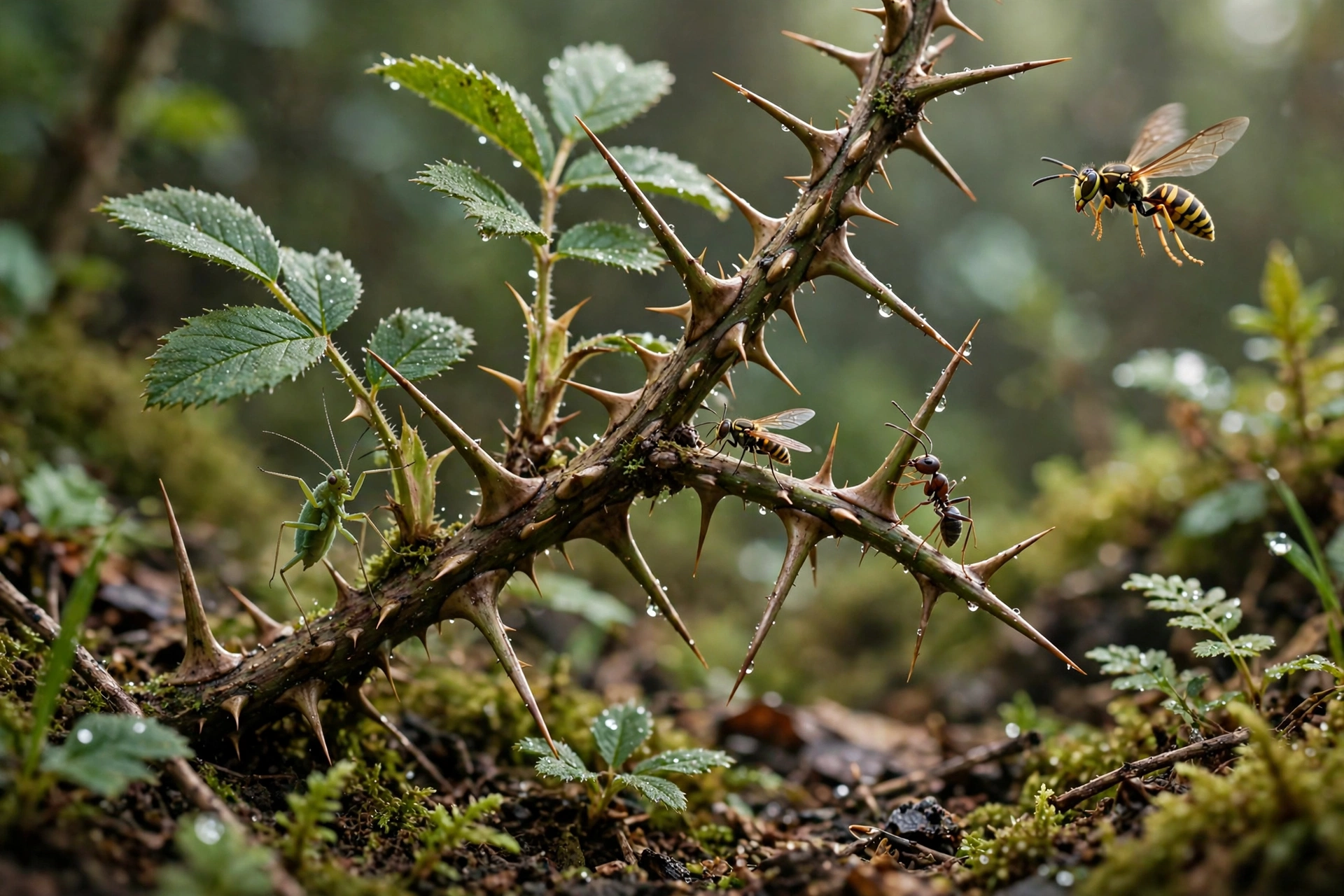
Introduction: Plants Are Not Helpless
Plants cannot run away from insects, fungi, or grazing animals, so they have evolved a wide range of defences. Some are physical, such as thorns, hairs, and tough leaves. Some are chemical, such as bitter or toxic compounds. Some are active responses, triggered when a plant detects damage or infection. Understanding these defences helps gardeners support plants, rather than fighting pests with chemicals alone.
This guide explains how plant defences work, what signs to look for, and how to help plants stay resilient through good growing conditions, diversity, and careful observation.
Physical Defences: Thorns, Hairs, and Tough Leaves
The first line of defence is often structural. Thorns, spines, and prickles deter grazing animals and make it harder for insects to feed. Roses have prickles, cacti have spines, and hollies have spiny leaf edges. These are not just decoration; they are protection.
Induced Defences: Plants That Fight Back After Attack
Many plant defences switch on only after damage, which saves energy when no pest is around. When a caterpillar chews a leaf, the wound triggers jasmonic acid, a hormone that signals the plant to produce bitter or toxic compounds in nearby leaves within hours. Some plants go further: they release volatile chemicals into the air that attract parasitic wasps, which lay their eggs in the caterpillars, and these same airborne signals can warn neighbouring plants, prompting them to raise their own defences before the pest arrives.
Plants also reward their bodyguards directly. Some species have extrafloral nectaries, small glands on leaves or stems that produce nectar for ants, and the ants in return patrol the plant and attack caterpillars and other herbivores. After surviving an infection, many plants develop systemic acquired resistance, a whole-plant alertness that makes them faster to respond to the next attack, much like an immune memory. These responses are powerful, but they cost energy, which is why a plant under constant attack often grows more slowly.
Chemical Defences: Bitter, Toxic, and Smelly
The Plant Immune System
Plants also have a form of memory called systemic acquired resistance. After one infection, a plant may become more resistant to later infections throughout the whole plant, for a period of time. This is one reason why healthy, well-grown plants often recover better from a first attack than stressed plants do.
How Gardeners Can Support Plant Defences: Step by Step
1. Identify the plant and the problem. Use the Plant Disease Identifier on aitreeidentier.site to photograph symptoms and get a starting point, then confirm with a local guide or expert before treating. 2. Give the plant the right conditions. A plant in the right light, soil, and water is more resilient. Stressed plants are more vulnerable to pests and disease. 3. Space plants for airflow. Good airflow reduces humidity around leaves and makes fungal disease less likely. Avoid overcrowding, and prune to open the centre of shrubs. 4. Water at the base, in the morning. Wet leaves encourage fungal disease. Water soil, not foliage, and allow leaves to dry during the day. 5. Encourage beneficial insects. Ladybirds, lacewings, hoverflies, and parasitic wasps eat aphids and other pests. Plant nectar-rich flowers, leave some wild areas, and avoid broad-spectrum insecticides. 6. Practice crop rotation and diversity. Do not grow the same family in the same spot year after year. Mix species, and include companion plants that support beneficial insects. 7. Remove and dispose of diseased material. Remove badly infected leaves or plants, and do not compost diseased material in a cold compost heap. Clean tools between plants when disease is present. 8. Use chemicals only as a last resort. If you use a treatment, choose the most targeted, least harmful option, follow the label exactly, and avoid spraying open flowers or when pollinators are active.
Common Mistakes
Spraying first, asking later. Many leaf spots and insect visits are minor and do not need treatment. Identify the problem first, and check whether it is actually harming the plant.
Overwatering and overfeeding. Soft, lush growth from excess nitrogen is more attractive to aphids and more vulnerable to disease. Feed moderately and water at the roots.
Planting the same crop in the same place. Soil-borne pests and diseases build up when the same family returns to the same bed each year. Rotate crops and rest beds.
Removing all insects. Not all insects are pests. Many are beneficial, neutral, or food for birds. Learn to recognise the main beneficial insects before spraying.
Ignoring early signs. Small spots, wilting, or a few aphids are easier to manage than a widespread infection. Check plants regularly, especially in warm, humid weather.
Working With Defences Instead of Against Them
The most useful thing a gardener can do is tolerate a little damage. A few chewed leaves rarely harm a healthy plant, and they feed the predators that keep pests in check. Spraying at the first sign of insects often kills the predators too, and because pests reproduce faster than their enemies, the problem can return worse than before. A better rule is to act only when damage threatens the harvest or the plant's health.
Feeding matters as well. Heavy doses of nitrogen fertiliser produce soft, lush growth that is easy for aphids and caterpillars to eat, while plants fed steadily with compost tend to grow tougher leaves with stronger chemical defences. Diversity helps too: mixed planting confuses pests searching for their host, and flowering herbs such as dill, fennel, and yarrow attract hoverflies and ladybirds. In short, a garden that supports the plant's own defences needs far less intervention than one that fights its battles for it.
Frequently Asked Questions
Can a plant recover after insect damage?
Often, yes, if the roots and growing tips are healthy and the damage is not too severe. Plants can regrow leaves, and many tolerate moderate defoliation. Severe or repeated damage, or damage to roots, is harder to recover from.
Are plant chemicals dangerous to people?
Some plant defence chemicals are toxic or irritant to people, which is why accurate identification matters. Never eat a plant based on AI identification alone, and wash hands after handling plants with sap, thorns, or stinging hairs.
Do companion plants really repel pests?
Some companion plants can help by attracting beneficial insects, masking scent, or improving soil, but effects are modest and variable. Companion planting works best as part of a diverse, healthy garden, not as a guaranteed pest cure.
Why do pests attack one plant and ignore the one next to it?
Individual plants differ in chemistry, vigour, and stress. A stressed or overfed plant often has softer growth and weaker defences, making it an easier target. Genetics plays a role too: some varieties of the same species are naturally more resistant, which is why choosing resistant varieties is one of the most effective defences of all.
Can plants warn each other about pests?
Yes, in a limited way. Damaged plants release volatile chemicals that neighbouring plants can detect, and experiments show those neighbours then raise their own defences. The effect is real but modest and short-range, so it is no substitute for good garden hygiene, but it is one more reason mixed, closely planted beds can be more resilient than isolated specimens.
Conclusion
Plants defend themselves with thorns, hairs, tough leaves, bitter chemicals, antimicrobial compounds, and an immune system that can learn from attack. As gardeners, our job is not to replace those defences with chemicals, but to support them: give plants the right conditions, space them well, encourage beneficial insects, rotate crops, and act early when problems appear. Identify the plant and the problem, observe regularly, and choose the gentlest effective response. A resilient garden is a diverse garden, where plants, insects, microbes, and soil life work together, and where a little damage is normal, not a crisis.
Try it: Try the free Tree Researcher on aitreeidentier.site — identify a tree from a photo and learn more about the science behind it.
Safety disclaimer: Never eat or use a plant based on AI identification alone. Some plants and their defence chemicals can be toxic or irritant. Consult a local expert before using any plant for food or medicine, wear gloves when handling thorny or irritant plants, and follow label instructions carefully if you use any garden treatment.