
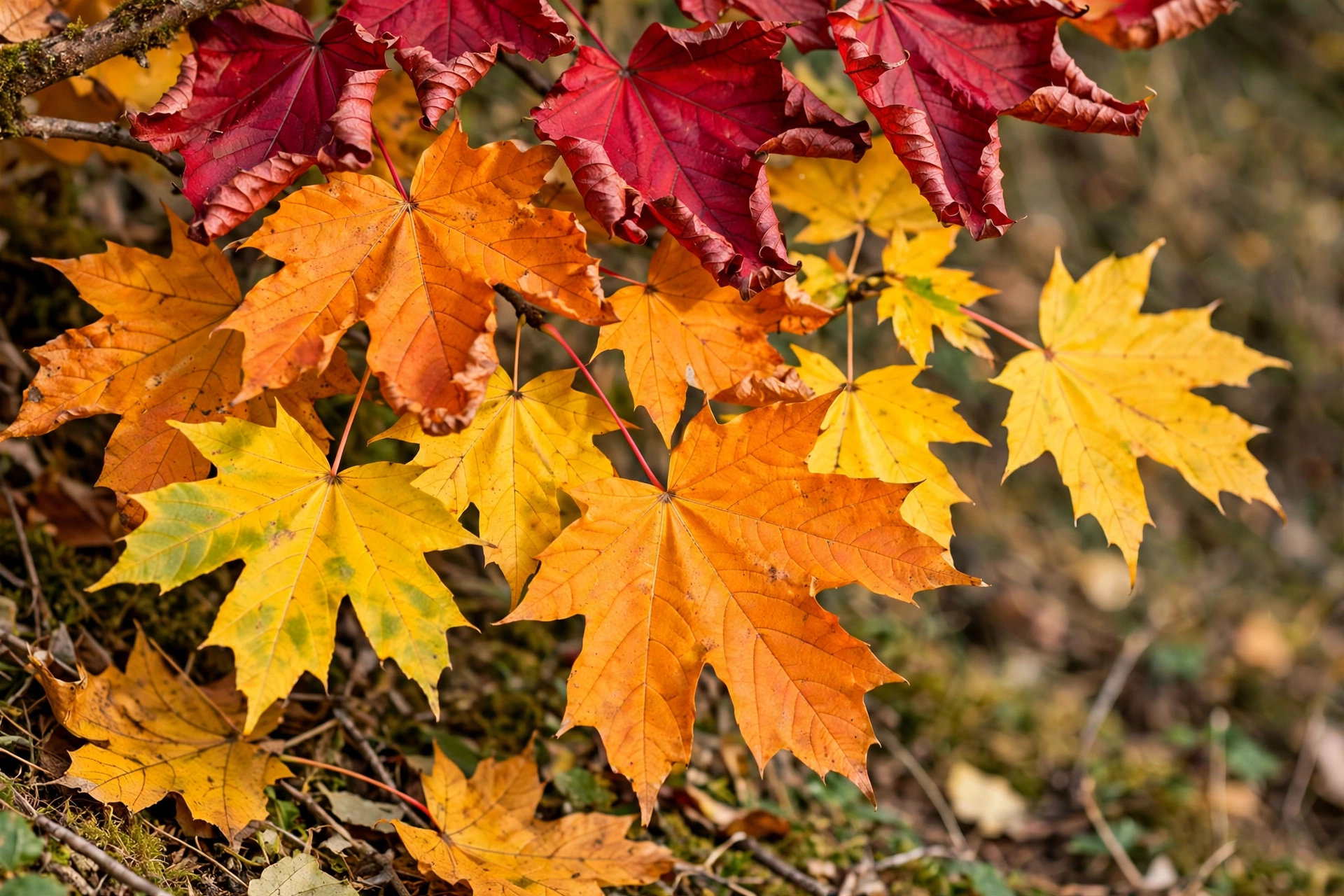
Introduction: Autumn's Colour Show
Every autumn, green hillsides turn gold, orange, and red, in one of nature's most familiar spectacles. The change seems sudden, but it is a careful, seasonal process. As days shorten and temperatures fall, trees prepare for winter by withdrawing nutrients from leaves, breaking down chlorophyll, and revealing or creating other pigments.
This guide explains why leaves change colour, what makes each colour, why some years are more vivid than others, and how to enjoy and predict fall foliage in your area.
Why Leaves Are Green in Summer
In spring and summer, leaves are green because they are full of chlorophyll, the pigment that captures sunlight for photosynthesis. Chlorophyll is constantly being made and broken down, but in the growing season, production keeps up, and green dominates.
The Abscission Zone: How Trees Let Go of Leaves
Before a leaf falls, the tree builds a special weak point at the base of the leaf stalk, called the abscission zone. Over several weeks, cells in this zone change: their walls weaken, and a corky layer forms on the twig side to seal the wound. Two plant hormones control the process. Auxin, produced by a healthy green leaf, keeps the abscission zone inactive. As autumn days shorten and the leaf ages, auxin production drops and ethylene rises, which switches the zone on. Once the connection is weak enough, a gust of wind or the leaf's own weight finishes the job, and the leaf drops, leaving a neat leaf scar behind.
This is also why trees withdraw nutrients first. Nitrogen, phosphorus, and magnesium are pulled back into the twigs and trunk before the leaf is shed, to be reused for next spring's growth. A tree that drops its leaves early, before this salvage is complete, loses valuable resources, which is one reason drought-stressed trees often look weaker the following year. Evergreens take a different approach: they keep each needle for several years, shedding only a fraction of their foliage at a time, so they never face the cost of replacing a whole canopy at once.
What Triggers the Autumn Change?
The main trigger is day length. As nights lengthen in late summer and autumn, trees sense the change through a pigment called phytochrome and begin to prepare for winter. Temperature, especially cool nights, and reduced water also play a role, but day length is the most reliable signal, because it does not vary from year to year as weather does.
What Makes Yellow, Orange, Red, and Brown?
Yellow and Orange: Carotenoids
Red and Purple: Anthocyanins
Brown: Tannins
Why Some Trees Stay Green
Why Some Years Are More Vivid Than Others
Fall colour varies from year to year, and from place to place. The best displays usually follow a warm, sunny late summer and early autumn, with cool nights, adequate rain during the growing season, and no early hard frost or strong wind.
This is why fall foliage forecasts are estimates, not guarantees. The same tree can look spectacular one year and muted the next, depending on weather.
How to Enjoy and Photograph Fall Foliage: Step by Step
1. Identify the tree. Use the Leaf Identifier on aitreeidentier.site to learn the species and its typical autumn colour, so you know what to expect. 2. Watch day length and temperature. Colour usually begins when nights become cool and days shorten. Note the date each year to build a local pattern. 3. Visit at the right time of day. Morning and late afternoon light makes reds and oranges glow. Overcast light can also be good, as it reduces harsh shadows. 4. Look for variety. A mix of species gives a mix of colours. Maples for red, birches for yellow, oaks for russet, and evergreens for contrast make a richer scene. 5. Photograph leaves against the sky or a dark background. This helps colours stand out. Include a whole tree for scale, and a close-up for leaf detail. 6. Leave fallen leaves where you can. Fallen leaves protect soil, feed microbes, and provide shelter for insects and other wildlife over winter. 7. Do not pick leaves from protected trees. Photograph them in place, and collect only fallen leaves where it is allowed.
Common Mistakes
Assuming colour means the tree is dying. Autumn colour is a normal, healthy preparation for winter in deciduous trees. It is not a sign of disease unless it happens very early in summer or is accompanied by dieback.
Expecting the same colour every year. Weather changes the intensity and timing. A dull year does not mean the tree is unhealthy.
Confusing early colour with autumn. Leaves that turn yellow or red in midsummer often signal stress, such as drought, root damage, or disease, not autumn. Check the season and the whole tree.
Raking every leaf away. Removing all leaves removes nutrients and habitat. Leave some in beds and under trees, or compost them and return them to the soil.
Planting for autumn colour in the wrong climate. Some species need cool nights to produce reds. In a warm climate, the same species may turn yellow or drop leaves without vivid colour.
Reading Foliage Like a Naturalist
Autumn colour can tell you more than which tree is which. A tree that turns colour weeks earlier than others of its species is often stressed, by drought, root damage, or disease, and is shutting down early to protect itself. A tree whose leaves turn brown and hang on through winter, a habit called marcescence, is often a young oak or beech; scientists think the lingering leaves may protect buds from browsing animals or return nutrients slowly as they decay in spring.
Colour also follows a rough sequence in most temperate regions: early-turning species such as ash and birch colour first, maples and sweetgums peak in the middle of the season, and oaks often finish last with russet and bronze tones. Keeping a simple foliage journal, noting the date each species near you starts to turn and peaks, builds a personal record that makes each autumn easier to predict and more rewarding to watch. Over years, it also reveals how the timing shifts with warmer or cooler seasons.
Frequently Asked Questions
Why do leaves fall off in autumn?
Leaves fall to avoid water loss and freeze damage in winter, when roots cannot absorb water from frozen soil and leaves would lose more water than they could replace. Shedding leaves is a survival strategy.
Can I predict peak fall foliage?
You can estimate it from local records, species, and weather, but exact peak timing varies by a week or more. Follow local foliage reports and visit regularly during the season.
Are autumn leaves good for the garden?
Yes. Shredded or composted leaves make excellent mulch and compost, returning nutrients to the soil. Leave some whole leaves in beds as habitat, and compost the rest.
Why do some leaves turn colour while others on the same tree stay green?
Leaves on the sunny, outer branches of a tree usually change first, because they receive more light and cooler night air, which speeds chlorophyll breakdown and anthocyanin production. Shaded inner leaves stay green longer, and leaves on the same branch can differ by days, so a single tree often shows a patchwork of colour.
Do autumn leaves change colour at the same time every year?
No. Day length sets the broad schedule, but weather decides the details. A warm, wet autumn delays colour, while cool nights and sunny days bring it forward. In most regions, peak colour shifts by a week or more from year to year, which is why local foliage reports are more useful than calendar dates.
Conclusion
Autumn colour is the visible result of a tree preparing for winter: chlorophyll breaks down, carotenoids are revealed, anthocyanins are made in response to light and cool nights, and nutrients are withdrawn before leaves fall. Weather, species, and place decide how vivid the display will be, which is why no two autumns are quite the same. Learn to identify your local trees, watch the season change, and enjoy the show while it lasts. When the leaves fall, they are not waste; they are the tree's way of surviving winter and feeding the soil for spring.
Try it: Try the free Tree Researcher on aitreeidentier.site — identify a tree from a photo and learn more about the science behind it.
Safety note: This guide is for general learning only. Never eat or use a plant based on AI identification alone, and consult a local expert before using any plant for food or medicine.