
Try it: Try the free Wood Identifier on aitreeidentier.site — identify the wood you are cutting first, so you know what you are working with before you start the saw.
A chainsaw is one of the most useful tools in the garden, and one of the most dangerous. It can clear a fallen branch and cut firewood in minutes, but it can cause a serious injury in a single second if used carelessly. Most chainsaw accidents happen to beginners, and most are preventable.
Before you pick up a chainsaw, it helps to understand what makes it different from other garden tools. A chainsaw does not just cut — it pulls, kicks, and throws material, and it keeps cutting as long as the chain is moving. That power is why it clears a fallen branch so quickly, and why a moment of inattention can cause a serious injury. The habits in this guide are designed to become automatic, so they protect you even when you are tired or in a hurry.
Chainsaw safety for beginners is about building a few solid habits before you pull the starter cord: wearing the right gear, checking the saw, planning each cut, and knowing when a job is too big for you.
Gear Up and Check the Saw
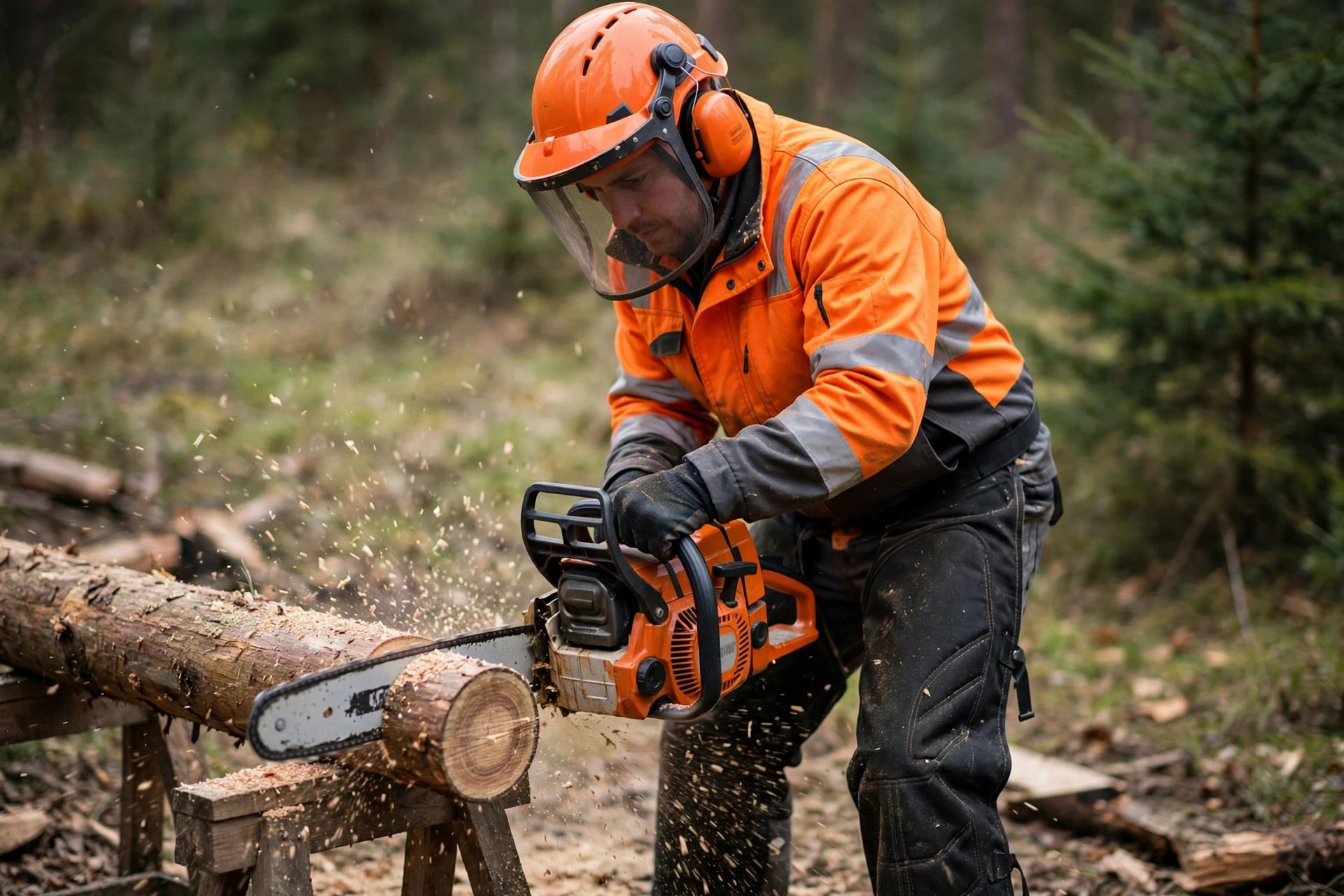
Never start a chainsaw without protective equipment. Wear a helmet with a visor and ear defenders, chainsaw-protective trousers or chaps, sturdy boots with a good grip, and gloves that still let you hold the saw firmly.
Check the saw before every session. Make sure the chain is sharp, correctly tensioned, and well oiled, and that the chain brake works. A loose chain can jump off the bar, and a dull chain forces you to push harder, increasing the risk of kickback.
Understand Kickback
Kickback is the sudden, violent upward movement of the saw when the tip of the guide bar touches wood, or when the chain is pinched in a cut. It is the most common cause of chainsaw injuries, and it happens faster than you can react.
How to reduce kickback risk
Keep both hands on the saw at all times, thumbs wrapped around the grips. Stand to the side of the cutting line, never directly behind the saw. Avoid cutting with the tip of the bar, and never let the tip touch another branch, a log, or the ground. Test the chain brake before you start, and let the chain do the work rather than forcing it.
Plan Every Cut Before You Make It
A safe cut starts before the saw is running. Work out where the wood will move when it is cut: a branch can spring back, a log can roll, and a trunk under tension can pinch the bar.
Step 1: Clear the area
Remove trip hazards and loose branches, and make sure no one else — especially children and pets — is within twice the length of the branch you are cutting. Keep a clear escape route behind you.
Step 2: Identify the wood
Know what you are cutting. Different woods behave differently, and some are rotten inside even when the bark looks sound. If you are unsure, the free Wood Identifier on aitreeidentier.site can help you identify it from a photo. Never cut wood that might be treated, painted, or full of nails.
Step 3: Start the saw safely
Place the saw on flat, clear ground, engage the chain brake, and start it on the ground or held firmly between your knees. Release the brake only when you are ready to cut, with both feet planted firmly.
Step 4: Cut with control
Hold the saw close to your body and cut at full throttle with steady, even pressure. Never cut above shoulder height, and never cut with one hand. If the saw binds, switch it off and free the bar with a wedge.
When to Stop and Call a Professional
Some jobs are not beginner jobs. Call a qualified tree surgeon if the tree is large, leaning, or hung up in another tree, if branches are tangled under tension, or if the tree is near a building, a road, or overhead power lines. Never cut near power lines yourself — electricity can arc across a gap, and contact can be fatal.
Stop work if you feel tired or unwell, if the light is fading, or if the weather turns wet or windy. Fatigue and poor visibility cause many accidents. A job can always wait until tomorrow.
Common Mistakes Beginners Make
- Skipping protective gear. A helmet, visor, ear defenders, and chainsaw trousers are your first line of defence.
- Cutting with one hand. You have no control if the saw kicks back.
- Using a dull or loose chain. A dull chain makes you push harder, and a loose chain can come off the bar.
- Cutting above shoulder height. You lose control, and the saw is closer to your face.
- Cutting with the tip of the bar. This is the fastest way to trigger a kickback.
- Working alone on a risky job. Tell someone where you are, and keep a phone within reach.
Choosing Your First Chainsaw and Keeping It Sharp
A smaller, lighter saw is the right choice for most beginners. A short bar — the part that guides the chain — is easier to control, and a lighter saw is less tiring, which matters because tired arms make mistakes. Battery saws are quieter and easier to start than petrol saws, and they are a good choice for small garden jobs, while a petrol saw suits larger, regular work. Buy from a dealer who will show you how to start, tension, and maintain the saw, rather than from a seller who cannot.
A sharp chain is a safety feature, not just a convenience. A dull chain forces you to push harder, which increases the risk of kickback and loss of control, and it produces fine dust instead of clean chips. Learn how to check chain tension — the chain should be snug against the bar but still move freely by hand when the saw is off — and how to recognise when the chain needs sharpening. Keep the bar oil topped up, clean the air filter as the manual directs, and store the saw with its bar cover on, out of reach of children.
Practising Safely: First Cuts and Building Confidence
Your first cuts should be small, low, and stable — a log on the ground, held firmly, with no one standing nearby. Practise starting the saw, letting it reach full speed before it touches wood, and letting the chain do the work without forcing it. Stand to the side of the cut, keep both hands on the saw, and stop the chain before you move to the next log. If the saw feels heavy, the log moves, or the cut binds, stop and rethink the setup instead of pushing through.
Build up slowly over several sessions rather than tackling a large job on your first day. Each session, check your gear, check the saw, and plan your cuts before you start. Consider a short training course: a day with an instructor teaches you more about safe cutting, felling, and kickback than weeks of trial and error, and it is the best investment a beginner can make. Confidence should come from practice and training, not from taking on a job that is too big.
FAQ
Do I need chainsaw-protective trousers for a small job?
Yes. Most serious chainsaw injuries are to the legs, and they can happen during a quick cut.
How do I know if my chain is too dull?
A sharp chain makes clean chips and pulls itself into the wood. A dull chain makes fine dust and needs pushing.
Is it safe to cut a leaning tree?
No, not for a beginner. A leaning tree is under tension and can fall unexpectedly. Leave it to a professional.
How often should I sharpen a chainsaw chain? It depends on use, but a chain that produces fine dust instead of chips, needs pushing to cut, or pulls to one side is dull and should be sharpened. Many beginners have a spare chain so they can swap a dull one and sharpen it later, away from the job.
Conclusion
Chainsaw safety for beginners comes down to a few habits: wear the right gear, check the saw, understand kickback, plan every cut, and know your limits. Start with small jobs on the ground, work slowly, and stop the moment something feels wrong.
Safety disclaimer: This article is guidance only and does not replace professional training. For large, leaning, or storm-damaged trees, trees near power lines, or if you are injured, call a qualified professional or emergency services. Never eat or use any plant based on AI identification alone.