
Fire blight is one of the most feared diseases of apple and pear trees, and with good reason. It moves fast, it can kill blossom, shoots, and whole branches in a single season, and in a bad year it can threaten a young tree entirely. The good news is that early action makes a real difference, and most gardeners can manage it with careful pruning and good hygiene.
The disease is caused by a bacterium that attacks trees in the rose family, especially apples, pears, quince, hawthorn, and rowan. It is most active in warm, wet weather during flowering and shoot growth.
How to Recognise Fire Blight
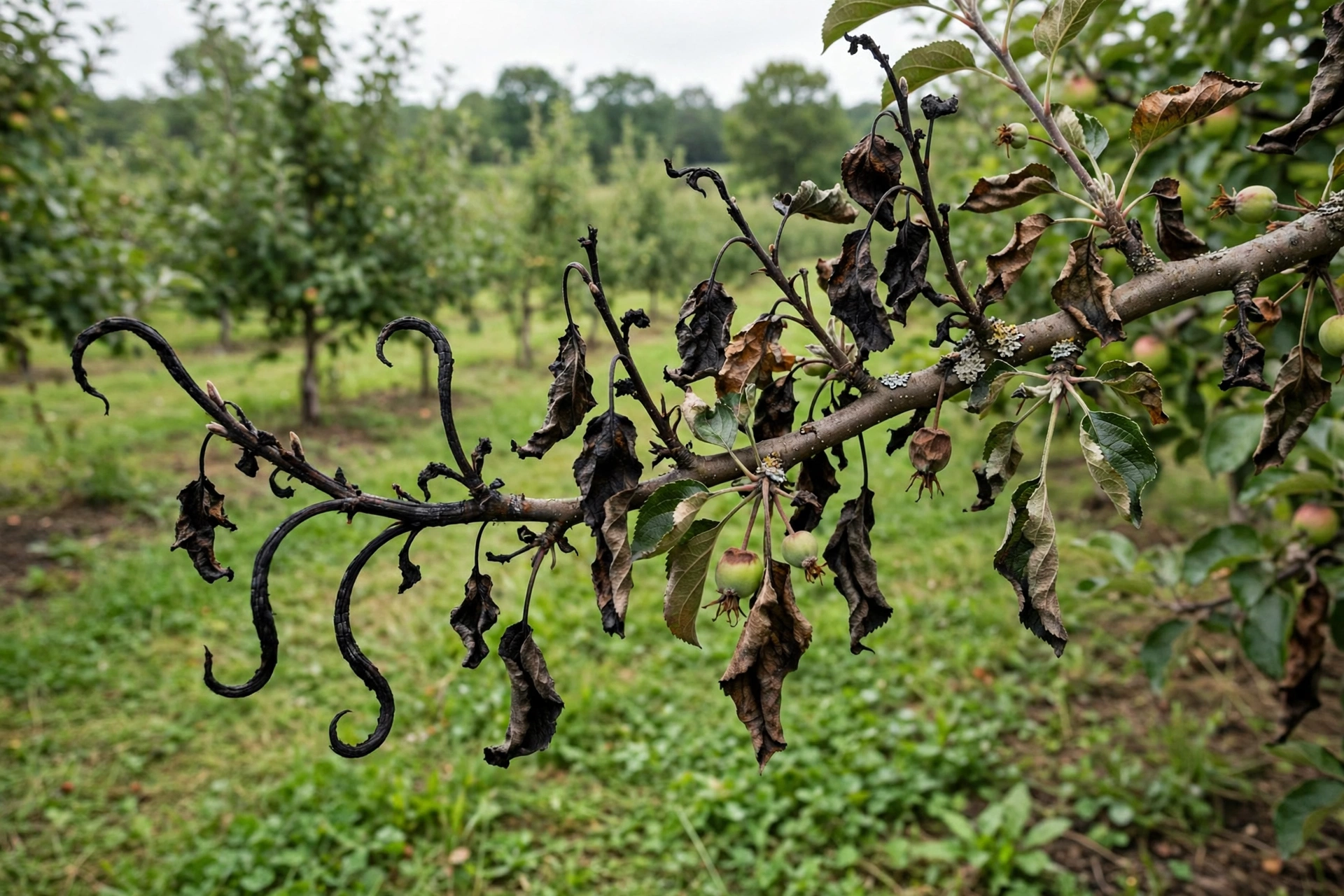
The first sign is often in the blossom. Flowers wilt, turn brown or black, and stay attached to the branch instead of falling. Soon after, the tips of young shoots bend over into a distinctive hooked shape, like a shepherd's crook, and the leaves along the shoot blacken as if scorched by fire. That scorched look is what gives the disease its name.
As the infection spreads down a branch, the bark may darken and sink slightly, and the wood beneath turns reddish-brown. In wet weather, you may see droplets of amber or milky ooze on the bark. Affected leaves and fruit shrivel and cling to the tree, and cankers can form where the infection reaches larger branches. If you see several of these signs together on an apple or pear tree, act quickly.
Which Trees Are Most at Risk
Pears are generally more vulnerable than apples, and young, fast-growing trees suffer most because their soft new shoots are easy for the bacterium to enter. Vigorous varieties and trees that have been heavily fertilised are also at greater risk, since lush growth is more inviting to infection.
The disease is worst in warm, humid weather, especially when rain or heavy dew follows flowering. Bees and other insects can carry the bacteria from flower to flower, and rain splash spreads it further.
How Fire Blight Spreads
Fire blight bacteria survive winter in cankers on branches and trunks. In spring, when the weather warms, the bacteria become active and ooze from these cankers. Insects, rain, and wind carry them to open blossom, where they enter through the flowers and move down into the shoots.
Step-by-Step: What to Do When You Find Fire Blight
Step 1: Confirm the symptoms
Photograph the blackened shoots, wilted blossom, and any ooze, and note which branches are affected. Fire blight is distinctive, but frost damage and other wilts can look similar, so compare carefully and consider using an identification tool to check your photos.
Step 2: Prune out infected wood promptly
Cut the affected shoot back to healthy wood, at least 30 centimetres below the last visible sign of infection. Make the cut in dry weather if you can, and avoid pruning when the tree is wet, because moisture helps the bacteria spread.
Step 3: Disinfect tools and dispose of prunings safely
Dip or wipe your secateurs or saw in disinfectant between cuts, and again before moving to another tree. This single habit is one of the most effective ways to stop fire blight spreading through your own pruning. Bag the pruned branches and dispose of them with garden waste; do not compost infected wood or leave it under the tree.
Step 4: Reduce stress and monitor through the season
Do not feed an infected tree heavily, since fertiliser encourages the soft, fast growth that fire blight loves. Water at the base during dry spells and avoid overhead watering that wets the blossom and shoots.
Preventing Fire Blight Next Year
Start with the variety. When planting new apple or pear trees, choose varieties known to resist fire blight if they suit your area, and give each tree plenty of space and sun. Prune in late winter while the tree is dormant, removing any cankers you find, and shape the tree for good airflow.
Common Mistakes Beginners Make
- Waiting to see if it gets better. Fire blight spreads fast in warm weather, so a shoot left for a week can infect a whole branch.
- Pruning too close to the damage. Cutting just above the blackened area leaves infected tissue behind, so always cut well into healthy wood.
- Skipping tool disinfection. Unclean tools are one of the easiest ways to spread the bacteria to healthy branches and other trees.
- Composting infected prunings. Home compost does not reliably kill the bacteria, so bagged disposal is safer.
Fire Blight and Pollinators: A Difficult Balance
Fire blight spreads partly through pollinators, which creates a difficult balance for fruit growers: bees are essential for a good fruit set, yet they can carry the bacteria from flower to flower. You do not need to keep bees away — that would cost you your crop — but you can reduce the risk. Avoid planting highly susceptible varieties next to each other, prune out cankers in winter before blossom, and do not over-fertilise, because the lush, fast-growing shoots that follow heavy feeding are the most inviting to infection. If fire blight has been a problem in your area, watch the blossom closely in warm, wet weather, and prune out any wilted blossom clusters promptly, disinfecting your tools between cuts. Some growers use a protective spray at blossom time where it is permitted locally, but always check the label and local rules, and never spray open blossom while bees are actively foraging unless the product is specifically approved for that use.
After Fire Blight: Rebuilding a Damaged Tree
A tree that has lost branches to fire blight needs time and gentle care, not heavy feeding. In the first year after an outbreak, the priority is to stop the disease: prune out all infected wood in dry weather, cutting well into healthy tissue, disinfect tools between cuts, and dispose of prunings safely. Do not fertilise heavily, because that encourages the soft growth the bacteria love. Water at the base during dry spells, mulch the root zone, and let the tree rebuild its canopy slowly. New shoots will appear below the pruning cuts, and you can shape them in winter to restore a balanced shape. A young tree that has lost a large part of its canopy may take two or three years to fruit well again, but most garden trees recover fully if the trunk and main branches are sound. If the infection has reached the trunk, or the tree fails to leaf out in spring, call an arborist — the tree may need more extensive work, or it may be safer to replace it with a resistant variety.
FAQ
Can fire blight kill a whole apple or pear tree?
Yes, it can, especially a young tree or one where the infection reaches the trunk. That is why early pruning and regular monitoring matter so much.
Is fire blight dangerous to people or pets?
No. The bacterium only affects plants in the rose family. Still, wash your hands after handling infected material and keep prunings away from other fruit trees.
Can I eat fruit from a tree with fire blight?
Fruit on healthy branches is generally fine, but do not eat shrivelled, blackened, or damaged fruit.
Should I tell my neighbours if I find fire blight? Yes, if they grow apples, pears, or other susceptible trees nearby. Fire blight spreads by insects, rain, and wind, so a neighbour's early warning can help them check their own trees and act before the disease spreads further.
Can fire blight be reported to plant health authorities? In some regions, fire blight is a notifiable disease or is monitored by plant health services, especially in commercial orchards. Check your local rules: reporting helps track outbreaks and protect other growers.
Conclusion
Fire blight is fast and frightening, but it is not unbeatable. Learn the scorched shoots, hooked tips, and wilted blossom, prune well into healthy wood, disinfect your tools between cuts, and dispose of infected material safely. With prompt action, most garden trees survive and keep fruiting for years.
Try it: Try the free Plant Disease Identifier on aitreeidentier.site — upload a clear photo of the blackened shoots or blossom for instant guidance.
Safety disclaimer: Never eat or use any part of a tree, or treat a disease, based on AI identification alone. AI results are guidance only — consult a local arborist or plant expert before applying treatments, especially near people, pets, food crops, or waterways.