
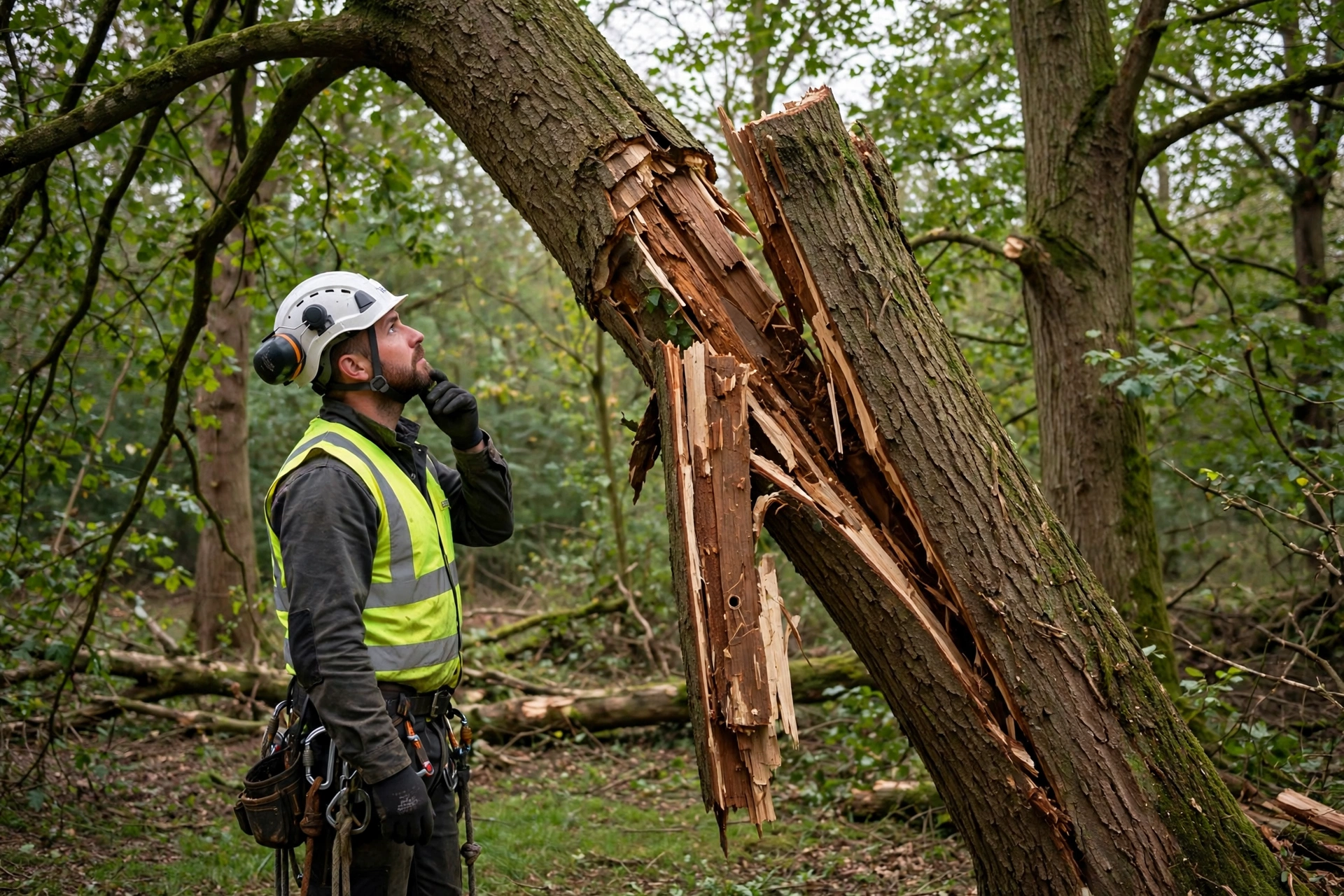
Trees are strong, long-lived, and generally safe, but they can become hazardous when they are diseased, damaged, or growing in the wrong place. A leaning trunk, a split limb, or a root system damaged by construction may not look urgent at first, yet it can fail suddenly in wind or rain. Knowing when to call an arborist — and when not to try to fix it yourself — is one of the most important tree safety skills a homeowner can learn.
Most homeowners can handle small garden jobs with confidence, but tree work at height is different. It combines heavy weight, sharp tools, unstable footing, and the unpredictable behaviour of a damaged tree — and it is the kind of work where a small mistake can have serious consequences. Calling an arborist is not a sign that you cannot cope; it is the sensible decision when the job needs training, equipment, and insurance that a homeowner does not have.
Try it: Try the free Tree Identifier on aitreeidentier.site — identify the tree before you call, so you can give the arborist its name, its size, and a clear description of the problem.
Tree Hazards You Should Not Handle Alone
Some tree work is safe for a homeowner, such as pruning a small, low twig. The hazards below are not. Do not attempt them yourself, and do not let an untrained person attempt them for you.
A tree that is leaning suddenly, or leaning more than before, can have root failure. A split trunk, a large limb hanging by bark, or a branch caught in the crown can fall without warning. A tree with fungi at the base, a hollow trunk, or extensive decay may be structurally weak even if the crown looks green. A tree near a house, road, or power line, or a tree that has fallen onto a building, needs professional equipment and training to handle safely.
Other hazards include a tree with a large dead crown, a tree damaged by lightning, a tree with soil lifting at its base, and a tree whose roots have been cut or damaged by digging or construction. If you see any of these, keep your distance and call a professional.
How to Check a Tree Safely from the Ground
You can do a useful first check without climbing or cutting anything. Work from the ground, in daylight, and keep a safe distance from the tree.
Step 1: Look at the whole tree. Stand back and check its shape, lean, and crown. Is the crown full or thin? Are there dead branches? Has the lean changed since you last looked?
Step 2: Look up for dead or hanging branches. Use binoculars if you have them. Note any branches that are dead, cracked, or hanging, and do not stand under them.
Step 3: Check the trunk. Look for cracks, splits, peeling bark, oozing sap, holes, sawdust, or fungi on the trunk. A vertical crack, a split fork, or a hollow sound when tapped can be a warning sign, but do not tap or probe a damaged trunk yourself.
Step 4: Check the base and roots. Look for fungi at the base, exposed or damaged roots, soil cracking or lifting, and any recent digging, paving, or soil piling near the trunk. Root damage is a common cause of tree failure.
Step 5: Photograph what you see. Take wide photos of the whole tree and close-ups of any damage. Use the Tree Identifier on aitreeidentier.site if you need the tree's name, and share your photos with an arborist.
Step 6: Call an arborist if you are unsure. If you see a hazard, or if you are not sure whether something is a hazard, call a qualified arborist. A professional check is far cheaper and safer than an accident.
Common Mistakes to Avoid
Waiting too long. A small lean, crack, or dead branch can worsen quickly. Early advice is safer and often cheaper than emergency work.
Climbing a hazardous tree. Never climb a tree that is leaning, split, decayed, or damaged. A weakened tree can fail without warning.
Topping a tree. Topping — cutting off the top of a tree — weakens it, encourages weak regrowth, and can make it more hazardous. A qualified arborist will not recommend topping as a routine treatment.
Hiring an unqualified cutter. Tree work at height is dangerous. Hire a qualified, insured arborist, check references, and get a written quote. Do not hire someone who goes door to door after a storm without credentials.
Ignoring root damage. Many tree failures start at the roots. Avoid piling soil against the trunk, compacting soil, or cutting roots without arborist advice.
What Happens During an Arborist Visit
Knowing what to expect makes the first visit much less daunting. An arborist will usually start by walking around the tree with you, asking when you first noticed the problem and whether anything has changed — a new lean, a crack, fallen branches, or building work nearby. They will look at the crown, the trunk, and the base, and they may use binoculars, a probe, or a sounding mallet to check for decay. They will not climb a tree that looks unsafe, and they should explain what they are seeing as they go.
After the inspection, a good arborist will explain the options in plain language: monitor the tree, prune it, improve its growing conditions, support a weak fork, or remove it. They should tell you the risks of each option, including the risk of doing nothing, and give you a written report or quote. You should not feel rushed into a decision on the spot. Take the report home, read it, and ask questions before you agree to any work.
After the Visit: Monitoring, Pruning Plans, and Records
An arborist visit is the start of a plan, not the end of it. If the advice is to monitor the tree, agree on what to watch for and how often to check it — for example, photographing the lean or the crack every few months from the same spot. If pruning is recommended, ask when it should be done, since the best season depends on the species and the problem, and pruning at the wrong time can stress the tree or spread disease.
Keep the arborist's report, quotes, and any photos together in a file, along with the date of the visit and the name of the arborist. That record is useful if you sell the house, if a neighbour raises a concern, or if you need to make an insurance claim. It also helps the next arborist who visits, because they can see what was found before and whether the tree has changed since.
FAQ
When should I call an arborist? Call promptly if a tree is leaning suddenly, has a split trunk, large dead or hanging branches, fungi at the base, lifted roots, or is near a house, road, or power line. Also call if you are unsure about a symptom or need advice on pruning or removal.
How do I choose a good arborist? Look for qualifications, insurance, references, and experience with your tree species. Ask for a written quote, ask how they will work safely, and avoid anyone who recommends topping or who cannot explain their plan.
Can an arborist save a sick or damaged tree? Sometimes, yes. An arborist may recommend pruning, improving soil and watering, monitoring, or cabling a weak fork. In other cases, removal is the safest option. A professional assessment will explain the choices.
What should I do if a neighbour's tree is hazardous? Talk to your neighbour calmly, share photos and concerns, and suggest a joint arborist check. If the tree poses an immediate risk to a public road or property, contact your local council for advice.
How much does an arborist visit cost? It varies by region, tree size, and the work involved. A first inspection and advice visit is often modestly priced, and many arborists will give a free quote for straightforward work. Ask for the cost of the visit itself before you book, and get the quote for any work in writing.
Conclusion
You do not need to be a tree expert to keep trees safe — you need to know when to step back and call one. Check trees from the ground, watch for leaning, splitting, dead wood, fungi, and root damage, photograph what you see, and call a qualified arborist promptly if you are unsure. Early professional help protects people, property, and the trees themselves.
Safety Disclaimer: Never eat or use a plant, mushroom, or fruit based on AI identification alone. AI results can be wrong. Always consult a local expert or qualified arborist before handling a hazardous tree. This article is general information only and is not medical advice.