
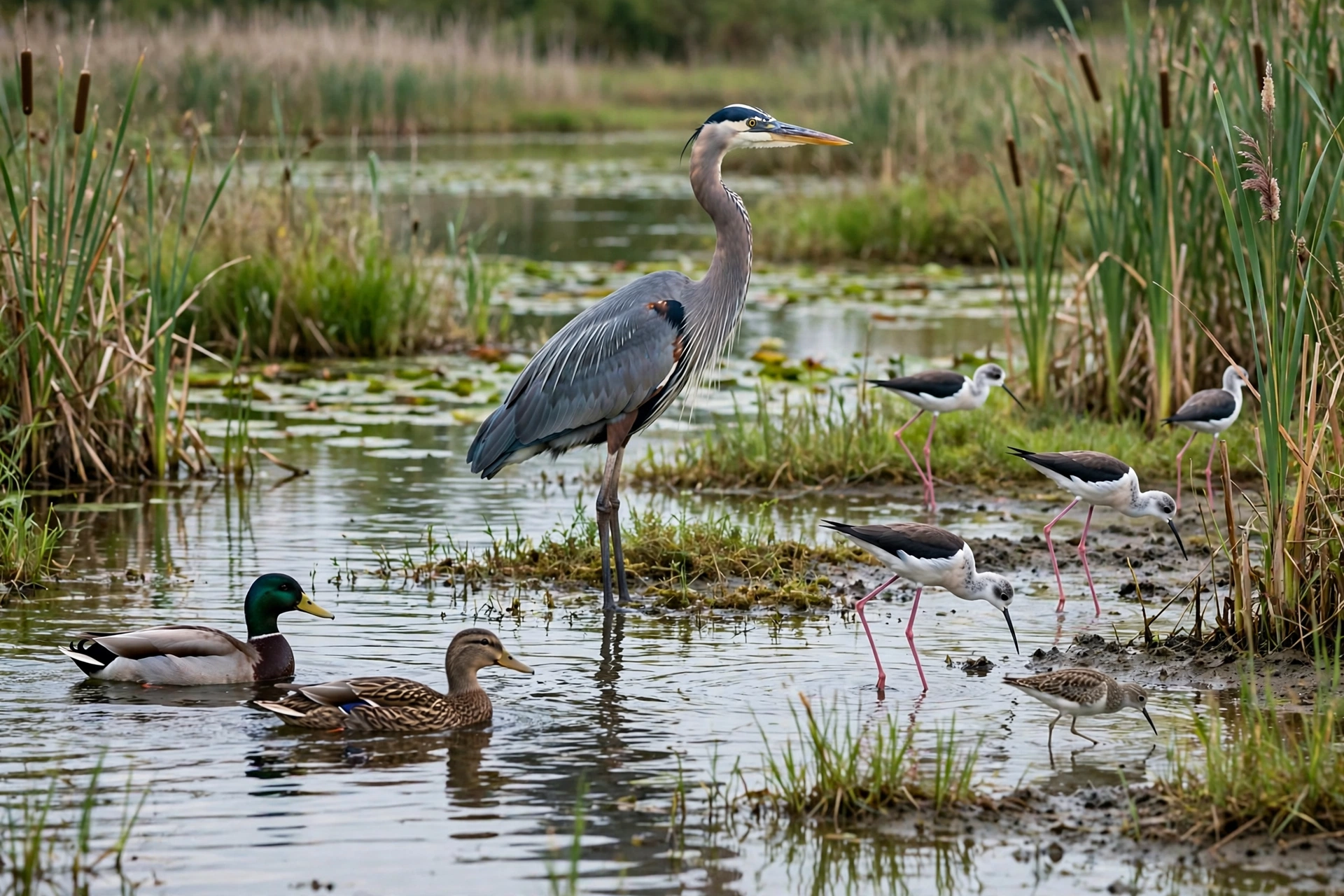
Wetlands, lakes, estuaries, and coasts host a remarkable range of birds, from colourful ducks to tall herons and busy waders. They can look confusing at first — many ducks change plumage through the year, waders look similar in winter, and herons stand still for long periods. Yet water birds are also rewarding to learn, because they are often visible in the open, in good light, and in predictable places.
Introduction: Wetlands Are Full of Variety
This guide explains how to identify ducks, herons, and waders using size, bill shape, leg length, behaviour, and habitat. With those clues, you can sort most water birds into the right group, and then narrow them down to species.
Water birds are a good group for beginners, because they are often easier to see than woodland birds. A duck on a lake, a heron in a shallow pool, or a wader on a mudflat is usually in the open, in good light, and not moving fast. You can watch it for minutes, compare it with the birds around it, and check your field guide without rushing. Wetlands also have hides — wooden shelters with viewing slots — that let you watch birds at close range without disturbing them. If you are new to birdwatching, a wetland reserve with hides is one of the best places to start. Go early in the morning, when the birds are most active, take your time, and work through the groups one at a time: ducks first, then herons, then waders. You will be surprised how quickly the confusion clears.
Step 1: Ducks — Size, Bill, and Plumage
Dabbling Ducks and Diving Ducks
Ducks fall into two broad groups. Dabbling ducks, such as mallard, teal, and gadwall, feed on the surface or upend to reach food below. They have a flat, broad bill, sit high on the water, and often take off almost vertically. Diving ducks, such as tufted duck, pochard, and scaup, dive for food, sit lower in the water, and need a run across the surface to take off.
The mallard is the most familiar duck. The male has a glossy green head, yellow bill, chestnut breast, and curled tail feathers. The female is mottled brown with an orange-brown bill. The teal is much smaller, with a chestnut head and green eye stripe in the male. The tufted duck male is black-and-white with a drooping crest; the female is dark brown. The pochard male has a chestnut head, black breast, and grey back.
Other ducks worth learning include the gadwall, which is a subtle, grey-brown dabbling duck, often overlooked because it looks plain next to a mallard, and the shoveler, which has a huge, spoon-shaped bill that is unmistakable once you have seen it. The wigeon is a whistling duck with a creamy forehead in the male, often seen grazing on grass near water in winter. The goldeneye is a diving duck with a round white cheek spot in the male and a steep forehead, and it is often seen on lakes and reservoirs in winter. Learning these species takes time, but the dabbling-versus-diving split is the key: once you know which group a duck belongs to, you have narrowed the possibilities enormously. Also watch how ducks feed: a dabbling duck upends, tail in the air, while a diving duck disappears underwater for twenty seconds or more. That single behaviour is often enough to tell the groups apart.
Step 2: Herons, Egrets, and Allies
Herons are tall, long-legged, long-necked birds that stand still or walk slowly in shallow water, waiting to spear fish. The grey heron is large, grey-and-white, with a black eyebrow, yellow bill, and black shoulder patch. In flight, it flies with its neck folded back and its legs trailing.
Step 3: Waders — Bill, Legs, and Feeding Style
Waders, or shorebirds, are a diverse group that feed on mudflats, estuaries, and lakeshores. They are identified largely by bill shape and length, leg length and colour, size, and feeding behaviour.
A Step-by-Step Routine at a Wetland
1. Scan the whole site first — note which birds are on open water, at the edge, and on mud. 2. Group birds by size and shape: duck, heron, wader, gull, or swan and goose. 3. For ducks, check bill, head pattern, and whether they dabble or dive. 4. For waders, check bill length and shape, leg colour, and feeding style. 5. Note habitat, tide, and time — many waders feed at low tide and roost at high tide. 6. Take a photo if you can do so without disturbance, and check it later.
It helps to visit the same wetland at different tides and at different times of year, because the birds change with both. At low tide, the mudflats are exposed and waders spread out to feed. At high tide, the waders gather in tight roosts, often on a distant sandbank or a shingle spit, and they are easier to count but harder to identify. In winter, the wetland is full of ducks, geese, and swans that have come from the north. In spring, the winter visitors leave and the summer visitors arrive, and waders in breeding plumage — with rusty breasts and patterned backs — look very different from the grey-brown birds you saw in January. Keeping a note of what you see on each visit, with the tide and the date, will teach you the rhythm of the wetland, and it will help you know when to visit for the birds you most want to see.
Common Mistakes
A common mistake is identifying ducks only by the male's bright plumage and forgetting that females and eclipse males look different. Another is confusing waders in winter, when many are plain grey-brown. In winter, rely on size, bill, legs, and behaviour rather than colour. A third mistake is approaching too closely and flushing birds, especially waders on a mudflat. Use a hide, a screen, or a distant viewpoint, and move slowly. Finally, do not assume a bird is rare because it looks different — check the common species first, and note the date and location, as some species are only present in certain seasons.
FAQ
What is the easiest water bird to identify? The mallard male and the grey heron are both distinctive and common. The oystercatcher is also easy due to its black-and-white plumage and orange bill.
How do I tell dabbling ducks from diving ducks? Dabbling ducks feed on the surface or upend, sit high on the water, and take off steeply. Diving ducks dive, sit low, and run across the water to take off.
Why do waders look so similar in winter? Many waders lose their bright breeding plumage in winter and become grey-brown. Use size, bill, legs, and behaviour to separate them in winter.
Where is the best place to watch water birds? Wetland reserves, estuaries, reservoirs, and lakes with hides or viewpoints. Visit at different tides and times of day to see different species.
What is the best time of year to visit a wetland? Winter is best for ducks, geese, and swans, which gather in large numbers. Spring and autumn are best for waders on migration, when many species pass through in breeding or autumn plumage. Summer is quieter, but it is the best time to see breeding birds and their young. There is no bad season — each one offers something different.
Do I need a telescope for water birds? A telescope helps for distant birds on a large estuary or reservoir, but it is not essential. Good binoculars and a hide will let you see most water birds well. If you visit wetlands regularly, a telescope is a worthwhile investment, and many reserves have scopes in their hides that you can use for free.
Conclusion
Water bird identification becomes easier once you sort birds by group and use bill, legs, size, and behaviour together. Ducks are identified by bill and head pattern, herons by size and posture, and waders by bill and leg shape and feeding style. Visit wetlands regularly, watch from a hide or a distance, and keep notes on what you see. Over time, you will recognise the common species quickly and spot the less common visitors with confidence.
Try the free Bird Identifier on aitreeidentier.site — upload a clear photo of the bird for instant guidance.
Safety disclaimer: Never disturb nests or wildlife. Observe from a distance, stay on paths and in hides where provided, and consult a local expert if you are unsure about a species or a sensitive site.