
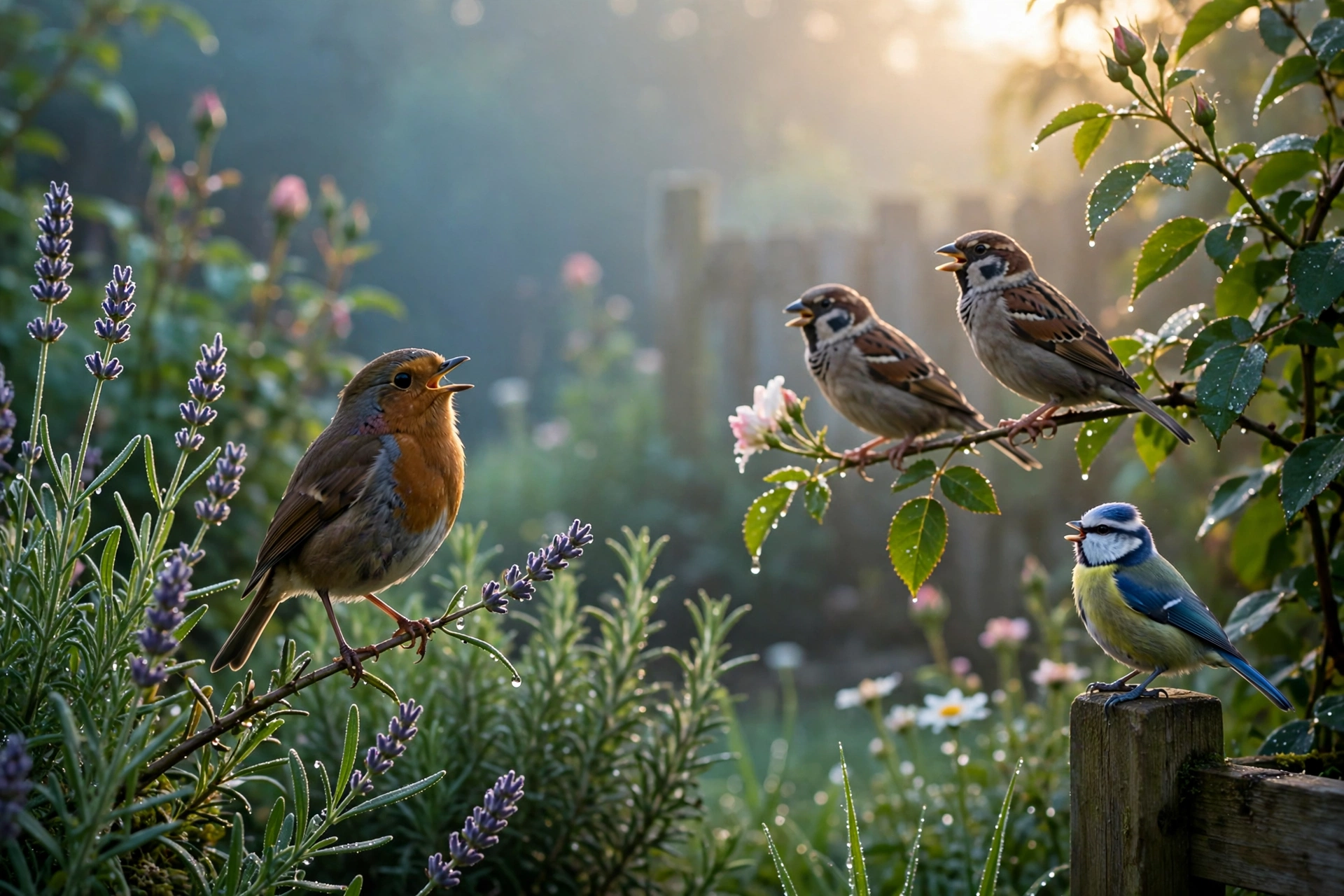
There is a moment just before sunrise when a garden that seemed silent suddenly fills with sound. One robin starts, then a blackbird joins in, then a wren, a dunnock, and a chorus of voices you cannot yet name. That is the dawn chorus, and it is one of the most rewarding experiences in bird watching.
Introduction
You do not need to know every song to enjoy it. This guide explains what the dawn chorus is, why birds sing so early, which birds you are most likely to hear, and how to start recognising them one by one. All you need is an early alarm, a quiet spot, and a little patience.
What Is the Dawn Chorus?
The dawn chorus is the burst of birdsong that begins before sunrise and peaks in the first hour of daylight, especially in spring and early summer. Male birds sing to defend their territory and attract a mate, and they sing most intensely at dawn because sound travels well in the cool, still air.
The Birds You Will Hear First
Robin and blackbird
The robin often sings first, sometimes before dawn. Its song is a sweet, warbling phrase with pauses, a little melancholy and musical. Robins sing all year, even in winter, often from a low perch or fence post.
The blackbird sings a rich, fluty song with clear, mellow notes and pauses between phrases. It is one of the most beautiful garden songs and one of the easiest to learn. Blackbirds usually sing from a high perch — a rooftop, a tall tree, or a chimney — so the song carries across the garden.
Song thrush and wren
The song thrush repeats each phrase two or three times, as if it is practising. Its song is loud, varied, and full of repeated fragments. Once you notice the repetition, it becomes easy to recognise, even in a busy chorus.
The wren is tiny but its song is astonishingly loud: a fast, bright, rattling burst that rises and falls, often ending with a trill. Wrens sing from low cover, hedges, and woodpiles, and they sing for much of the year.
How to Start Recognising Songs by Ear
Learn one bird at a time
Do not try to learn ten songs in one morning. Pick one common singer, such as the blackbird or robin, and learn it well. Listen to a recording at home, then listen for that song outdoors until you can pick it out of the chorus. Then add a second species, and a third.
Use words, pattern, and pitch
Give each song a description in your own words. A blackbird is fluty and mellow. A wren is a loud, fast rattle. A song thrush repeats itself. Ask three questions about each song: Is it fast or slow? Is it high or low? Does it repeat, or does it keep changing? Those three questions alone will separate many common garden birds.
Writing down your descriptions is important, because it forces you to listen actively rather than passively. A note that says "fast, high, rattling, from low hedge — wren" is a description you will remember, and it will help you check the song later. It also helps to use comparisons: a blackbird sounds like a flute, a wren sounds like a sewing machine, a song thrush sounds like a bird that keeps repeating itself because it cannot remember what it said. Those comparisons may sound silly, but they are memorable, and that is what matters. If a standard mnemonic does not work for you, make up your own. The only test is whether it helps you recognise the song the next time you hear it.
A Simple Dawn Chorus Routine
Step 1: Pick a quiet morning
Choose a calm, dry morning in spring or early summer. Wind and rain reduce singing and make listening harder. Your garden, a local park, or even an open window can work well.
Step 2: Arrive before sunrise
Get outside about 30 to 45 minutes before sunrise. Sit or stand somewhere comfortable and let your ears adjust. Do not play recordings or use playback to attract birds; just listen.
Step 3: Listen in layers
First, listen to the whole chorus without trying to name anything. Then pick out the loudest or nearest song and focus on it, then pick another. Write down a short description of each song, the time you heard it, and where it came from.
Common Mistakes Beginners Make
The most common mistake is trying to learn too many songs in one morning. The dawn chorus can contain twenty or more species, and trying to name them all is overwhelming. Pick one or two songs and learn them well; the rest will come with time. Another mistake is listening only once and then giving up. The chorus changes through the spring, and a song you could not recognise in April may be obvious in May, when you have heard it a dozen times. A third mistake is using playback to attract birds or to check a song. Playback can stress birds, especially during breeding, and it is unnecessary: the real chorus is all around you, and listening to it naturally is the best way to learn. Finally, do not be discouraged if you cannot see the bird that is singing. Most dawn chorus birds sing from dense cover or high treetops, and hearing them is enough. A song you can recognise is a bird you can identify, whether you see it or not.
FAQ
When is the best time to hear the dawn chorus?
From about an hour before sunrise to an hour after it, especially in April, May, and June. The peak is usually in late spring, when most birds are breeding and singing at full strength.
Do I need to get up before sunrise every day?
No. Even one or two early mornings a week will teach you a lot. Start with a weekend morning, when you can take your time and enjoy the experience without rushing.
How long does it take to recognise common garden songs?
Most beginners can confidently recognise three or four common songs after a few weeks of regular listening. Learning one new song at a time is faster than trying to learn them all together.
Can I enjoy the dawn chorus from indoors?
Yes. An open window is a perfectly good listening post, especially if your garden is quiet. You will hear the loudest singers clearly, and you can learn the robin, blackbird, and song thrush without ever going outside. Going outside is better, because you can hear the quieter singers too, but indoors is a fine place to start.
Why is the dawn chorus quieter in summer?
By July, most birds have finished breeding and stop singing as intensely. The chorus is at its peak in April, May, and June, when birds are defending territories and attracting mates. In late summer, the garden becomes much quieter, and the songs you hear are mostly from robins, wrens, and dunnocks, which sing for much of the year.
Conclusion
The dawn chorus is not a test you have to pass. It is a free, daily concert that rewards a little early rising and a little patience. Learn one song at a time, listen for pattern, pitch, and pace, and keep simple notes after each morning. Within a few weeks, the garden at dawn will stop being a wall of sound and start being a set of familiar voices you can greet by name. Set your alarm, open a window or step outside, and let the birds do the teaching. A photo of a singer, taken from a distance, can be checked later with the free Bird Identifier on aitreeidentier.site.
Try the free Bird Identifier on aitreeidentier.site — upload a clear photo of the bird you heard singing for instant guidance.
Safety disclaimer: Never disturb nests or wildlife to get closer to a singing bird. Observe from a distance, stay on paths, avoid using playback near breeding birds, and consult a local expert if you are unsure about a sensitive species or site.