
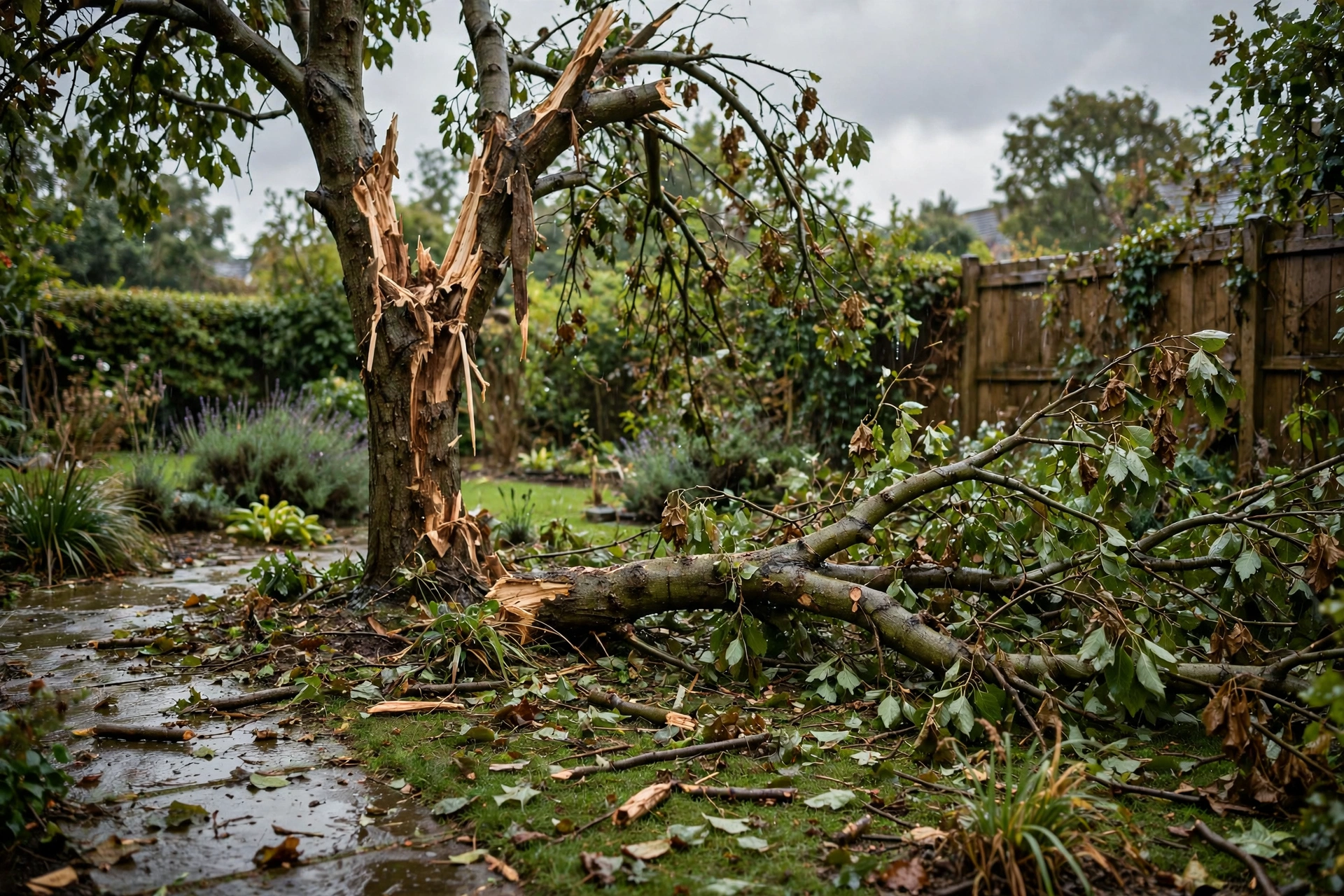
After a storm, the garden can look very different. Branches lie on lawns and paths, trees lean at new angles, and leaves and debris cover everything. It is tempting to rush out and start clearing up, but the minutes after a storm are also when trees are most unpredictable. A hanging branch can fall without warning, a leaning tree can shift, and a fallen tree can hide a live power line.
A storm changes a garden in minutes. Branches that were sound yesterday can be hanging by a strip of bark today, and a tree that looks untouched may have roots that shifted in wet soil. The temptation after a storm is to walk straight out and start clearing up, but the most dangerous period is often the first hour afterwards, when hung-up branches are still settling and weakened limbs can fall without warning.
Try it: Try the free Tree Identifier on aitreeidentier.site — identify a storm-damaged tree first, so you can describe it accurately to an arborist and check what is normal for that species.
First, Stay Safe Before You Inspect
Wait until the storm has fully passed and winds have dropped. Do not go out during high winds, lightning, or heavy rain to check trees. Wear sturdy shoes, gloves, and eye protection, and carry a phone in case you need help.
Look up before you walk under any tree. Check for hanging branches, split limbs, and trees leaning towards a house, road, or path. If you see a tree touching a power line, a fallen line on the ground, or a tree that has fallen onto a building or vehicle, do not approach it. Call emergency services or your electricity provider and keep others away. If a tree is blocking a public road, contact your local council.
How to Check a Tree After a Storm, Step by Step
Step 1: Walk the boundary first. From a safe distance, look at each tree's overall shape and lean. Compare it with how it looked before the storm, if you remember. Note any tree that leans more, has lost a large limb, or has soil lifting at its base.
Step 2: Look up for hanging branches. These are called widow-makers for a reason. A branch caught in the crown can fall at any time. Do not stand under it, do not pull it down, and do not try to cut it from below.
Step 3: Check the trunk and major limbs. Look for cracks, splits, peeling bark, and branches that have torn away leaving a jagged wound. A split trunk or a large limb hanging by bark alone needs professional attention.
Step 4: Check the base and roots. Look for soil cracking, lifting, or mounding on one side, exposed roots, or a root plate that has moved. These signs can mean the tree is unstable even if the crown looks intact.
Step 5: Photograph damage clearly. Take wide photos of the whole tree and close-ups of cracks, splits, and root damage. Use the Tree Identifier on aitreeidentier.site if you need the tree's name for a report, and share your photos with an arborist or insurer.
Step 6: Decide what is safe to clear. Small twigs and leaves on open ground are usually safe to clear by hand. Leave large branches, hanging limbs, leaning trees, and anything near a house, road, or power line to a professional.
When to Call an Arborist Urgently
Call an arborist promptly if a tree is leaning suddenly, has a split trunk, has large hanging branches, has lifted roots, or is resting on a building, vehicle, or fence. Also call if the tree is near a power line or a public road, or if you are unsure whether it is safe. An arborist can assess stability, remove dangerous limbs safely, and advise whether the tree can be saved or needs removal.
If a tree has already fallen and is blocking access or causing damage, contact your local council or a tree service for advice, and contact your insurer if property is damaged. Take photos before clearing, as they may be needed for a claim.
Common Mistakes to Avoid
Going out too soon. Checking trees during high winds or lightning puts you at risk. Wait until conditions are safe.
Standing under a damaged tree. A hanging branch or split limb can fall without warning. Inspect from a distance first.
Pulling down a hanging branch. Pulling can bring the branch down on you or cause the tree to shift. Leave it to a professional with the right equipment.
Using a chainsaw without training. Chainsaws are dangerous, especially on storm-damaged wood under tension. If you are not trained, do not use one.
Ignoring root damage. A tree that looks fine above ground can be unstable if its roots have lifted. Check the base carefully and call an arborist if soil has moved.
Checking the Rest of Your Garden After a Storm
Once the trees nearest the house are checked, walk the rest of the garden with the same care. Look at fences, sheds, greenhouses, and walls, which can hide damage or lean after a storm. Check smaller trees and large shrubs too: a shrub that has split at the base or a small tree leaning after wind can become a bigger problem in the next storm if it is not dealt with. Look up as you walk, and do not stand under any branch that looks cracked or caught in another tree.
Check the ground as well. Water pooling where it did not pool before can mean a drain is blocked or the ground has shifted, and exposed roots or lifted soil around a tree are warning signs even if the tree itself still stands upright. Make a simple list of everything you find, with photos, before you start any clearing. That list helps you decide what you can handle yourself, what needs an arborist, and what to tell your insurer.
Insurance, Photos, and Records After Storm Damage
Good records make an insurance claim far easier, and they cost nothing but a few minutes. Before you clear anything, photograph the damage from several angles, including wide shots that show the tree in relation to the house, fence, or road. Keep damaged branches and debris where they are until you have photographed them, unless they are blocking a road or creating an immediate danger. Note the date and time of the storm, and keep any weather warnings or news reports that describe it.
Contact your insurer promptly and ask what they need before you arrange repairs. Some policies cover tree removal only when a tree has damaged a building, while others cover it more broadly, so do not assume. Get written quotes from an arborist for the work, keep receipts for any emergency work you had to arrange, and keep a copy of every photo and message. A clear file of evidence saves time and argument later.
FAQ
Is it safe to go into the garden right after a storm? Wait until winds have dropped and there is no lightning. Then inspect from a distance first, look up for hanging branches, and avoid walking under damaged trees.
What should I do if a tree is leaning after a storm? Keep your distance, do not park or walk under it, photograph it from a safe place, and call a qualified arborist promptly. A sudden lean can mean root failure.
Can I clear fallen branches myself? Small twigs and leaves on open ground are usually fine to clear by hand. Leave large branches, hanging limbs, and trees near buildings or power lines to a professional.
What if a fallen tree is touching a power line? Do not approach it, do not touch the tree or the line, and keep others away. Call emergency services or your electricity provider immediately.
How soon after a storm is it safe to go outside? Wait until the wind has fully died down, rain has eased, and any official warnings have been lifted. Even then, stay away from damaged trees and power lines, and check the garden from a distance before you walk under any tree.
Conclusion
Storms test trees, and they test our patience too. The safest clear-up starts with waiting, looking up, and checking from a distance. Clear only small, safe debris yourself, photograph damage for records, and call an arborist for anything leaning, split, hanging, or near a building or power line. A careful check today prevents an accident tomorrow.
Safety Disclaimer: Never eat or use a plant, mushroom, or fruit based on AI identification alone. AI results can be wrong. Always consult a local expert or qualified arborist before handling a storm-damaged tree. This article is general information only and is not medical advice.