
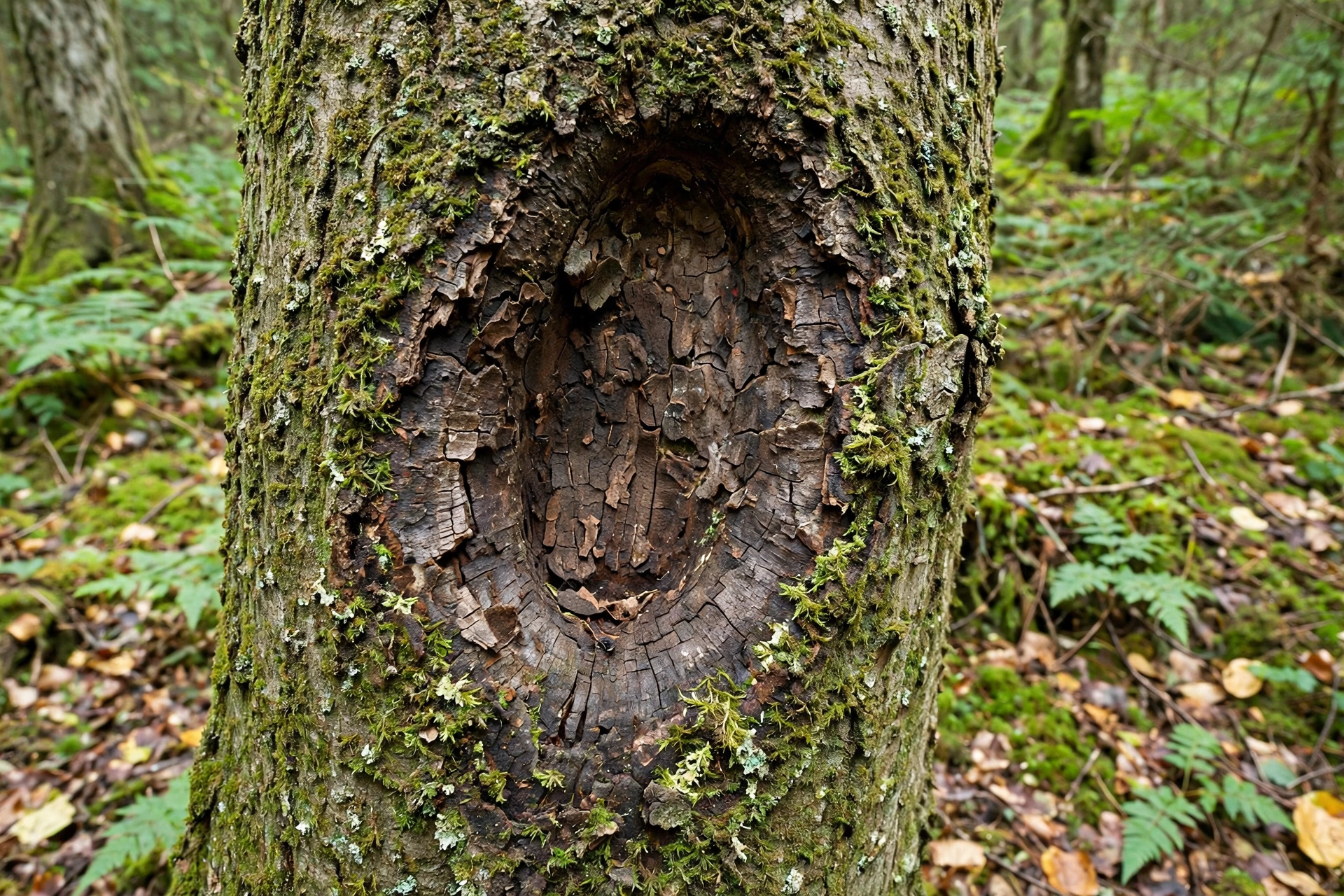
A canker is a dead patch on a tree's bark or branch — sunken, discoloured, sometimes oozing — where the living tissue underneath has died. It may start small, on a twig, and be easy to prune away. Or it may appear on the trunk, grow slowly year after year, and eventually girdle the tree, cutting off the flow of water and nutrients.
Canker diseases affect many species, from apples and cherries to oaks, pines, and maples, and they are often linked to stress, wounds, and wet weather. This guide explains how to recognise a canker, what causes it, what you can safely do yourself, and when to call an arborist.
What Is a Tree Canker?
A canker is a localised area of dead bark and cambium, the living layer just under the bark. It is usually caused by fungi or bacteria entering through a wound — a pruning cut, storm damage, frost crack, insect injury, or sunscald. Once inside, the pathogen kills tissue and the canker expands, often forming a sunken area with a raised edge or callus where the tree is trying to wall it off.
Some cankers are annual: they grow in one season and then stop. Others are perennial: they grow a little each year, forming concentric rings of dead tissue, and can eventually encircle a branch or trunk. The longer a canker grows, the more serious it becomes.
Symptoms to Look For
- Sunken, discoloured bark: A patch of bark that is darker, reddish, or grey, and slightly sunken compared with healthy bark around it.
- Cracked or peeling bark: The bark over a canker may crack, peel, or fall away, exposing dead wood underneath.
- Oozing or gum: Some cankers ooze sap, gum, or dark fluid, especially in spring. Cherry and plum cankers often produce amber gum.
- Dieback above the canker: Leaves and twigs beyond the canker may yellow, wilt, or die, because water cannot pass the damaged area.
- Fruiting bodies: Small black, orange, or pink dots or cushions may appear on the canker surface — fungal fruiting bodies releasing spores.
- Target-like rings: Perennial cankers may show concentric rings of callus tissue, like a target, as the tree tries to heal each year.
Step-by-Step: What to Do
Step 1: Photograph and measure
Photograph the canker in context and close-up, and note its size and location. Is it on a twig, a branch, or the trunk? How much of the branch's circumference does it cover? A canker covering more than half the circumference is serious.
Step 2: Check the crown above
Is there dieback, yellowing, or sparse foliage above the canker? That suggests the canker is already blocking water flow.
Step 3: Prune small branch cankers
For cankers on small branches, prune back to healthy wood, cutting at least 10–15 centimetres beyond the visible edge of the canker, into clean, pale wood. Cut in dry weather, disinfect tools between cuts, and bag and bin the pruned material. Do not prune in wet weather, which spreads spores.
Step 4: Do not cut into trunk cankers yourself
Trunk cankers are not a DIY job. Cutting into the trunk can create a larger wound and weaken the tree. Leave trunk cankers for an arborist to assess.
When to Call an Arborist
Call an arborist if the canker is on the trunk or a large limb, covers a large part of the circumference, is growing quickly, is associated with dieback or leaning, or if the tree is near a house, road, or path. Also call if you are unsure whether a branch is safe to prune, or if the tree is large or valuable. An arborist can assess structural risk, prune safely, and advise whether the tree can be saved or should be removed.
Common Mistakes
- Painting the wound. Wound sealants are generally not recommended; they can trap moisture and slow healing.
- Waiting too long. A small twig canker is easy to prune out; a trunk canker that has girdled the tree is often too late.
Common Canker Diseases by Tree Type
Different trees face different canker fungi, and knowing which one is likely helps you judge the risk. Apple canker, caused by Neonectria, is common on apple trees: it forms sunken, cracked patches on branches, often with small red fruiting bodies, and can girdle young branches over a few years. Bacterial canker on cherry and plum causes sunken bark, amber gum, and dieback, often after a wet spring, and it spreads in rain. Cytospora canker affects spruce, pine, and many fruit trees, producing resinous ooze and dieback from the lower branches upward. Chestnut blight, a far more serious canker disease, has devastated sweet chestnut in some regions and must be reported to plant health authorities where required — check local rules if you suspect it. You do not need to identify the exact fungus to act sensibly: the response is the same in most cases — prune small branch cankers in dry weather, keep the tree healthy, and call an arborist for trunk cankers — but knowing the likely culprit helps an arborist confirm the diagnosis faster.
Preventing Cankers: Wounds, Stress, and Pruning
Cankers almost always start at a wound, so prevention is largely wound prevention. Prune correctly: make clean cuts just outside the branch collar, do not leave stubs, and do not flush-cut into the trunk, because both mistakes leave wounds that heal slowly and invite infection. Prune in dry weather, preferably in late winter while the tree is dormant, and avoid pruning in wet weather when spores are spreading. Protect trunks from strimmers, mowers, and construction damage, and do not tie wires or ropes tightly around branches. Keep the tree unstressed by watering in drought, mulching the root zone, and avoiding heavy fertiliser that forces soft, vulnerable growth. A healthy tree walls off small infections with callus tissue; a stressed tree cannot. That is why two trees with the same wound can have very different outcomes — one heals, the other develops a spreading canker.
FAQ
Can a tree survive a canker? Yes, many trees live for years with small cankers, especially if the canker is pruned out or walled off by callus tissue. Large trunk cankers are more serious and may shorten the tree's life.
Should I remove a tree with a canker? Not necessarily. A small branch canker is no reason to fell a tree. Removal is considered only if the canker threatens structural safety, is spreading rapidly, or the tree is declining despite care. An arborist can advise.
Do cankers spread to other trees? Some canker fungi spread by spores in rain and wind, especially in wet weather. Prune infected branches promptly, clean tools, and avoid planting the same susceptible species in the same spot.
How fast can a canker grow? Some cankers grow only a few millimetres a year, while others expand quickly in wet weather. Measure and photograph the canker every few months: if it is growing fast, or the dieback above it is spreading, call an arborist promptly.
Can I prune a cankered branch in summer? Small branch cankers can be pruned out at any time in dry weather, but the safest time is usually late winter, when the tree is dormant and the air is dry. Avoid pruning in wet weather, which spreads spores.
Conclusion
Tree cankers are a sign that a wound has become infected, and that the tree is under stress. Small branch cankers can be pruned out cleanly in dry weather; trunk cankers need professional assessment. Keep trees healthy, prune correctly, avoid wounds, and monitor any canker you find. Early action, and knowing when to call an arborist, will save many trees that would otherwise be lost.
Try it: Try the free Tree Disease Identifier on aitreeidentier.site — upload a clear photo of the cankered bark for instant guidance.
Safety disclaimer: Never eat or use any part of a tree, or treat a disease, based on AI identification alone. Do not climb a damaged tree or prune large limbs yourself. Consult a local arborist for diagnosis and safe treatment.