
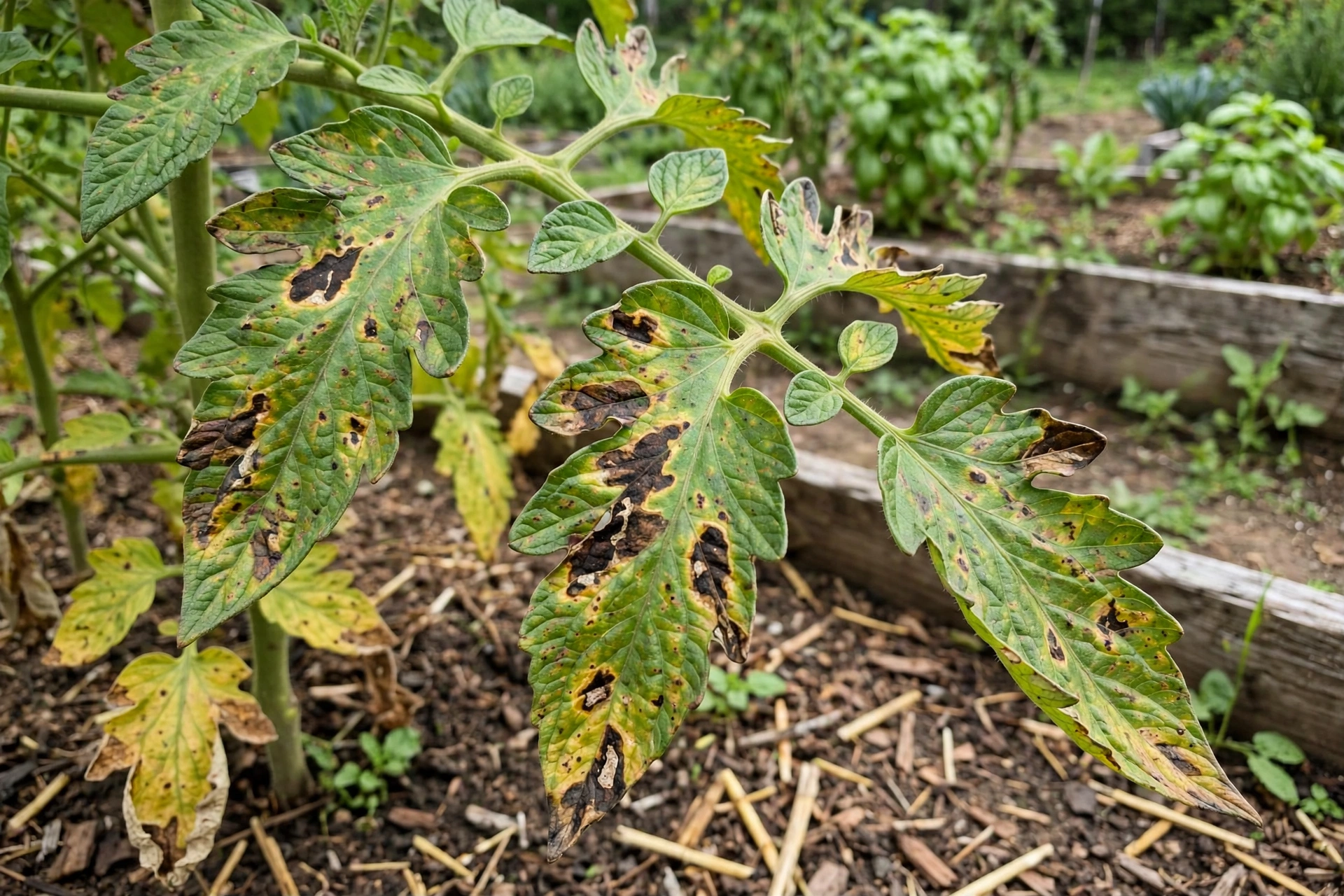
For tomato growers, few words cause as much dread as "blight." It can turn a promising crop into a blackened, rotting mess in a matter of days, and it is easy to confuse the two main types — early blight and late blight — which need different responses. Early blight is common, slow, and manageable; late blight is fast, destructive, and often fatal to the plant.
Knowing how to tell them apart, and what to do for each, is one of the most useful skills a vegetable gardener can learn. This guide explains the symptoms, the timing, and the practical steps that will protect your tomatoes this season and next.
What Is Tomato Blight?
"Blight" is a general term for rapid, widespread damage to leaves, stems, and fruit, but early and late blight are caused by different organisms. Early blight is caused by the fungus Alternaria solani. Late blight is caused by the water mould Phytophthora infestans — the same organism behind the Irish potato famine.
Both spread by spores, thrive in warm, humid conditions, and are favoured by wet leaves, poor airflow, and crowded planting. Both also affect potatoes and other members of the tomato family, so crop rotation and hygiene matter for the whole vegetable patch, not just tomatoes.
Early Blight: Signs and Timing
Early blight usually appears in warm weather, often after fruit has started to set. It starts on the older, lower leaves and moves upward slowly. Look for dark brown spots with concentric rings — like a target or bullseye — often with a yellow halo. Leaves yellow, dry, and drop, starting at the bottom. Stems may show dark, sunken lesions, and fruit may develop dark, leathery spots near the stem end.
Early blight rarely kills the plant outright, but defoliation reduces fruit size, quality, and yield, and exposes fruit to sunscald. It overwinters in soil and plant debris, and spreads by splashing water and wind.
Late Blight: Signs and Timing
Late blight is far more aggressive and usually appears in cool, wet weather — often after a period of rain and temperatures around 15–20°C. It spreads rapidly, sometimes destroying a plant in a few days. Look for large, dark, water-soaked patches on leaves, often starting at the edges or tips, with a white, fuzzy mould on the underside in damp conditions. Stems develop dark, greasy-looking lesions. Fruit shows firm, brown, sunken patches that rot quickly.
Late blight does not wait. If you see large, water-soaked patches spreading fast in wet weather, act the same day. It can also spread to potatoes, so check nearby potato plants too.
Step-by-Step: Tell Them Apart
Step 1: Look at the spot shape
Early blight spots are smaller, round, and have clear concentric rings. Late blight patches are larger, irregular, water-soaked, and lack rings.
Step 2: Look at the underside
Late blight often shows white, fuzzy growth on the leaf underside in damp weather. Early blight does not usually show this.
Step 3: Note where it starts and how fast it spreads
Early blight starts on lower, older leaves and spreads slowly upward. Late blight can start anywhere, spreads rapidly, and affects stems and fruit quickly.
Step 4: Note the weather
Early blight favours warm, humid weather. Late blight favours cool, wet weather. Recent rain, fog, or heavy dew points towards late blight.
How to Manage Blight
For both types
Choose resistant varieties where available, buy healthy plants, avoid overcrowding, and water at soil level. Keep a weekly check routine during the growing season so you catch the first spots early.
Common Mistakes
- Watering from above in the evening. Wet leaves overnight are ideal for both blights.
- Planting tomatoes in the same bed every year. Rotation breaks the disease cycle in the soil.
- Waiting to see if late blight "gets better." It rarely does. Early removal protects the rest of the crop.
- Composting blighted plants. Home compost does not get hot enough to kill blight spores. Bag and bin them.
Blight-Resistant Varieties and Seed Choice
Variety choice is the simplest long-term defence against tomato blight, and it costs nothing extra. Many modern tomato varieties are bred for resistance to early blight, late blight, or both, and seed catalogues usually note this clearly — look for the letters E and L, or for descriptions such as blight resistant or blight tolerant. Resistance does not mean immunity: a resistant plant can still be infected in a bad year, but it will usually cope far better, lose fewer leaves, and keep fruiting longer than a susceptible variety beside it. If blight has hit your garden before, try a resistant variety next year alongside your favourite, and compare them through the season. Also buy plants from a reputable source, and inspect them before planting: avoid plants with spotted or yellowing lower leaves, however cheap they are, because they may already carry early blight into your garden.
Protecting Potatoes and Other Relatives
Tomatoes are not the only crop at risk. Late blight also attacks potatoes, and early blight affects potatoes, aubergines, and peppers, because they are all members of the same family. If late blight appears on your tomatoes, check your potatoes the same day: look for dark, water-soaked patches on leaves and stems, and act fast. For potatoes, cutting off the foliage — haulm — a week or two before harvest can reduce the chance of spores washing down into the tubers, but seek local advice on timing for your area. Rotate the whole family together: do not plant tomatoes where potatoes grew last year, or potatoes where tomatoes grew, and leave at least three years before growing the same family in the same bed. That single habit, plus the autumn clean-up of all blighted material, breaks the disease cycle more reliably than any spray.
FAQ
Can I eat tomatoes from a plant with early blight? Fruit that is unaffected and looks healthy is often fine to eat after washing, but do not eat fruit with dark, rotten patches. If in doubt, discard it and seek local advice.
Can late blight spread to potatoes? Yes. Late blight affects both tomatoes and potatoes, and can spread between them. Check both crops, and remove infected plants promptly.
Is tomato blight the same as blossom end rot? No. Blossom end rot causes a dark, sunken patch at the blossom end of the fruit and is linked to uneven watering and calcium uptake, not infection. It is not contagious.
Can I save seed from a tomato plant with blight? It is best not to. Blight can be carried on seed and in plant debris, so buy fresh, certified seed each year, especially if blight has affected your garden before.
Should I remove all the leaves from a tomato plant with early blight? No. Remove the worst-affected lower leaves, but leave enough healthy foliage for the plant to photosynthesise and ripen fruit. Stripping the plant bare weakens it and exposes fruit to sunscald.
What should I do with blighted tomato plants at the end of the season? Pull them up, bag them, and bin them or dispose of them with garden waste. Do not compost them, and do not leave them in the bed over winter, because blight spores survive in debris and soil and can infect next year's crop.
Conclusion
Early blight is slow, ringed, and starts low; late blight is fast, water-soaked, and spreads in cool, wet weather. That distinction matters, because late blight needs same-day action while early blight can be managed steadily through the season. Water at the base, mulch, space plants, rotate crops, and check leaves weekly — and you will give your tomatoes the best chance of a healthy, productive summer.
Try it: Try the free Plant Disease Identifier on aitreeidentier.site — upload a clear photo of the affected leaves for instant guidance.
Safety disclaimer: Never eat or use a plant, or treat a disease, based on AI identification alone. AI results are guidance only — consult a local expert before applying treatments, especially on food crops. Discard rotten fruit.