
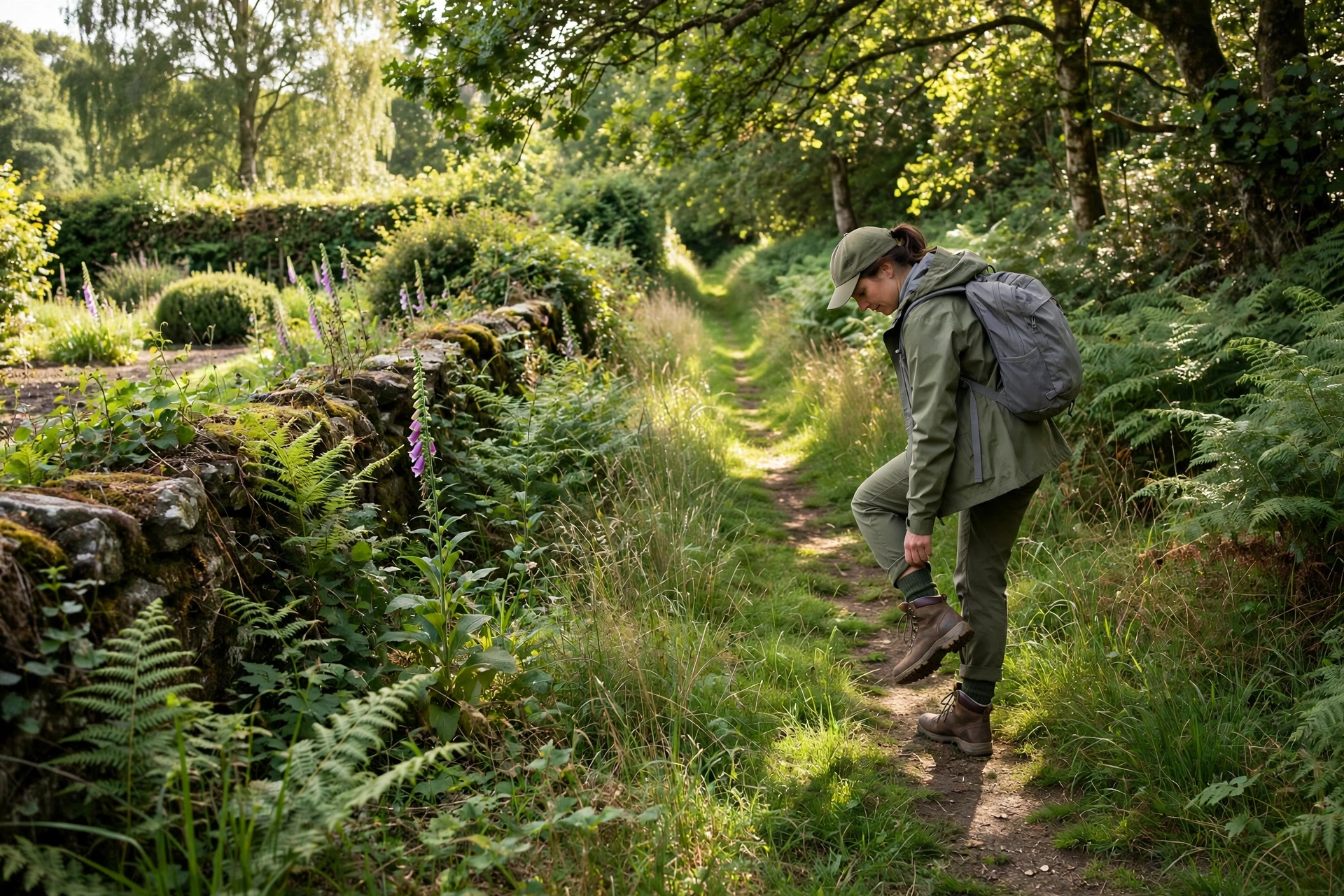
Ticks are small, blood-feeding creatures that live in grass, woodland and gardens across Britain, and they are most active from spring through to autumn. Most tick bites are harmless, but ticks can carry infections such as Lyme disease, so it is worth taking them seriously. This guide explains where ticks live, how to avoid bites in the garden and the woods, and exactly what to do if you find one attached to your skin.
What Ticks Are and Why They Matter
Ticks are tiny arachnids, related to spiders and mites, and they feed on the blood of mammals, birds and sometimes people. In Britain, the sheep tick is the species most often found on humans. Ticks do not jump or fly. Instead, they climb to the tip of a grass stem or leaf and wait, with their front legs outstretched, for a passing animal or person to brush against them. Once on skin, a tick crawls to a warm, sheltered spot, such as behind the knee, in the groin or under the waistband, and then bites. The bite itself is usually painless, which is why ticks can feed unnoticed for hours or even days. Most bites cause no illness, but a small number of ticks carry bacteria that cause Lyme disease, so prompt removal matters.
Where Ticks Live in Gardens and Woods
Ticks need damp, shaded places and the animals that carry them, so they are commonest in woodland edges, long grass, bracken, leaf litter and dense undergrowth. Deer, sheep, mice and birds all carry ticks, which is why woodland paths, deer parks and fields grazed by livestock carry the highest risk. Gardens are not tick-free either. Ticks can live in overgrown borders, compost heaps, log piles and the shady corners where hedgehogs and birds shelter. You are most likely to meet them from March to October, when warm, humid weather suits them, though mild winters can keep them active for longer.
Dressing to Avoid Tick Bites
What you wear is your first line of defence against ticks. Covering your skin makes it much harder for a tick to reach you, and light-coloured clothing makes any tick easier to spot. Wear long trousers tucked into your socks or boots, a long-sleeved top, and closed shoes rather than sandals when you walk through grass or woodland. For gardening, gloves and long sleeves are sensible, especially when you are clearing leaf litter or cutting back overgrown borders. In warm weather, covering up can feel uncomfortable, but lightweight, breathable fabrics make it much easier, and the protection is worth the effort. Shake clothes out outdoors before bringing them inside.
Repellents and Other Protection
Insect repellent adds a useful second layer of protection, especially on skin that clothing cannot cover. Choose a repellent that lists ticks on the label and contains an effective ingredient such as DEET, picaridin or lemon eucalyptus oil, and follow the instructions on the bottle. Apply it to exposed skin and around cuffs, collars and waistbands, and reapply as directed, particularly if you are sweating or have been in water. You can also treat clothing and boots with a permethrin spray, which kills ticks on contact and stays effective through several washes. Treat outdoor clothing outdoors, let it dry fully before wearing it, and never apply permethrin directly to skin. Repellent and treated clothing work best together with sensible dress, and none of them replaces the need to check yourself afterwards.
Checking Yourself, Children and Pets
A tick check is the single most important habit you can build, because removing a tick within a day greatly reduces the risk of infection. After gardening or a walk, check your whole body in good light, using a mirror or asking someone to help with the places you cannot see. Pay special attention to warm, hidden areas: behind the knees, in the groin, under the arms, around the waistband, behind the ears, in the hairline and between the toes. Check children carefully, including their scalp and neck, and check pets too, especially dogs, which pick up ticks easily in long grass. If you find a tick, do not panic. Note the date and where you think you picked it up, remove it promptly using the method below, and keep an eye on the bite area for the next few weeks.
How to Remove a Tick Safely
Remove a tick as soon as you find it, using fine-tipped tweezers or a proper tick-removal tool. Grasp the tick as close to the skin as possible, then pull steadily upwards with even pressure. Do not twist, jerk or squeeze the body, because that can break off the mouthparts or force bacteria into the wound. If you are using a tick hook, slide it around the tick, twist gently as directed and lift it out. Once the tick is out, clean the bite area and your hands with soap and water or an antiseptic wipe. Never burn a tick with a match, smother it with petroleum jelly or nail varnish, or try to pull it out with your fingers, as these methods can make the tick release more bacteria. Dispose of the tick by dropping it in alcohol or flushing it away, and note the date of the bite.
What to Do After a Bite
Most tick bites heal without any problem, but it is sensible to watch the area for several weeks. The main sign to look for is a spreading circular rash around the bite, often called a bull's-eye rash, which can appear three to thirty days after the bite. Other early signs of Lyme disease include flu-like symptoms, such as fever, tiredness, headache and aching muscles or joints. If you develop a spreading rash or these symptoms after a tick bite, contact your doctor promptly and mention the bite, because Lyme disease is much easier to treat when it is caught early. Antibiotics are effective, especially in the early stages. If you feel unwell but are unsure whether it is connected to the bite, it is still worth calling your doctor or NHS 111 for advice. Do not wait for symptoms to get worse before seeking help.
Making Your Garden Less Tick-Friendly
You cannot remove every tick from a garden, but you can make your garden much less inviting to them. Ticks love damp shade and thick cover, so keep your lawn short, clear leaf litter regularly and cut back overgrown borders and brambles. Create a sunny, dry barrier of gravel or woodchip between woodland or long grass and the areas where you sit and play, because ticks dry out and die quickly in hot, dry conditions. Move log piles and compost heaps away from paths and seating areas, and keep bird feeders tidy, since spilled seed attracts mice that carry ticks. A tidy, sunny garden with short grass and clear paths is pleasant for people and poor habitat for ticks, which is a good exchange for a little regular maintenance.
Frequently Asked Questions
How long does a tick need to be attached before it can spread disease? The risk rises the longer a tick feeds. Removing a tick within 24 hours greatly reduces the chance of infection, which is why a daily tick check after being outdoors is so important.
Can ticks live indoors? Most ticks found outdoors do not survive long inside a dry house, and they do not infest homes like fleas. They can, however, survive on clothing and pets, so check clothes and animals after a walk and wash or tumble dry outdoor clothing.
Should I see a doctor after every tick bite? Not usually. Most bites heal without treatment, but you should seek medical advice if you develop a spreading rash, flu-like symptoms, or if part of the tick remains in the skin. Mention the bite and when it happened.
Conclusion
Ticks are a normal part of gardening and walking in the British countryside, and they should not stop you enjoying the outdoors. The risks are small and manageable once you know what to do. Dress to cover your skin, use a good repellent, stick to clear paths in woodland, and check yourself, your children and your pets when you get home. If you find a tick, remove it promptly with tweezers or a tick tool, clean the area and watch for a rash or flu-like symptoms over the next few weeks.
If you are clearing an overgrown corner of your garden and come across a plant or tree you do not recognise, take a clear photo and try the identifier at aitreeidentier.site. Try the plant identifier at aitreeidentier.site