
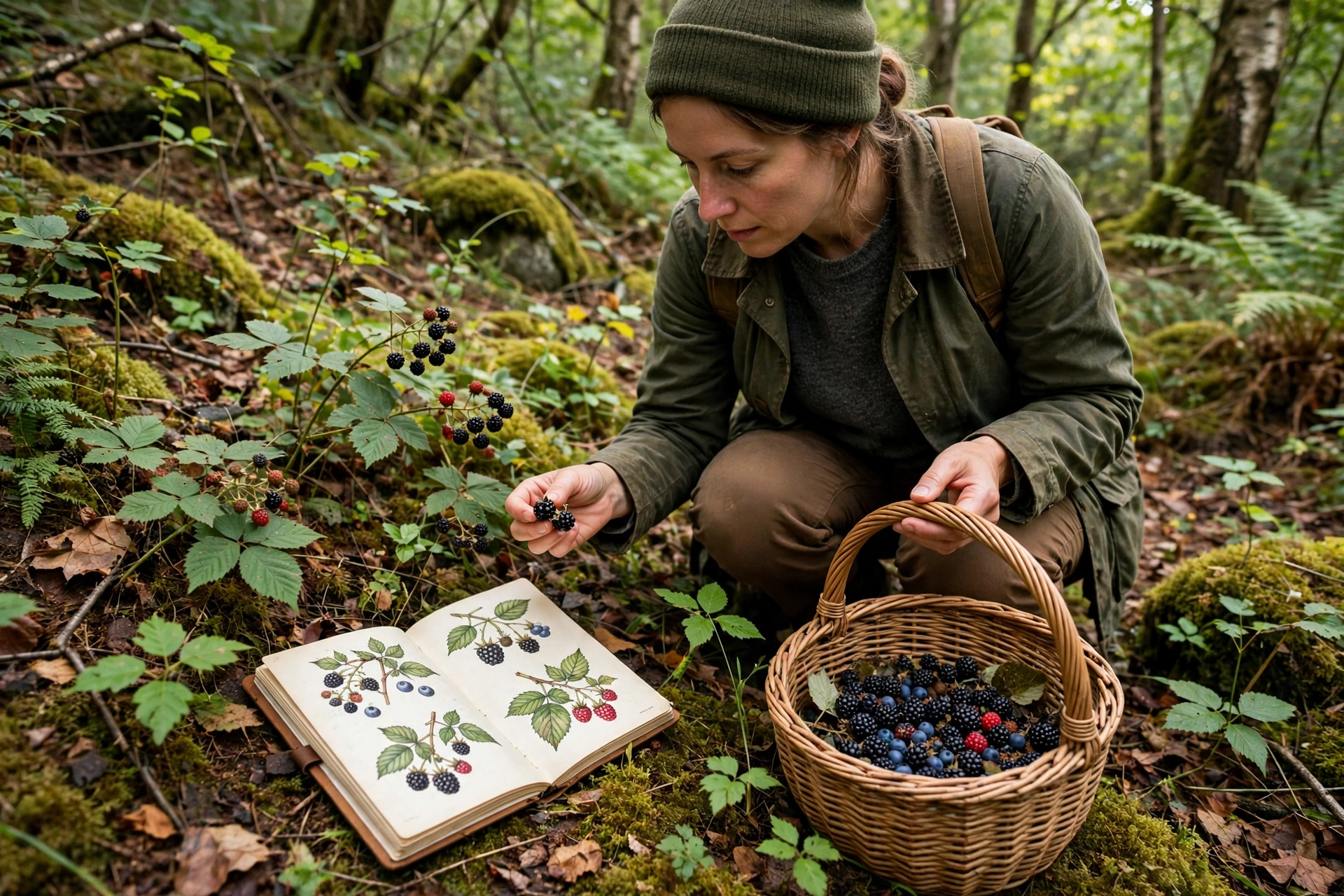
Foraging can be a joyful way to connect with nature, learn plant names, and notice the seasons. It can also be risky if you move too fast. Many wild plants, mushrooms, and berries look edible but are not, and some toxic species grow beside edible ones. The difference is often a small detail in leaf shape, berry arrangement, or habitat that is easy to miss.
Foraging connects you with the seasons in a way that shopping never can. You learn when the first greens appear, which hedgerows fruit first, and how a wood changes from spring to autumn. It is also a skill where a mistake can have serious consequences, which is why safe foraging is less about finding food and more about learning slowly, with guidance, and knowing when to walk past a plant you cannot name with certainty.
Try it: Try the free Plant Identifier on aitreeidentier.site — use it as a study aid on a foraging walk, and confirm every plant with a local expert before you consider eating it.
The Golden Rules of Safe Foraging
Start with three rules and keep them every time you go out. First, never eat anything based on a single identification, a photo, or an app result. Second, learn one or two species at a time, in depth, with a local expert, before you add more. Third, if there is any doubt, leave it alone. Doubt is not a challenge to overcome by tasting — it is a clear signal to walk away.
Also respect the land. Only forage where it is allowed, ask permission on private land, and follow local rules in parks and nature reserves. Take only what you need, leave plenty for wildlife and other foragers, and avoid rare or protected species. Wash your hands after handling wild plants, and wash any foraged food thoroughly if an expert has confirmed it is safe to eat.
How to Learn Foraging Safely, Step by Step
Step 1: Learn with a local expert. Join a guided walk, a local foraging group, or a botanical society outing. A mentor can show you key features in person and correct mistakes before they matter.
Step 2: Start with observation, not eating. For your first season, focus on identification only. Photograph plants, note their habitat, and build a field notebook. Enjoy the learning without the pressure of a meal.
Step 3: Use tools for study. Photograph the whole plant, leaves, flowers, fruit, stem, and habitat. Use the Plant Identifier on aitreeidentier.site for a first clue, then compare the suggestion with a trusted field guide for your region.
Step 4: Learn lookalikes together. For every edible species you study, learn its toxic lookalikes at the same time. Note the exact differences in leaf shape, berry arrangement, smell, and habitat.
Step 5: Confirm in person before any use. Even after study, have a local expert confirm your identification in person, with the fresh plant in hand, before you consider eating it. A photo confirmation is not enough for food.
Step 6: Keep records. Note the date, location, species, expert who confirmed it, and how it was prepared. If you ever feel unwell after eating wild food, this record helps medical professionals act quickly.
Common Mistakes to Avoid
Eating based on an app result. An AI tool can suggest a name, but it cannot guarantee edibility. Toxic lookalikes, poor photos, and regional differences make app-only foraging unsafe.
Tasting to test. The old idea of tasting a small amount to test safety is dangerous. Some toxins act in tiny amounts or with a delay, so a taste test proves nothing.
Foraging by common name alone. Common names vary by region and can refer to several different species. Always use the scientific name and check it with a local guide.
Picking everything that looks similar. Edible and toxic species often grow together. Pick only plants you have identified individually, one by one, and check each one.
Ignoring the law and the land. Foraging in protected areas, on private land without permission, or taking rare species can harm nature and break local rules. Check before you pick.
Learning with a Mentor and a Local Group
Books and apps can teach you a great deal, but they cannot watch you identify a plant and correct you. A mentor can. On a guided walk, a mentor will show you the same plant at different stages of growth, point out the lookalike growing beside it, and explain which parts of the plant matter and which do not. That kind of teaching, done in person with real plants, builds judgement that no amount of reading can replace.
Look for a local foraging group, a botanical society, or a natural history group in your area, and join their walks regularly over a full year. A single walk in spring teaches you spring plants; a year of walks teaches you how plants change with the seasons. Ask questions, take notes and photos, and do not be embarrassed about asking the same question twice. Every experienced forager was once a beginner who asked the same questions.
A Forager's Notebook: Records That Keep You Safe
A notebook is one of the most useful tools a forager owns. For each plant you study, record the date, the location, the habitat, the features you observed, and the name you think it has — along with the name of its most dangerous lookalike and the features that separate them. Add a photo, or a pressed leaf if you are learning plant pressing, and a note about who confirmed the identification and when.
Over time, that notebook becomes a personal field guide for your own area, far more useful than a generic book. It also protects you from a common mistake: remembering a plant as safe because you once ate it, or once saw someone else eat it, without remembering the details. A written record, with a date and a confirmer, keeps your memory honest — and if you ever feel unwell after eating a wild plant, it gives a clinician exactly the information they need.
- Join guided walks with a local group over a full year.
- Record the date, location, habitat, and features of every plant you study.
- Note the dangerous lookalike and the features that separate it.
- Record who confirmed each identification, and when.
FAQ
Is foraging safe for beginners? Yes, if you treat it as learning first and eating much later. Start with guided walks, focus on identification, and do not eat wild food until a local expert has confirmed it in person.
Can I use an AI identifier while foraging? Yes, for learning and getting a first clue about a plant's name. Do not use it to decide whether something is edible. Always confirm with a field guide and a local expert.
What should I do if I eat a wild plant or mushroom and feel unwell? Save a sample or clear photos, note what and when you ate, and call poison control or seek urgent medical care. Do not wait for symptoms to worsen, and bring your photos or sample with you.
Are berries safe if birds eat them? No. Birds can eat berries that are toxic to people. Do not use wildlife as a test for human safety.
Is foraging legal where I live? It depends on your country and the land you are on. Some places allow picking small amounts for personal use, others require the landowner's permission, and picking in nature reserves or protected areas is often restricted. Check local laws and always ask permission on private land.
How many species should a beginner learn first? Start with just two or three very distinctive species that have no dangerous lookalikes in your area, and learn them thoroughly over a full season with a mentor. A small number of species known well is far safer than a long list known only from photos.
Conclusion
Safe foraging is slow, curious, and careful. Learn one species at a time, study its lookalikes, use identification tools for learning only, and always get expert confirmation in person before you eat anything wild. The best foragers are not the ones who eat the most — they are the ones who know when to leave a plant alone.
Safety Disclaimer: Never eat or use a plant, mushroom, or fruit based on AI identification alone. AI results can be wrong. Always consult a local expert before eating any wild plant, mushroom, or berry. This article is general information only and is not medical advice.