
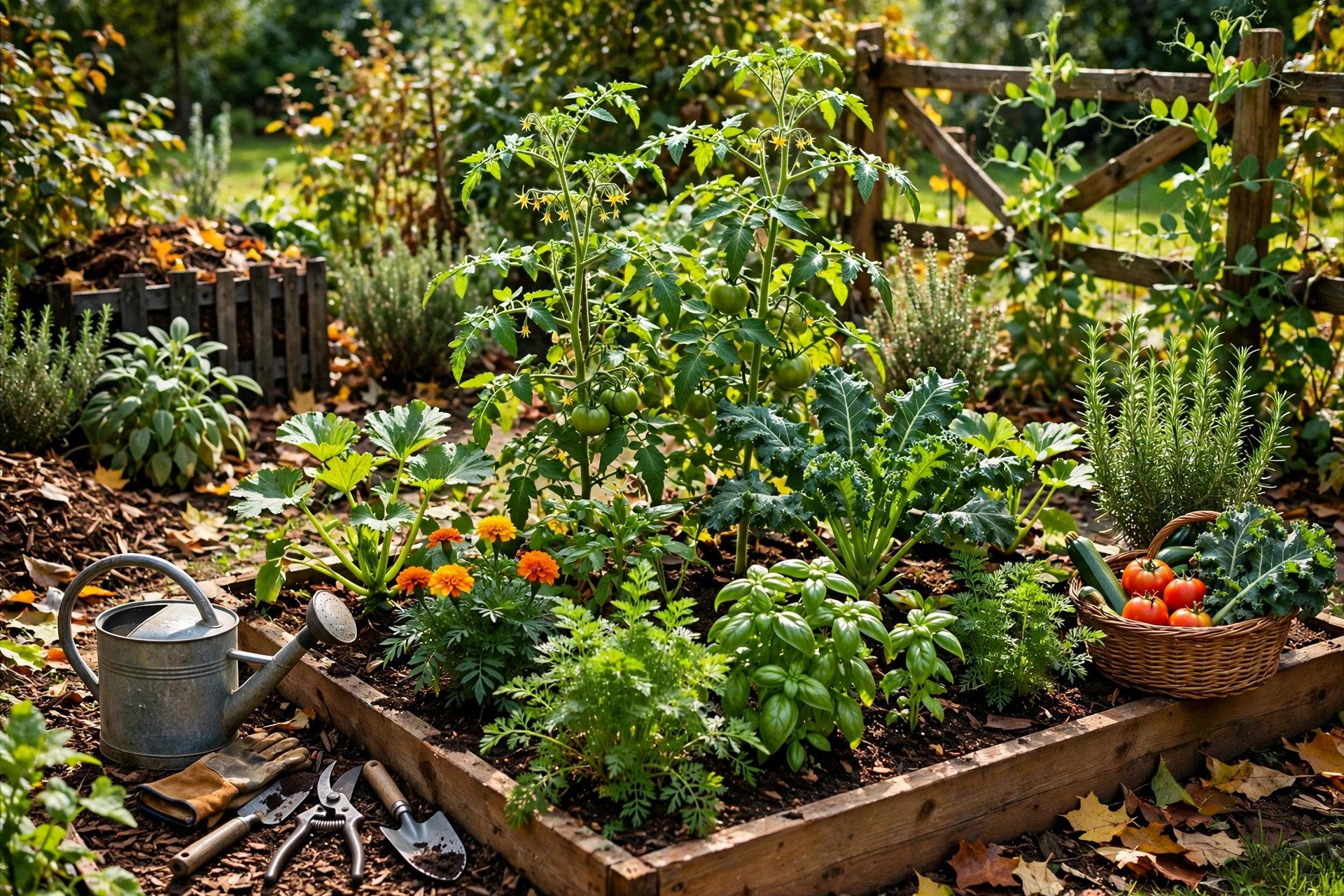
The best way to deal with plant disease is not to get it in the first place. Most diseases need three things to take hold: a susceptible plant, a pathogen, and favourable conditions — usually wet leaves, still air, and stressed plants. Remove any one of those, and disease struggles to establish. That is why prevention, done season by season, is more effective than any spray.
This guide gives you a simple seasonal checklist — spring, summer, autumn, and winter — that covers soil, watering, spacing, hygiene, and plant choice. Follow it, and you will spend far less time treating disease and far more time enjoying a healthy garden.
Spring Checklist
Spring is the season of new growth — and of new infections. Start the season clean and give plants a strong start.
- Clean up winter debris: Rake up fallen leaves, remove dead stems, and bin diseased material. Do not compost it.
- Inspect plants as they leaf out: Look weekly for spots, curling, mildew, and pests on new growth. Photograph anything unusual.
- Prune for airflow: Thin crowded branches, remove crossing stems, and create an open shape that dries quickly after rain.
- Mulch the soil: Apply a layer of compost or bark mulch to retain moisture, suppress weeds, and reduce soil splash. Keep mulch away from stems and trunks.
- Water at the base: Water in the morning, at soil level, and avoid wetting leaves.
- Feed wisely: Feed with compost or a balanced fertiliser, but avoid excess nitrogen, which produces soft, disease-prone growth.
- Choose resistant varieties: When buying new plants, look for varieties bred for resistance to common local diseases.
Summer Checklist
Summer is the season of growth, fruit, and — in wet years — rapid disease spread. Keep up the routine and catch problems early.
- Water consistently: Water deeply and less often, rather than little and often. Keep soil evenly moist, especially for tomatoes and other fruiting plants.
- Space and stake: Tie up tomatoes, cucumbers, and other climbers so foliage is off the ground and air can circulate.
- Remove affected material daily: Pick off diseased leaves and fruit, bag them, and bin them. Do not leave them on the ground.
- Avoid working with wet plants: Do not prune, tie, or handle plants when they are wet — that spreads bacteria and fungi.
- Control pests: Aphids, whitefly, and other sap-feeders spread viruses. Encourage predators and remove heavy infestations promptly.
- Clean tools: Disinfect secateurs and knives between plants, especially after cutting diseased material.
Autumn Checklist
Autumn is the season to break the disease cycle for next year. What you clean up now will not reinfect plants in spring.
- Rake up all fallen leaves: Especially under roses, fruit trees, and other susceptible plants. Bin them.
- Remove spent vegetable plants: Pull up tomato, potato, and bean plants after harvest, and bin diseased material. Rotate crops next year.
- Cut back perennials: Remove dead and diseased stems, and clear debris from beds.
- Improve the soil: Add compost, check drainage, and avoid planting in waterlogged spots.
- Plant for next year: Choose a different bed for tomatoes, potatoes, and other members of the same family. Note what worked and what did not.
- Store tools clean: Clean, dry, and oil tools before winter storage.
Winter Checklist
Winter is quiet, but it is the best time for planning and structural work.
- Prune fruit trees and roses: Prune in dry weather to create an open shape, removing dead, crossing, and diseased wood. Disinfect tools between cuts.
- Check stored plants: Inspect overwintering plants for mould, pests, and rot, and remove affected material.
- Plan rotations: Sketch next year's planting plan, rotating families and giving each plant the space it needs.
- Order resistant varieties: Order seed and plants early, choosing disease-resistant varieties where available.
- Improve drainage: Fix boggy spots, add organic matter to heavy soil, and ensure pots have drainage holes.
- Learn from last year: Review your photos and notes. Which plants struggled? What will you change next year?
Common Mistakes
The Disease Triangle: Why Prevention Works
Plant pathologists describe disease with a simple idea called the disease triangle: for a disease to take hold, you need a susceptible host, a pathogen, and favourable conditions, all at the same time. Remove any one side of the triangle and the disease cannot establish. That is why the seasonal checklist works — it attacks all three sides at once. Resistant varieties and healthy, well-fed plants reduce the susceptible host. Cleaning up fallen leaves, disinfecting tools, and removing infected material reduce the pathogen. Watering at the base, spacing plants, and pruning for airflow remove the favourable conditions. No single habit does all of this, but together they make your garden a hard place for disease to live. When a disease does appear despite your efforts, use the triangle to diagnose the gap: was the variety susceptible, was infected material left over winter, or were the leaves wet and crowded? The answer tells you what to change next year.
A Simple Weekly Routine That Prevents Most Problems
You do not need to spend hours in the garden to prevent disease — a short, regular routine is enough. Once a week in the growing season, walk the garden slowly with a pair of secateurs and a bag. Look at both sides of the leaves on your most vulnerable plants: roses, tomatoes, cucumbers, and fruit trees. Remove any spotted, yellowed, or mouldy leaves and put them straight in the bag, not on the ground. Check that mulch has not crept against stems, that pots are draining, and that climbers are tied up and off the soil. Note anything unusual in a few words, or take a photo. That ten-minute walk, done every week, catches most problems while they are still a handful of leaves, and it is far more effective than a long, panicked session once a disease has spread. Make it a habit — the same day each week, after watering, so you never forget it.
FAQ
What is the single most effective way to prevent plant disease? Good airflow and dry leaves, combined with autumn clean-up and crop rotation. Those three habits prevent more disease than any spray.
Do I need to spray to prevent disease? Not necessarily. Many gardens stay healthy with hygiene, spacing, watering habits, and resistant varieties alone. Sprays are a supplement, not a substitute, for good care.
How often should I check my plants? Once a week in the growing season is enough for most gardens. Check more often in wet weather, or if you have had disease problems before.
Which plants should I check first each week? Start with the plants that have suffered before, and the ones that are most vulnerable: roses, tomatoes, potatoes, cucumbers, squash, and fruit trees. Check new growth and lower leaves first, and look at both sides of the leaves.
Is it worth keeping a garden notebook? Yes. A few lines each week — what you saw, what you did, and the weather — build into a record that shows which varieties cope best in your garden, which beds stay damp, and what to change next year. It is the cheapest expert advice you will ever get.
Conclusion
Preventing plant diseases is not about perfection or constant spraying. It is about a seasonal rhythm: clean up in spring and autumn, check weekly in summer, prune and plan in winter, and always water at the base, give plants space, and keep the garden clean. Do that consistently, and your garden will be healthier, more productive, and far less stressful to look after — year after year.
Try it: Try the free Plant Disease Identifier on aitreeidentier.site — upload a clear photo of the affected leaves for instant guidance.
Safety disclaimer: Never eat or use a plant, or treat a disease, based on AI identification alone. AI results are guidance only — consult a local expert before applying treatments, especially on food crops or near children and pets.