
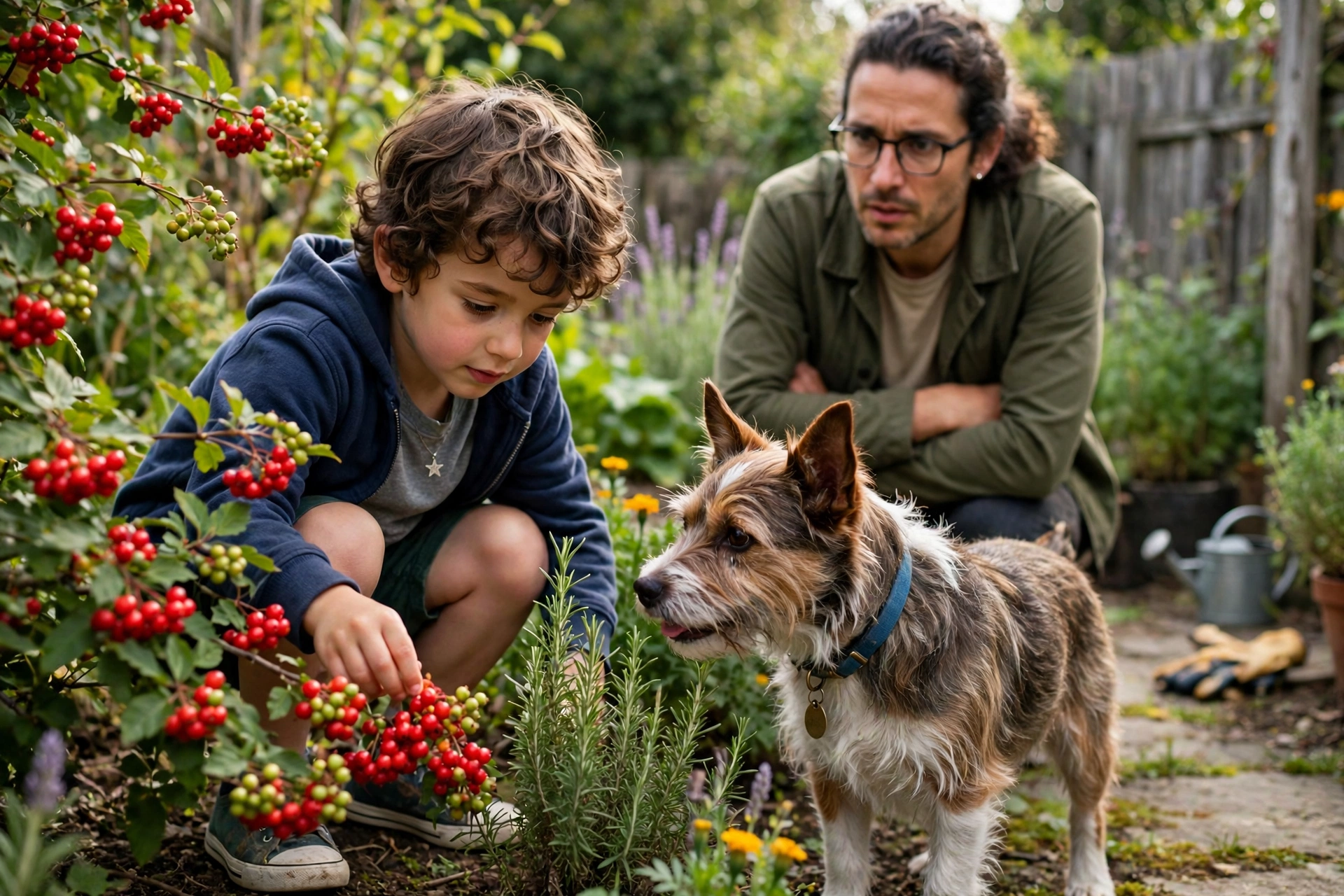
A bright berry, a pretty leaf, or a new plant in the garden can catch a child's eye in seconds. Pets are just as curious, and they often explore the world by chewing, licking, and digging. Most plants are harmless, but a small number can irritate skin, upset the stomach, or cause more serious problems if eaten. You do not need to panic or remove every plant, but you do need a calm, practical way to check what is growing where children and pets play.
A home can feel safe and still contain plants that are toxic if chewed or swallowed. Many popular houseplants and garden shrubs were chosen for their flowers or foliage, not for their safety, and a toddler or a curious pet does not read warning labels. The goal is not to remove every plant from your home, but to know which ones need a high shelf, a fenced bed, or a different home altogether.
Try it: Try the free Plant Identifier on aitreeidentier.site — identify every plant in your home and garden, so you can check which ones are toxic to children or pets.
Why Toxic Plants Are Easy to Miss
Many toxic plants look ordinary. Some are popular houseplants, garden favourites, or common weeds. Others grow wild along fences, paths, and parks. A plant can be toxic in one part only — for example, the berries may be harmful while the leaves are not, or the bulb may be the main concern. Children are more vulnerable because they are smaller and more likely to put things in their mouths. Pets, especially puppies, kittens, and curious cats, may chew leaves out of boredom or play.
Risk also depends on the amount eaten, the part eaten, and the individual child or animal. That is why general lists online are useful for awareness but not enough for a final decision about one specific plant in your home. Always treat an unknown plant as potentially unsafe until you have a reliable identification and, if needed, professional advice.
How to Identify a Plant Safely
Follow these steps before you touch, move, or taste anything.
Step 1: Keep children and pets away. Move them to another room or area first. Do not let a child hold the plant while you check it, and do not let a pet chew it for a photo.
Step 2: Look without touching. Note the plant's size, where it is growing, and whether it has flowers, berries, thorns, or milky sap. Look at the leaf shape, leaf arrangement, stem colour, and any smell from a safe distance.
Step 3: Take clear photos. Photograph the whole plant, a close-up of a leaf, any flowers or fruit, and the stem. Take photos in good daylight and avoid blurry or shadowed images. Do not pick the plant to photograph it if you can avoid it.
Step 4: Use an identification tool for a first clue. Upload your photos to the Plant Identifier on aitreeidentier.site and note the suggested name and any similar matches. Save the result and the photos so you can share them with an expert.
Step 5: Confirm with a local expert. Contact a local nursery, garden centre, veterinarian, paediatrician, or poison control service, especially if a child or pet has eaten part of the plant. Tell them what was eaten, how much, and when, and share your photos. Do not wait for symptoms to appear before seeking advice if ingestion has happened.
Step 6: Decide on a safe next step. If the plant is confirmed toxic and is within reach of children or pets, move it out of reach, fence it off, or remove it safely with gloves. If it is harmless, you can keep it and still teach children not to eat garden plants.
Common Mistakes to Avoid
Assuming a plant is safe because it is common. Popular houseplants and garden plants can still be irritating or toxic if eaten. Common does not mean safe.
Tasting a plant to test it. Never taste an unknown leaf, berry, or root. Tasting is not a safe identification method and can be harmful even in a small amount.
Trusting one photo match. AI identification can be wrong, especially with similar-looking species, young plants, or poor photos. Always treat a result as a clue, not a diagnosis.
Removing a plant bare-handed. Some plants cause skin irritation through sap or thorns. Wear gloves, long sleeves, and eye protection when handling an unknown plant.
Waiting to see what happens. If a child or pet has eaten an unknown plant, seek advice promptly. Early advice is easier and safer than waiting for symptoms.
Making a Room-by-Room Safety Check
A room-by-room check takes less than an hour and is the fastest way to find the risks you have stopped noticing. Start with the rooms where children and pets spend the most time: the living room, the kitchen, and the garden. List every plant in each room, including plants on windowsills, hanging baskets, and cut flowers in a vase. Then check each name against a reliable toxic-plants list for children and pets, and mark any plant that is toxic if eaten or if its sap touches skin.
For each toxic plant, decide on a clear action: move it out of reach, move it to a room children and pets do not enter, or remove it. A high shelf is not enough for a climbing toddler or a cat, and a plant that drops leaves or berries onto the floor can be reached even when the pot is high. Write your list down and keep it somewhere an adult visitor or babysitter can find it, along with your local poison control number.
What to Tell a Vet or Doctor After Exposure
If a child or pet has chewed or swallowed part of a plant, the information you give in the first minutes shapes the advice you receive. Stay calm, and if it is safe, take a clear photo of the plant and keep a sample of what was eaten, including leaves or berries. Note the time, how much was eaten, and any symptoms so far, such as drooling, vomiting, or a rash. Do not make a child or pet vomit unless a clinician tells you to.
Call poison control, your doctor, or your vet promptly, and have the plant's name ready if you know it. If you do not know the name, the photo is the next best thing. Describe the plant's features — leaf shape, flowers, berries, and where it was growing — and follow the advice you are given. Even if symptoms seem mild, a call is worth making: some toxic plants cause delayed symptoms, and early advice is always safer than waiting.
FAQ
How can I tell if a plant is toxic? You cannot tell from appearance alone. Use clear photos and an identification tool for a first clue, then confirm the name and toxicity with a local expert, nursery, or veterinarian.
What are the most common warning signs after eating a plant? Signs can include mouth irritation, drooling, vomiting, stomach pain, diarrhoea, drowsiness, or a skin rash. Signs vary by plant and amount eaten, so seek professional advice even if symptoms seem mild.
Should I remove all plants that might be toxic? Not necessarily. Many people keep potentially toxic plants safely by placing them out of reach, teaching children not to eat plants, and supervising pets. Remove or relocate a plant if it is in a high-risk spot and cannot be kept safely out of reach.
Can I use an AI plant identifier to decide if a plant is safe? No, not on its own. Use it to get a possible name, then confirm that name and its safety with a local expert before you make a decision about keeping, moving, or removing the plant.
Are fallen leaves and berries from a toxic plant dangerous? Yes, they can be. A toxic plant does not stop being toxic when a leaf or berry falls to the floor, and children and pets often find fallen material first. Clear fallen leaves and berries from toxic plants regularly, and keep the area under them tidy.
Conclusion
Keeping children and pets safe around plants is about habits, not fear. Learn what is growing in your space, photograph unknown plants carefully, use an identification tool for a first clue, and confirm anything uncertain with a local expert. Teach children to look but not eat, keep tempting plants out of reach, and know who to call if something is eaten.
Safety Disclaimer: Never eat or use a plant, mushroom, or fruit based on AI identification alone. AI results can be wrong. Always consult a local expert, veterinarian, or poison control service before touching, removing, or deciding a plant is safe. This article is general information only and is not medical or veterinary advice.