
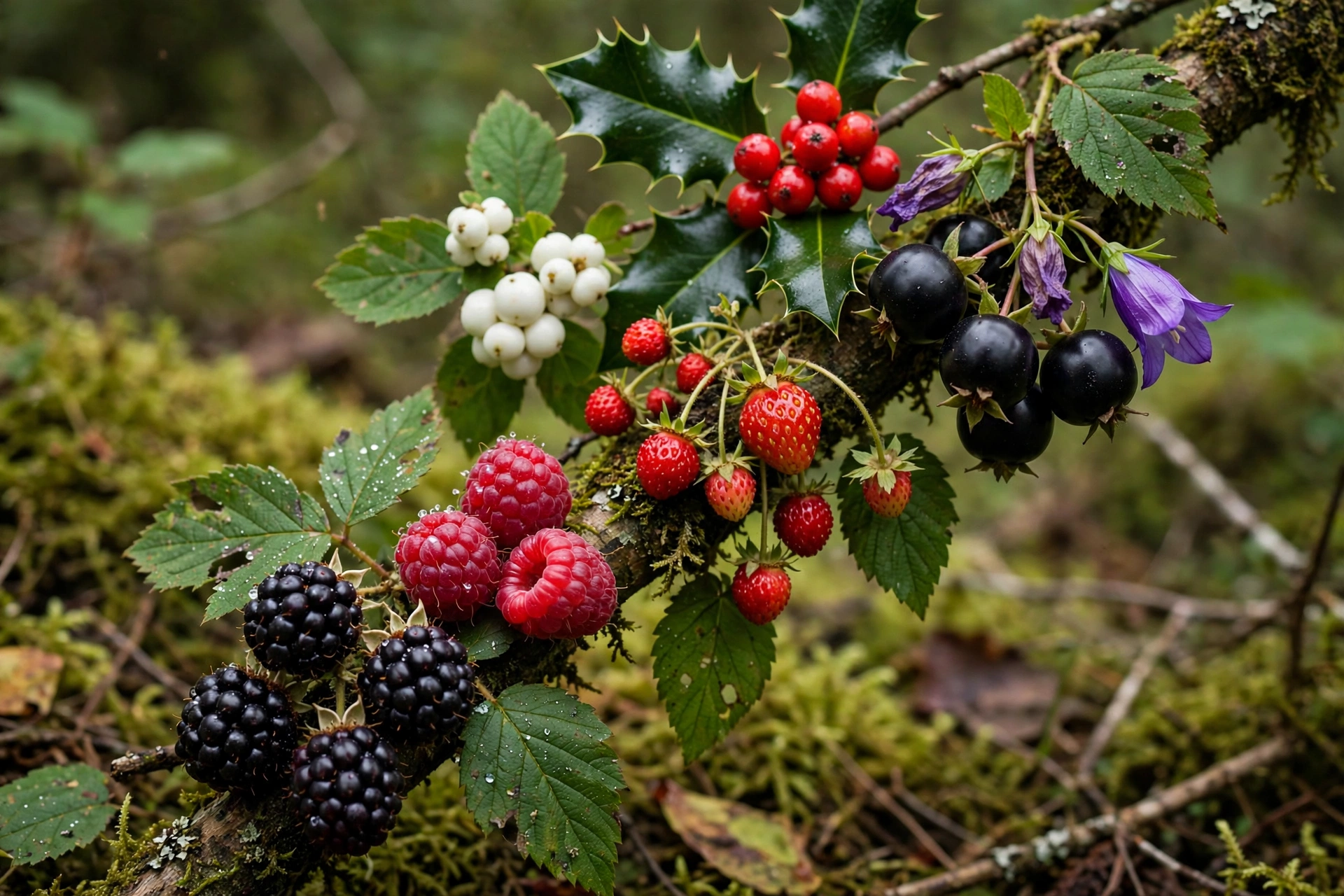
A tree or shrub covered in fruit can be tempting. The fruit may look like a familiar apple, plum, berry, or grape, and it may smell sweet. Yet many inedible and toxic fruits look like edible ones, and some edible fruits have toxic seeds, leaves, or unripe stages. A single taste can be enough to cause illness, and a wrong guess can be serious, especially for children.
Fruit is one of the most tempting things to pick on a walk. It hangs within reach, it often looks ripe and sweet, and it is easy to assume that something that looks like a familiar fruit must be one. The trouble is that many inedible and toxic fruits evolved to look attractive — that is how they get animals to carry their seeds. Looking appetising is not evidence that a fruit is safe for people.
Try it: Try the free Fruit Identifier on aitreeidentier.site — photograph a fruit and its tree or shrub first, and use the result as a starting point for learning, not as permission to eat it.
Why Fruit Identification Is Harder Than It Looks
Fruit changes with ripeness. An unripe fruit can be a different colour, size, and texture from a ripe one, and some fruits are safe only when fully ripe and properly prepared. Leaves, bark, and habitat are often more reliable for identification than fruit alone, yet many people focus only on the fruit.
Fruit also varies by variety and region. A wild fruit may look like a cultivated fruit but belong to a different species. Birds and animals eating a fruit does not mean it is safe for people. Some fruits are safe for birds but toxic to humans, and some are safe only after cooking. That is why a photo of fruit alone is rarely enough, and why an AI result alone is never enough for eating.
How to Observe Fruit Safely, Step by Step
Step 1: Look, do not taste. Admire the fruit where it grows. Do not eat, lick, or bite it to test it, even if it looks familiar.
Step 2: Photograph the whole tree or shrub. Take a wide photo that shows its size, shape, and surroundings, and note whether it was planted in a garden or growing wild.
Step 3: Photograph the fruit in detail. Take close-ups of a single fruit, a cluster, the stem, and a cut fruit only if you are wearing gloves and an expert has asked you to — otherwise, photograph it whole. Note the colour, size, shape, and surface.
Step 4: Photograph leaves, bark, and flowers if present. Leaves, bark, and flowers help experts confirm the species. Photograph a leaf from above and below, and note the leaf arrangement.
Step 5: Note the habitat, season, and smell. Record the date, location, nearby trees, soil, and whether the fruit has a strong smell. Do not crush fruit to smell it if you are unsure what it is.
Step 6: Use an identification tool for a first clue. Upload your photos to the Fruit Identifier on aitreeidentier.site and note the suggested names. Compare them with a trusted field guide for your region.
Step 7: Confirm with a local expert before any use. Share your photos with a nursery, botanist, or local fruit expert. Only an expert who has examined the plant in person can give reliable advice, and even then, eating wild fruit carries risk.
Common Mistakes to Avoid
Eating fruit because it looks familiar. A familiar shape or colour is not proof of identity. Toxic lookalikes are common, and a small difference in leaves or seeds can matter.
Tasting to test. Never taste an unknown fruit to see if it is safe. Some toxins act in small amounts or with a delay.
Trusting one app result. An AI identifier can suggest a name, but it can confuse similar fruits, especially when photos are poor or the fruit is unripe. Always confirm with a local expert.
Assuming cooking makes it safe. Cooking does not make all toxic fruits safe. Some toxins survive heat, so never assume a poisonous fruit becomes edible after cooking.
Eating fruit from a sprayed or polluted area. Even a known edible fruit can be unsafe if it has been sprayed with chemicals or grown in contaminated soil. Wash fruit thoroughly and know its source.
Fruit by Season and Place: Extra Clues That Help
When and where a fruit grows can be as informative as what it looks like. A fruit that ripens in early summer in a hedgerow may be a different species from a similar-looking fruit that ripens in autumn in a wood. Note the month, the habitat, and the plant it came from — a shrub, a climber, or a tree — before you look anything up. A fruit on the ground, separated from its plant, has lost most of its clues, so always identify the fruit on the plant if you can.
Ripeness matters too. Many fruits change colour, softness, and taste as they ripen, and some are toxic when unripe but edible when fully ripe, while others are the reverse. A single fruit picked at the wrong stage can mislead you completely. If the fruits on one plant are at different stages, photograph several of them, and note which stage you are looking at. A careful record beats a confident guess.
What Children Should Know About Wild Fruit
Children are the most likely to pick and eat wild fruit, and the least likely to check first. A clear family rule helps: never eat fruit from a wild plant, a hedge, or a garden you do not know without asking an adult first — even if it looks like a berry from the supermarket. Practise the rule on walks by spotting fruit together, photographing it, and looking it up at home, so that curiosity is rewarded without tasting.
At home, walk your own garden and agree which fruit is for eating and which is look-only, especially with ornamental shrubs that produce bright berries. Teach children to wash their hands after handling wild fruit, and to tell an adult straight away if they have eaten something unknown, rather than hiding it for fear of being told off. A quick, honest report gives adults time to identify the plant and, if needed, call poison control with a name and a photo.
- Always identify fruit on the plant, not from a fallen fruit alone.
- Note the season, habitat, and ripeness of the fruit.
- Teach children to ask an adult before eating any wild fruit.
- If a child eats an unknown fruit, keep a sample and call for advice promptly.
FAQ
Can I eat fruit from a tree in a park or garden? Only if you know the tree, you have confirmed its identity with a local expert, and you have permission to pick it. Do not eat fruit from an unknown tree, even if it looks like a familiar fruit.
How can I tell if a fruit is edible? By identifying the whole plant — fruit, leaves, bark, flowers, habitat, and season — comparing it with its lookalikes in a local guide, and getting confirmation in person from a local expert. No single feature is enough.
Is it safe to eat fruit that birds eat? No. Birds can eat fruit that is toxic to people. Do not use wildlife as a test for human safety.
What if a child eats an unknown berry? Remove remaining fruit from the mouth, save a photo or sample, note the time, and call poison control or seek medical care promptly. Do not wait for symptoms.
Can I eat a fruit if birds are eating it? No. Birds can safely eat many fruits that are toxic to people, and birds eating a fruit tells you nothing about whether it is safe for you. Use identification and expert confirmation, not animal behaviour, to decide.
What should I do if I have eaten an unknown fruit and feel unwell? Save a sample or clear photos of the fruit and the plant, note how much you ate and when, and call poison control or seek urgent medical care. Bring the sample or photos with you.
Conclusion
Fruit can be a joy to grow and eat, but only when you know exactly what it is. Observe the whole plant, photograph fruit, leaves, and bark, use an identification tool for a first clue, and always get expert confirmation in person before you eat anything unknown. The safest fruit is one you planted, identified, and confirmed — not one you guessed about on a walk.
Safety Disclaimer: Never eat or use a plant, mushroom, or fruit based on AI identification alone. AI results can be wrong. Always consult a local expert before eating any unknown fruit. This article is general information only and is not medical advice.