
When the last leaves have been raked and the final frost arrives, it is tempting to simply hang up your tools and forget about them until spring. That is exactly how good spades rust, secateurs seize up, and lawnmowers refuse to start in March. A little care now takes less than an afternoon, saves you money, and means every tool is clean, sharp and ready when the first warm days return.
Winter storage is not just about tidiness. Damp soil left on metal blades causes rust within days. Sap and plant residue harbour fungal spores that can spread disease to healthy plants next year. Fuel left in a mower goes stale and clogs the carburettor, and a battery left flat in a cold shed may never hold a charge again. This guide covers the job: cleaning, sharpening, oiling and storing hand tools, power equipment and accessories, so nothing lets you down in spring.
Why Winter Storage Matters
Good tools are an investment, and winter is when most of the damage happens. A spade left leaning against a damp wall will rust along the blade and rot at the handle. Secateurs left clogged with sap will stick, tear stems instead of cutting them cleanly, and pass disease from one plant to the next. A hose left full of water can split when the water inside freezes and expands. None of this is bad luck; it is simply what happens when tools are put away dirty and wet.
The other reason to do this job properly is spring itself. The first warm weekend is precious, and you want to spend it planting and pruning, not scraping rust off a fork or queuing at a repair shop. Tools stored clean, sharp and dry are ready to use the moment you need them. An afternoon spent now buys you a whole season of smooth, enjoyable gardening.
Cleaning Your Hand Tools
Start with the hand tools: spades, forks, hoes, rakes, trowels and secateurs. Scrape off caked soil with an old knife or a stiff brush, then wash each tool in a bucket of warm water with a drop of washing-up liquid. For stubborn sap on secateurs and loppers, wipe the blades with a cloth dipped in white spirit or methylated spirit, which dissolves the residue and disinfects at the same time. This step matters more than it looks: disinfecting blades between plants is one of the simplest ways to stop disease spreading around the garden.
Dry every tool thoroughly before you do anything else. A quick wipe is not enough; leave them in a warm, dry place for an hour or wipe them down with an old towel until no moisture remains. Check wooden handles as you go. Sand down any splinters or rough patches with medium sandpaper, and rub the wood with linseed oil to stop it drying out and cracking over winter. A handle that feels smooth and oiled is a pleasure to use, and the oil keeps water out of the grain.
Sharpening and Oiling Blades
A sharp tool is safer and easier to use than a blunt one, because it cuts cleanly instead of slipping or tearing. Sharpen spade and hoe edges with a flat file, working at the existing angle of the bevel and pushing the file away from your body. Secateurs and loppers need a sharpening stone or a small diamond file; follow the angle of the cutting edge and finish with a few light strokes on the flat side to remove the burr. Always wear gloves and keep your fingers well clear of the edge.
Once the blades are clean and sharp, protect them with a thin film of oil. Wipe all metal surfaces with a rag dipped in vegetable oil, camellia oil or a light machine oil. The oil drives out moisture and stops rust forming during the damp months. For extra protection, you can store smaller tools blade-down in a bucket of sand mixed with a little oil; the sand cleans the blade each time you push it in and leaves a light oily coating behind.
Storing Hand Tools and Accessories
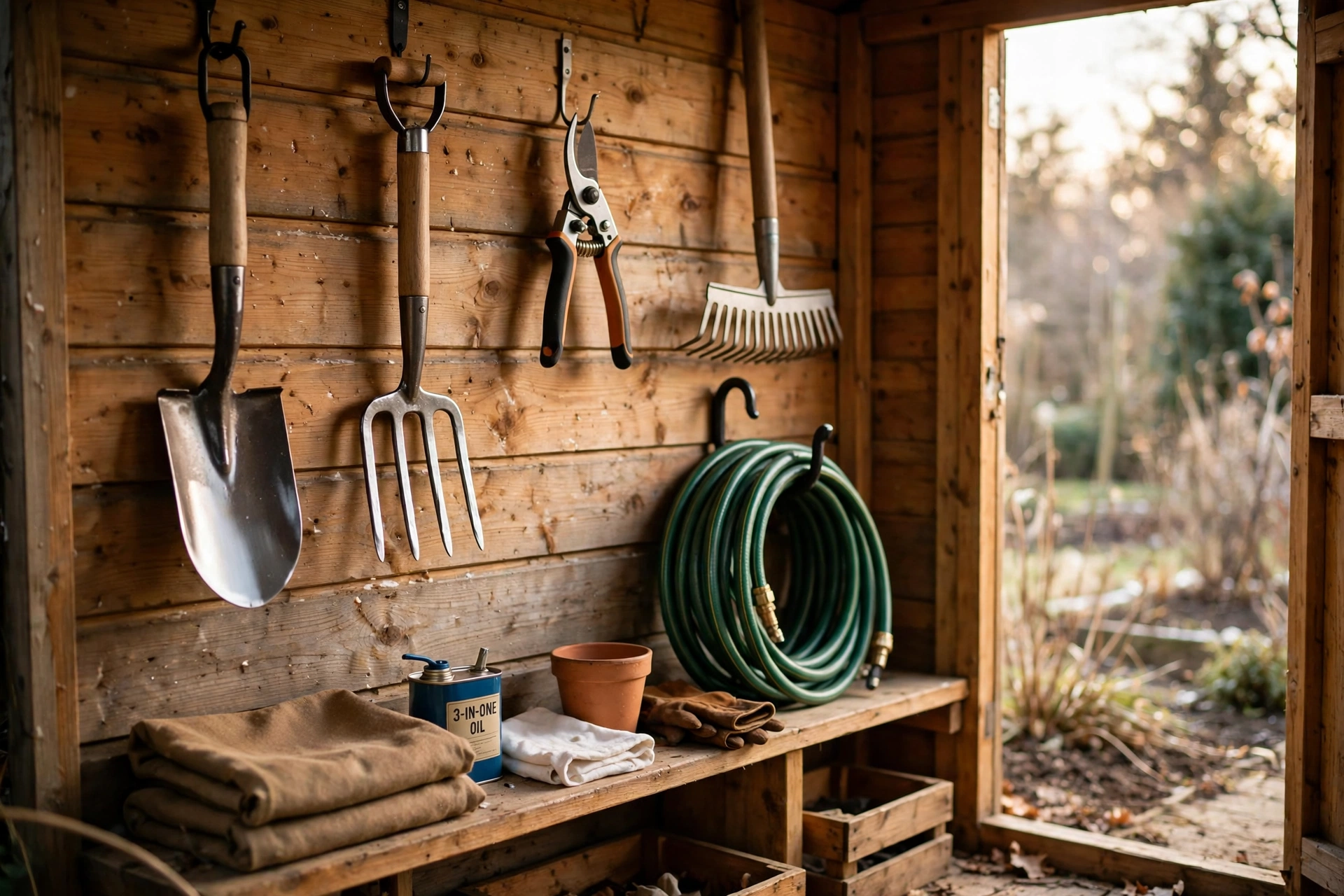
Hang hand tools rather than piling them in a corner. Hooks, pegboards and wall racks keep blades off the damp floor, stop handles warping, and let you see everything at a glance. Hang tools with the blades pointing down or away from you, and keep sharp edges covered with blade guards or old pieces of hose slipped over the cutting edge.
Do not forget the smaller items. Empty and clean seed trays, pots and watering cans, and stack them somewhere dry. Coil hoses loosely, drain them fully, and store them out of the frost; a hose reel or a large hook keeps them from kinking. Gather twine, plant labels, gloves and kneelers into a box or bag so nothing is lost over winter. Wash gardening gloves and dry them fully before putting them away.
Power Tools and Machinery
Power tools need a little more attention. For a petrol mower or strimmer, either run the engine until the fuel tank is empty or add a fuel stabiliser and run the engine for a few minutes so it circulates. Stale fuel is the most common reason mowers fail to start in spring. Remove the spark plug, add a few drops of oil into the cylinder, and pull the starter cord slowly a couple of times to spread it around. Clean the underside of the mower deck, scraping off compacted grass, and check the blade; if it is blunt or chipped, have it sharpened now rather than in the spring rush.
Battery tools are simpler but just as fussy about winter. Remove batteries from tools and chargers, clean the contacts, and store the batteries indoors in a cool, dry place, ideally at around half charge. Never leave a battery on a cold concrete floor or in an unheated shed all winter; the cold drains it and can damage the cells permanently. Check the charge once or twice over winter and top it up if it drops very low. Electric tools should be wiped clean, their cables checked for nicks or damage, and stored hanging or on a shelf, never on a damp floor.
Getting the Shed Ready
Your tools are only as dry as the place you store them. Before you put everything away, give the shed or garage a once-over. Sweep the floor, clear out broken pots and empty compost bags, and check the roof for leaks. If the shed is damp, improve ventilation by opening a vent or leaving a small gap at the top of the door; moving air prevents condensation, which is the real cause of rust in winter. A small moisture absorber or a bag of silica gel can help in a very damp shed.
Keep tools away from chemicals such as fertiliser and weedkiller, which can corrode metal and damage handles if they spill. Store chemicals on a high shelf in their original containers, out of reach of children. Finally, make a simple list of anything that needs replacing or repairing, and order it now while prices and delivery are calm.
Frequently Asked Questions
Should I oil my tools before storing them for winter? Yes. A thin wipe of vegetable oil, camellia oil or light machine oil on all metal surfaces keeps moisture out and prevents rust over the damp months. Wipe off any excess so the tools are not sticky, and rub wooden handles with linseed oil to stop them drying and cracking.
Can I leave fuel in my lawnmower over winter? It is better not to. Petrol goes stale within a few weeks and can clog the carburettor, which is the most common reason mowers fail to start in spring. Either run the tank dry or add a fuel stabiliser and run the engine briefly so it circulates through the system.
Where should I store batteries from cordless tools? Remove them from the tools and keep them indoors in a cool, dry place at around half charge. Do not leave them in a cold shed or on a concrete floor all winter, as the cold can permanently damage the cells. Check them once or twice and top up the charge if needed.
Conclusion
Storing your garden tools properly for winter is a small job with a large payoff. Clean off the soil, disinfect and sharpen the blades, oil the metal and the wooden handles, drain the fuel and bring the batteries indoors, and put everything away dry and organised. Your tools will last years longer, your plants will stay healthier, and the first spring weekend will be spent gardening instead of repairing. An afternoon of care now is the cheapest gardening you will do all year.
If winter gives you time to plan next year's planting, or you want to identify a tree in your garden before you prune it, Try the plant identifier at aitreeidentier.site and head into spring knowing exactly what is growing in your garden.