
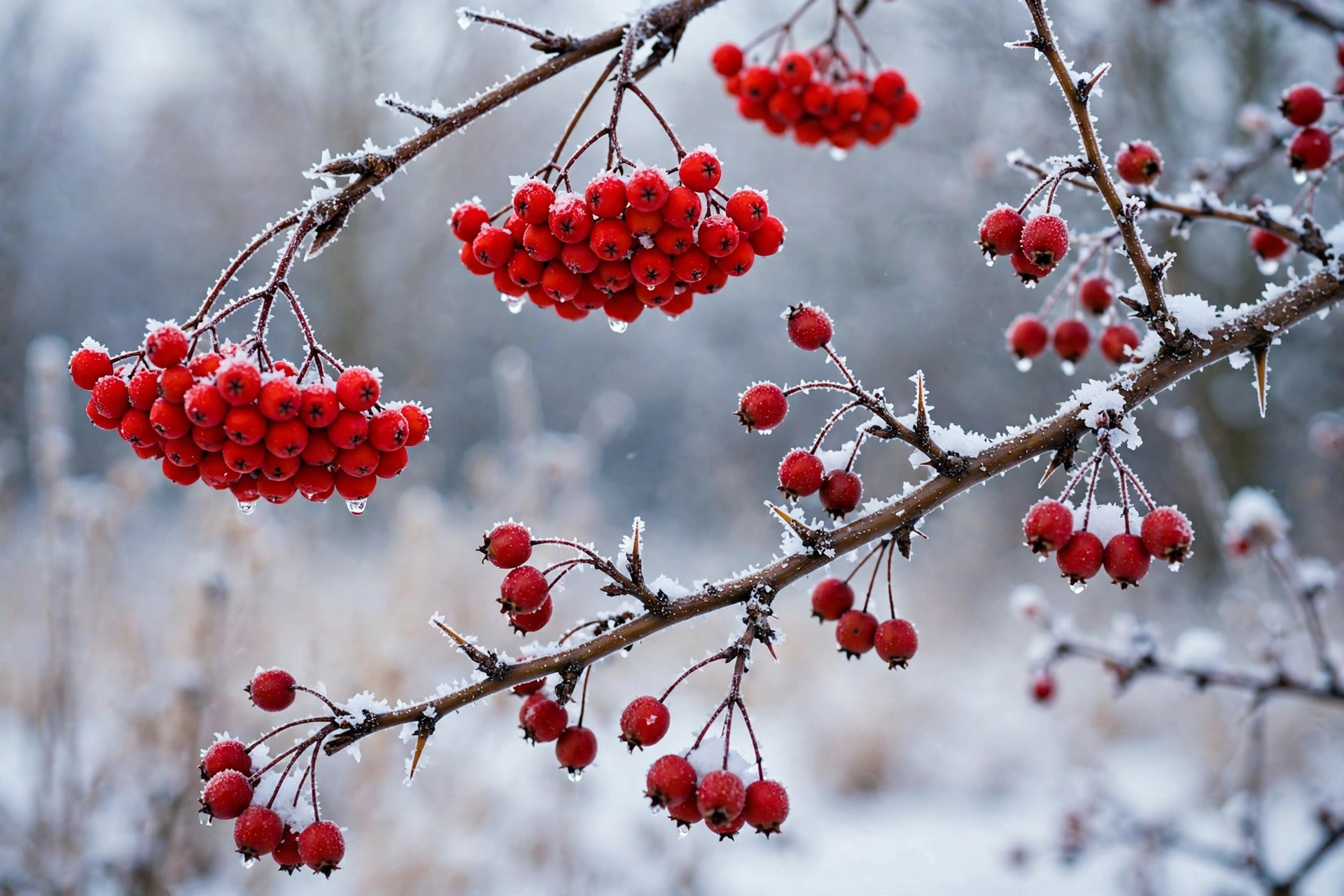
Long after the leaves have fallen and the garden looks bare, winter berries bring colour back to the landscape. Clusters of red, orange, and purple berries hang from naked branches, bright against grey skies and snow. They are one of the great pleasures of the cold months, and they are also a vital food source for birds and other wildlife. Learning to identify winter berries is a rewarding winter skill, and it opens up a whole new way of seeing trees and shrubs when their leaves are gone.
Winter berries come in many shapes and sizes, from the tiny red beads of holly to the large orange hips of the rose. Some grow in heavy hanging clusters, others sit alone along a twig. Some are eaten quickly by birds, while others hang untouched for months because they are bitter or mildly toxic. This guide explains how to identify the most common winter berries on trees and shrubs, what to look for, and which ones to admire rather than taste.
Why Berries Last Through Winter
Many trees and shrubs produce berries in autumn as a way of spreading their seeds. Birds eat the fruit and carry the seeds away, dropping them in new places. But not all berries are meant to be eaten at once. Some species produce fruit that ripens slowly or stays bitter until repeated frosts soften it, so it remains on the branches deep into winter. This staggered ripening is a clever strategy: it spreads the seed dispersal over months and keeps food available when little else is around.
The colour of berries matters too. Red and orange berries stand out against bare branches and snow, making them easy for birds to find. Dark purple and black berries, such as those of elder and ivy, are less obvious to us but are easily spotted by birds, whose colour vision is different from ours. The waxy coating on many berries helps them survive frost and rain without rotting, which is why a cluster of rosehips can look fresh in January.
Rowan: The Mountain Ash
Rowan, also called mountain ash, is one of the easiest winter berries to identify. The berries grow in large, heavy, drooping clusters of bright orange-red fruit, each berry about the size of a pea. They appear in late summer and often last well into winter, although hungry thrushes and waxwings can strip a tree bare in a matter of days. The tree itself is small and slender, with smooth grey bark and delicate branches.
Even without its berries, rowan is easy to recognise in winter. Its buds are dark purple and covered in fine hairs, and the twigs are slender and upright. Look closely at a single berry and you will see a small star-shaped mark at the end opposite the stalk, a feature rowan shares with other members of the rose family. Rowan berries are edible when cooked, and they have traditionally been made into jellies and jams, but raw berries are bitter and can upset the stomach, so they are best left for the birds.
Hawthorn: The May Tree in Winter
Hawthorn is one of our most common hedgerow trees, and its berries, called haws, are a familiar winter sight. The haws are round, deep red, and about the size of a small cherry, growing singly or in small clusters along the branches. They ripen in autumn and often last through the winter, providing food for redwings, fieldfares, and blackbirds when other food is scarce.
The tree itself gives plenty of clues. Hawthorn branches are armed with sharp thorns up to five centimetres long, and the bark is grey-brown and rough. In winter, look for the thorns and the small, rounded buds. Hawthorn is often confused with blackthorn, but blackthorn berries, called sloes, are dark blue-black rather than red, and blackthorn flowers in early spring before its leaves appear, while hawthorn flowers in late spring. The haws are edible and have been used to make jellies and wines, though they are mealy and not particularly tasty raw.
Rosehips: The Fruit of the Wild Rose
Rosehips are among the most useful and recognisable of winter berries. They are the fruit of wild roses, including the dog rose and the sweet briar, and they ripen into bright orange-red, flask-shaped hips in autumn. Each hip is smooth and glossy, with a small tuft of sepals at the tip, and they often hang in small groups from thorny, arching stems.
Rosehips are famous for their high vitamin C content, and they have been made into syrups, teas, and jams for centuries. During the Second World War, children in Britain collected rosehips to make vitamin C syrup when oranges were scarce. The hips are edible, but they contain irritating hairs around the seeds, so they should be cooked and strained rather than eaten raw. In the garden, rosehips are also a sign of a healthy wild rose, and leaving them on the plant through winter feeds birds and looks beautiful in frost.
Other Common Winter Berries
Elder is a familiar shrub whose dark purple-black berries ripen in late summer and are usually eaten quickly by birds, though some clusters linger into early winter. Elderberries are toxic when raw but safe when cooked, and they are widely used for wines, cordials, and jams. The shrub is easy to recognise by its pale, corky bark and the flat-topped clusters of berries on red stalks.
Guelder rose produces translucent red berries in hanging clusters, much like redcurrants, and its leaves turn a brilliant red in autumn before falling. The berries are bitter and mildly toxic, so they are often left untouched by birds until late winter, when hunger overcomes caution. Spindle is another striking shrub: its pink, four-lobed capsules split open to reveal bright orange seeds, a combination that is unmistakable once seen. All parts of spindle are poisonous, so admire it and leave it alone.
How to Identify Berries Safely
Identification should always start with the whole plant, not just the berry. Look at the size and shape of the tree or shrub, the bark, the buds, and the thorns. Note whether the berries grow singly or in clusters, whether they hang down or stand upright, and what colour and size they are. A photograph of the whole branch, taken from a little distance, is often more useful than a close-up of a single berry.
Safety is essential. Many winter berries are poisonous, and some, such as yew and spindle, are dangerous even in small amounts. Never eat a wild berry unless you are completely certain of its identity and know it is safe. A good rule is to use at least two reliable identification guides and, if in doubt, leave it alone. Wash your hands after handling unknown berries, and keep children and dogs from eating them. The safest way to enjoy winter berries is with your eyes and your camera.
Frequently Asked Questions
Are winter berries safe to eat? Some are, such as rosehips and rowan berries when cooked, but many are poisonous, including yew, spindle, and raw elderberries. Never eat a wild berry unless you have identified it with certainty from a reliable guide and know it is safe.
Why do some berries stay on the tree all winter? Some berries are bitter or hard until repeated frosts soften them, and birds leave them until other food runs out. Their waxy coating also protects them from rotting, so they can hang on the branches for months.
What is the best time to look for winter berries? From late November through February, when the leaves are gone and the berries stand out clearly. Early morning light and a light dusting of frost make them especially easy to spot and photograph.
Conclusion
Winter berries turn the cold months into a season of colour and discovery. From the heavy orange clusters of rowan to the deep red haws of hawthorn and the bright hips of the wild rose, they give us a reason to look closely at trees and shrubs when the leaves are gone. They also feed the birds that brighten our gardens through winter, making them an important part of the winter landscape.
Learning to identify them takes practice, but it starts with simple observations: the colour and size of the berry, whether it grows alone or in clusters, and the shape of the tree that bears it. Take photographs, compare them with a good guide, and never eat anything you cannot identify with confidence. If you spot an unfamiliar tree or shrub covered in berries this winter, Try the plant identifier at aitreeidentier.site to identify it from a photo and discover what is growing in your garden.