
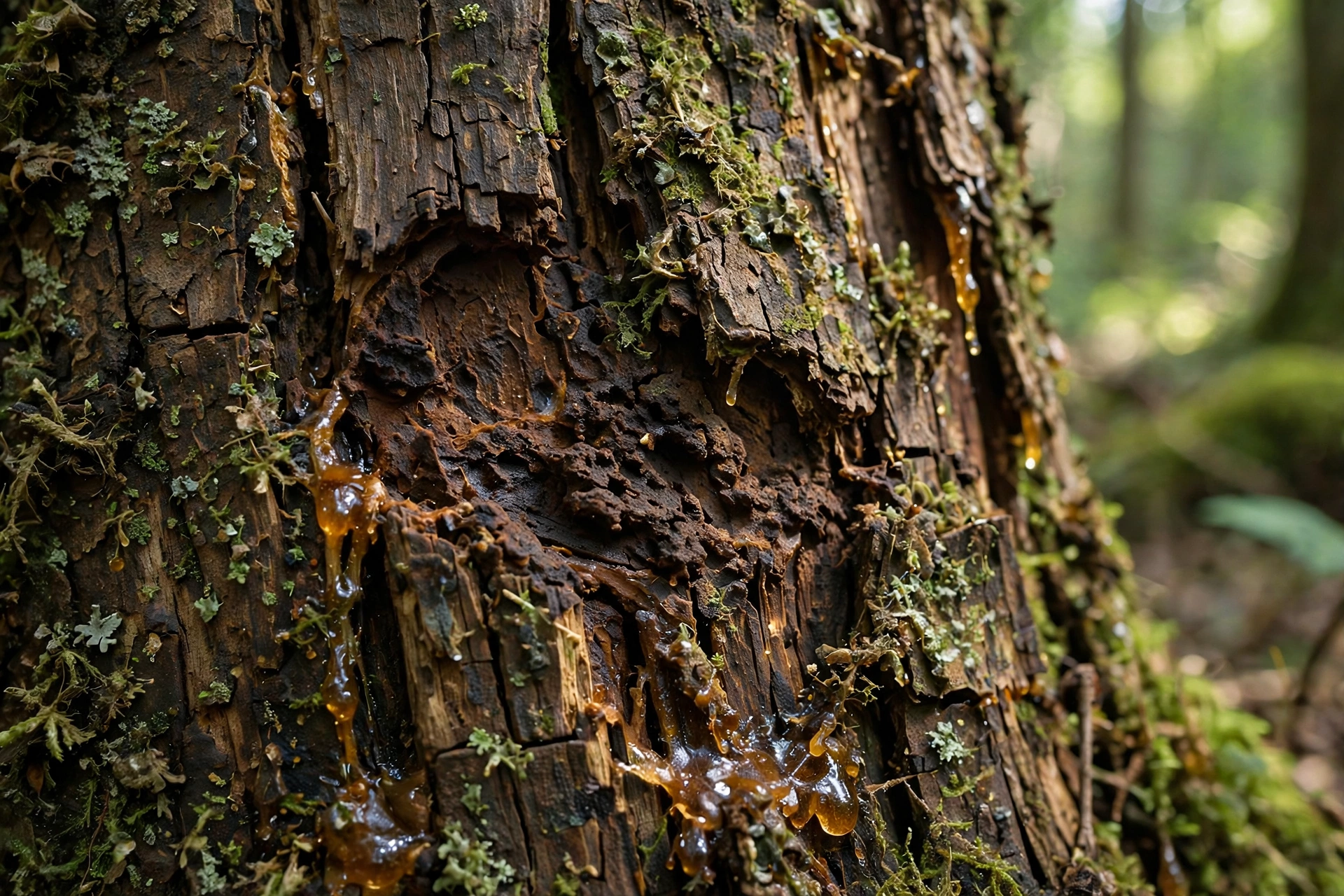
Leaves get most of the attention when a tree is unwell, but bark often tells the story first. Bark is a tree's skin — it protects the living tissue underneath, transports water and nutrients, and seals out disease. When bark cracks, peels, oozes, or develops sunken patches, it is a sign that something has breached that protection.
Learning to read bark symptoms helps you catch canker diseases, borer damage, sunscald, frost cracks, and root problems before they spread through the crown. This guide explains what each common bark symptom looks like, what it might mean, and what to do next.
Healthy Bark vs Sick Bark
Healthy bark varies widely by species — smooth and grey on beech, rough and furrowed on oak, peeling in strips on birch — so the first step is knowing what is normal for your tree. Healthy bark is generally firm, dry, and attached, with no soft, sunken, or oozing areas, and no strong smell.
Sick bark may be cracked, peeling away in large sheets, sunken, discoloured, soft, or wet. It may ooze sap, gum, or dark fluid, show sawdust-like frass, or have mushrooms or fungal brackets growing from it. Any of these signs deserves a closer look, especially if the crown above it is also thinning or dying back.
Common Bark Symptoms and What They Mean
Cankers
A canker is a dead, often sunken area of bark, usually oval or elongated, with a distinct edge. The bark may be dark, cracked, or peeling, and the wood underneath may be discoloured. Cankers are caused by fungi or bacteria entering through a wound — pruning, storm damage, or insect injury. Small cankers on a twig can be pruned out; large cankers on the trunk can girdle the tree and cut off water and nutrients.
Oozing and gum
Oozing sap, gum, or dark, foul-smelling fluid can indicate bacterial infection, fungal canker, borer damage, or physical injury. Clear, sticky gum on a cherry or plum may be gummosis, often linked to canker or borer attack. Dark, wet oozing with a smell may suggest bacterial wetwood or Phytophthora. Note the colour, smell, and whether insects are present.
Peeling and loose bark
Some peeling is normal — birch, plane, and eucalyptus shed bark naturally. Peeling that exposes soft, discoloured, or dead wood underneath, especially in large patches, is not normal. It can indicate decay, canker, or root damage.
Step-by-Step: Examine Sick Bark
Step 1: Photograph the damage in context
Take a wide photo of the whole tree, a mid-distance photo of the affected trunk or branch, and a close-up of the bark detail. Note the height of the damage and which side of the tree it is on.
Step 2: Check the crown above
Is the foliage above the damaged bark thinning, yellowing, or dying back? Damage on one side of the trunk often matches dieback on the same side of the crown.
Step 3: Feel and smell gently
Gently press the bark around the damaged area — is it firm or soft and spongy? Is there a smell? Do not peel bark away forcefully; that creates a larger wound.
Step 4: Look at the base and roots
Check for mushrooms, soil heaped against the trunk, girdling roots, construction damage, or a leaning trunk. Many bark problems start with root stress or physical injury at the base.
Step 5: Record timing and history
When did you first notice the crack or ooze? Was there a storm, frost, pruning, or construction nearby? Has it grown, changed colour, or started oozing more?
Step 6: Decide the next step
Small, dry cracks with healthy bark around them can often be monitored. Large cankers, heavy oozing, mushrooms, or dieback above the damage call for a professional arborist, especially if the tree is large or near people or buildings.
Common Mistakes
Cracks, Frost Damage, and Sunscald
Not every bark crack is a disease. Frost cracks are long, vertical splits that often appear on the south or south-west side of a young tree, where winter sun warms the bark by day and frost freezes it at night. They usually run straight, are dry, and may close over in summer as the tree lays down callus tissue. Sunscald is similar: pale, sunken, dead patches on the sunny side of thin-barked trees such as maple, cherry, and young fruit trees. You can reduce both by wrapping the trunks of young trees in winter, painting the trunk with diluted white paint in some climates, and keeping the base mulched so the soil temperature stays steadier. A frost crack that is dry, narrow, and healing is very different from a canker, which is sunken, discoloured, and often oozing — and telling them apart saves you from treating a harmless injury as a disease.
What to Do After You Find a Bark Problem
Once you have photographed and recorded a bark symptom, resist the urge to cut, scrape, or paint it straight away. Most bark problems are best handled by improving the tree's overall health first: water during dry spells, mulch the root zone without piling mulch against the trunk, avoid wounding the bark with strimmers and mowers, and prune only in dry weather with clean, sharp tools. Small cankers on twigs can be pruned out, but leave trunk work to an arborist. If mushrooms or fungal brackets are growing from the trunk or base, take that seriously: they often mean decay inside the wood, even if the crown still looks reasonable. An arborist can test the wood, assess the risk of the tree falling, and advise whether the tree can be managed safely or needs to be removed. Keeping a dated record of the bark — a photo each season — also helps an arborist judge whether a canker is stable, healing, or spreading.
FAQ
Is a crack in tree bark always serious? No. Small, dry frost cracks on young trees often heal on their own. Cracks that are wide, oozing, soft, or associated with dieback above them are more serious and deserve closer inspection.
What does oozing sap mean? It can be a normal response to injury, or a sign of canker, borer, or bacterial infection. Note the colour, smell, and amount, and whether the crown above is healthy. Persistent dark or foul-smelling ooze should be checked by an arborist.
Can a tree recover from a canker? Small cankers on twigs can be pruned out and the tree may recover fully. Large trunk cankers are harder to treat and may weaken the tree over time. Early detection and good tree care improve the odds.
Should I fill a bark crack or hole with sealant? No. Wound paints and fillers are generally not recommended: they can trap moisture, slow the tree's own healing, and hide decay. Let the tree form callus tissue naturally, and focus on keeping the tree healthy instead.
Why is bark peeling off my tree in sheets? Some species, such as birch, plane, and eucalyptus, shed bark naturally as they grow. Peeling is a concern only when the wood underneath is soft, dark, or dead, or when large patches come away with the crown thinning above them.
Conclusion
Bark is a tree's first line of defence, and its condition is a reliable early warning system. Learn what healthy bark looks like for your species, check it regularly, and pay attention to cracks, cankers, oozing, peeling, and fungal growth — especially when the crown above is also struggling. Small problems can often be monitored; large or spreading ones need a professional. Either way, looking at the bark is a habit that will save trees.
Try it: Try the free Tree Disease Identifier on aitreeidentier.site — upload a clear photo of the cracked, cankered, or oozing bark for instant guidance.
Safety disclaimer: Never eat or use any part of a tree, or treat a disease, based on AI identification alone. Do not climb a damaged tree or prune large limbs yourself. Consult a local arborist for diagnosis and safe treatment.