
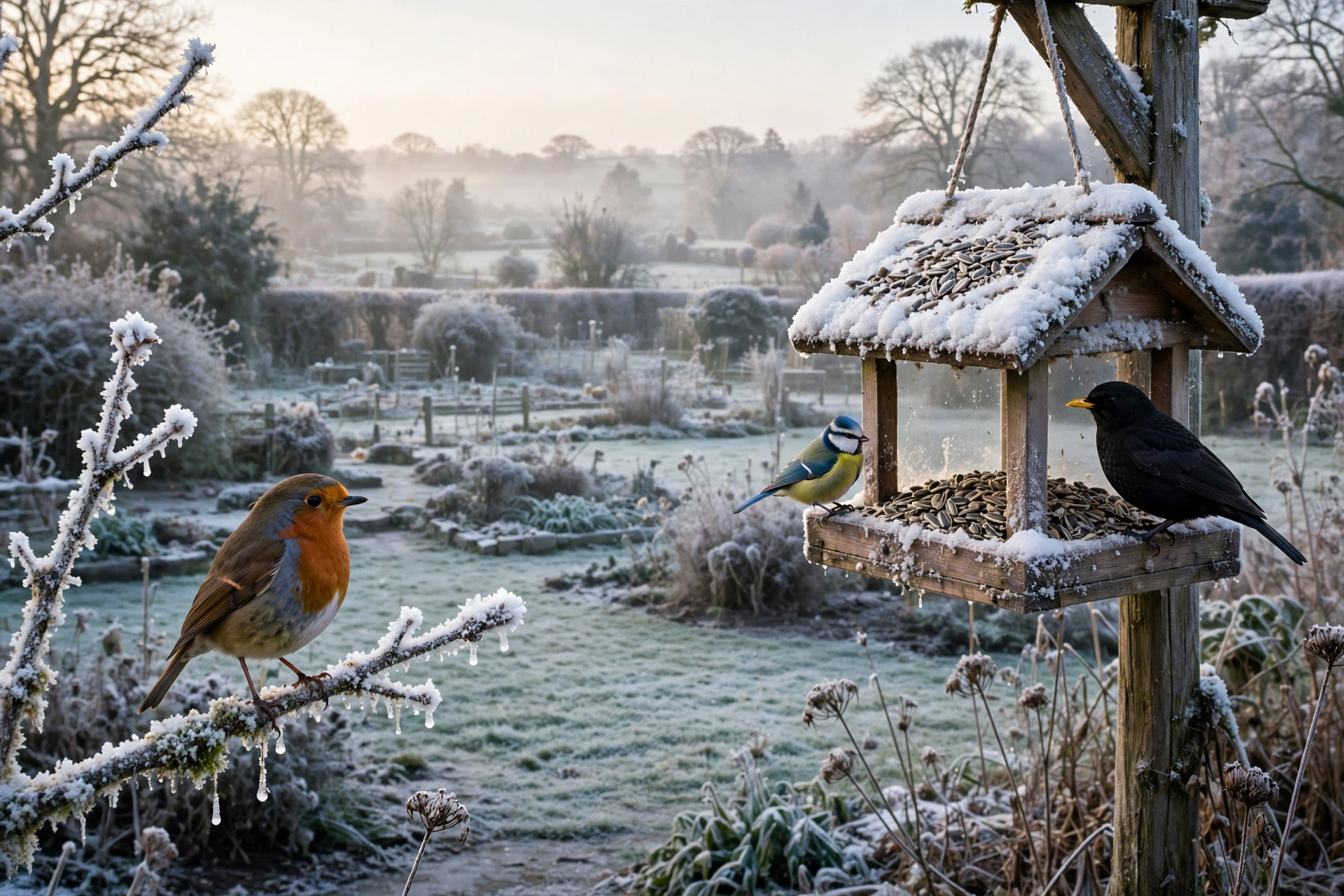
Winter is the best season to start identifying garden birds. The trees are bare, the birds are easier to see, and many species visit gardens looking for food. At the centre of it all is the robin, one of Britain's most familiar and best-loved birds, with its bright red breast and bold, confiding manner. But the robin is not alone. Blackbirds, blue tits, thrushes and winter visitors from Scandinavia all share our gardens in the cold months, and learning to tell them apart is easier than you might think.
Why Robins Stand Out in Winter
Robins are with us all year round, but they seem bolder and more visible in winter. With leaves gone and food scarce, they spend more time in the open, perching on fences, spades and garden furniture while they search for insects and berries. Robins are also fiercely territorial, and in winter both males and females defend their own feeding areas, singing loudly even on cold, grey days. Their song is a sweet, warbling phrase that carries well in still winter air, and it is often the first bird song you hear at dawn. If you put out food regularly, a robin will quickly learn your routine and may follow you around the garden, waiting for you to turn over soil and expose worms.
How to Recognise a Robin
The robin is a small, round bird, about 14 centimetres long, with a bright orange-red breast and face, a brown back and wings, and a pale belly. Its dark eyes are large and prominent, and its beak is thin and dark, suited to picking up insects. Young robins look quite different: they are speckled brown all over, with no red breast at all, and they only gain their adult colours after their first moult. Their flight is quick and direct, with rapid wingbeats between perches. When you hear a thin, high-pitched "tick" call, that is often a robin warning other birds away from its territory. Male and female robins look identical, so you cannot tell them apart by appearance alone.
Blackbirds in Winter
The blackbird is one of the commonest winter garden birds, and the male is unmistakable: glossy black all over, with a bright yellow-orange beak and a yellow ring around the eye. Females are a warm dark brown, with a paler, speckled breast and a brown beak, so beginners sometimes mistake them for a thrush. Blackbirds are larger than robins, about 25 centimetres long, and they run across lawns in short bursts, pausing to cock their tail and listen for worms. In winter, blackbirds rely heavily on fallen fruit and berries, and they will defend a berry bush or a windfall apple against other birds. Blackbirds often feed on the ground under hedges and shrubs, so look low as well as high when you are watching for them.
Blue Tits, Great Tits and Other Small Visitors
Tits are the small, acrobatic birds that visit feeders in mixed flocks during winter, and learning to tell them apart is a good next step. The blue tit is small and colourful, with a blue cap, white cheeks, a yellow breast and greenish wings, and it often hangs upside down from feeders and twigs. The great tit is larger, with a black head, white cheeks and a yellow breast crossed by a bold black stripe down the centre. The coal tit is smaller and duller, with a black cap, white cheeks and a pale patch on the back of its neck. Long-tailed tits are different again: tiny pink, black and white birds with very long tails that travel in noisy family groups. Tits visit gardens in winter because they need extra food to survive cold nights, and they will happily use peanut feeders, fat balls and seed feeders.
Thrushes, Redwings and Fieldfares
Thrushes are a group of medium-sized, speckled birds that visit gardens in winter, and two of them only arrive from Scandinavia when the weather turns cold. The song thrush is a resident bird with a warm brown back and a cream breast covered in neat, dark spots. It is famous for smashing snails against a stone, using it as an anvil, and its song is a loud, repeated phrase, often described as "did-he-do-it". Redwings are winter visitors, smaller than a song thrush, with a creamy stripe over the eye and a rusty-red patch under the wing. Fieldfares are larger, with a grey head, chestnut back and speckled breast, and they arrive in noisy flocks. Both redwings and fieldfares eat berries and fallen fruit, so watch for them on hawthorn, rowan and holly, and on lawns after rain.
What Winter Birds Eat and How to Help Them
Winter is the hardest season for garden birds, because insects are scarce and cold nights burn a lot of energy. Robins eat insects, worms and soft fruit, and they love mealworms, grated cheese and soaked raisins scattered on the ground or on a bird table. Blackbirds and thrushes prefer fallen apples, pears and berries, so leave windfall fruit on the ground rather than clearing it all away. Tits and finches do well on sunflower seeds, peanuts and fat balls, while finches also like nyjer seed. Fresh water is just as important as food, because birds need to drink and bathe even in cold weather. Keep a shallow dish topped up and break the ice on frosty mornings. Clean your feeders regularly with hot water to prevent disease, and move them occasionally so droppings do not build up underneath.
Where to Look for Winter Birds
You do not need to travel far to see winter birds: your own garden, a local park or a churchyard will do. Look in the places where birds feed and shelter. Robins and blackbirds favour lawns, flower beds and the ground under hedges, where they hunt for worms and insects. Tits and finches visit feeders and the branches of trees and shrubs, while redwings and fieldfares gather on berry bushes and open grass. Early morning is the best time to watch, because birds feed actively after a cold night, and late afternoon is good too, as they top up before roosting. Sit quietly near a window or in a sheltered spot, and let the birds come to you. Binoculars help, but they are not essential in a garden, where birds often come close.
Watching Birds Without Disturbing Them
Garden birds are wild animals, and the best birdwatching is done quietly and patiently. Move slowly, avoid sudden gestures, and wear muted colours if you are sitting outside. If a bird flies away when you approach, you are too close, so back off and wait for it to return. Never chase birds or disturb nests, and in winter avoid flushing birds from roosts, because they need their energy to survive cold nights. Keep cats indoors at dawn and dusk if you can, when birds feed most actively, and fit a bell to your cat's collar. Feeding stations work best when they are near cover, such as a hedge or shrub, so birds can escape quickly if a sparrowhawk appears. With a little patience, the birds in your garden will grow used to you, and a robin may even come close enough to take food from your hand.
Frequently Asked Questions
Do robins migrate in winter? Most British robins stay here all year, but some birds from Scandinavia and northern Europe arrive in autumn to spend the winter with us.
What is the best food for robins in winter? Mealworms are the robin's favourite, along with grated mild cheese, soaked raisins and soft fruit. Scatter food on the ground or on a bird table, because robins prefer to feed low down rather than hanging from a feeder.
How can I tell a redwing from a song thrush? Look for the creamy stripe above the eye and the rusty-red patch under the wing, which the song thrush does not have. Redwings are also slightly smaller and usually arrive in flocks, while song thrushes are often alone.
Conclusion
Winter is a wonderful time to learn your garden birds, and the robin is the perfect place to start. Once you can recognise a robin by its red breast, upright stance and sweet song, the other winter visitors become easier to place: the glossy blackbird on the lawn, the acrobatic blue tit on the feeder, the speckled thrush under the hedge and the redwing flock on the hawthorn. Put out food and fresh water, watch from a quiet spot, and keep a simple record of what you see.
If a robin is singing from a tree in your garden and you would like to know what tree it is, take a clear photo of its leaves and bark and try the identifier at aitreeidentier.site. Try the plant identifier at aitreeidentier.site