
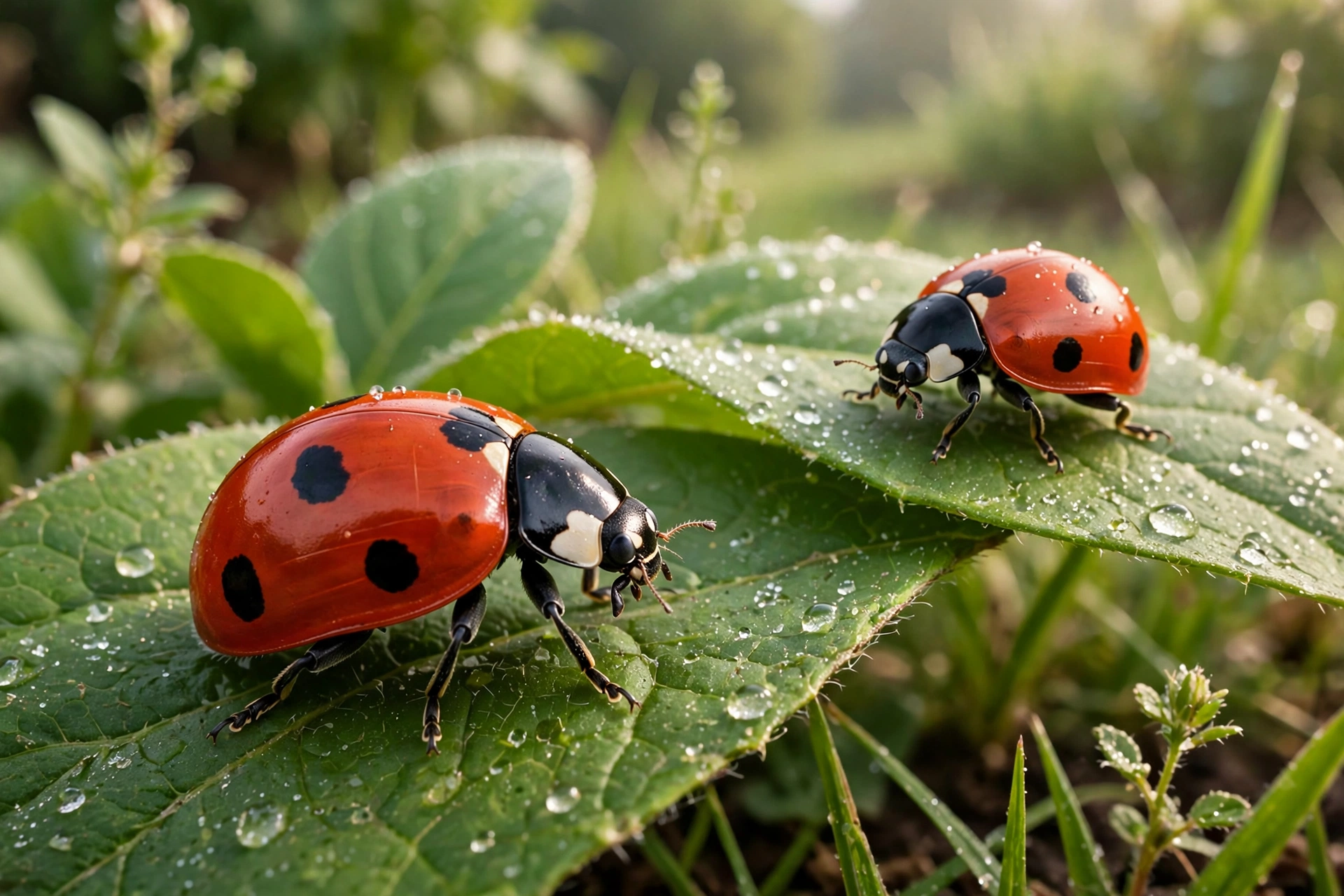
Of all the insects in a British garden, the ladybird is the one almost everyone recognises and loves. Its bright red wing cases, neat black spots and round, cheerful shape make it a favourite with children and gardeners alike, and it appears on everything from children's books to garden ornaments. Yet the ladybird is far more than a pretty face. It is one of the most useful creatures in the garden, a tireless hunter of aphids that protects roses, beans, fruit trees and vegetables without any help from us. Learning to identify the different ladybirds in your garden is a rewarding way to begin watching wildlife, and it tells you a great deal about the health of your plot.
Why Ladybirds Matter in the Garden
A single ladybird can eat thousands of aphids in its lifetime, and a ladybird larva can eat even more. Aphids, the small green, black or white insects that cluster on the soft tips of plants, suck sap, distort growth and spread viruses. Ladybirds keep them in check naturally. A garden with plenty of ladybirds usually has few serious aphid problems, while a garden that has been sprayed heavily with insecticide often has more aphids, because the spray kills the ladybirds and their larvae along with the pests.
Ladybirds are also a useful sign of a healthy garden. They need a mix of habitats: flowers for nectar and pollen, dense plants for shelter, and plenty of prey. If ladybirds are visiting your garden regularly, it is a good sign that your garden supports a wide range of insects and that you have not sprayed away the food web they depend on. Watching which species appear, and when, can tell you how your garden changes through the seasons.
The Seven-Spot Ladybird
The best-known ladybird in Britain is the seven-spot ladybird, and it is a good place to start learning. It is a fairly large ladybird, about seven to eight millimetres long, with bright red wing cases and exactly seven black spots: three on each wing case and one straddling the centre line near the front. Its head is black with two white patches, and its body is a neat, domed oval. The seven-spot is common across the whole of Britain and Ireland, and it is one of the first ladybirds to appear in spring.
You will find seven-spots on a wide range of plants, from garden flowers and vegetables to hedgerows, meadows and woodland edges. They are strong fliers and often turn up in large numbers when aphids are plentiful, especially on roses, beans, nettles and cereals. In autumn, they gather in groups to hibernate, often in sheltered places such as window frames, sheds and leaf litter. If you see a big red ladybird with seven spots, you can be confident of your identification.
Other Common Ladybirds to Know
Once you can recognise the seven-spot, there are several other common species to look for. The two-spot ladybird is smaller, about four to five millimetres, with red wing cases and one black spot on each side, though it also comes in a black form with red spots. The ten-spot ladybird is smaller still, yellow or orange with ten black spots, and often found on trees and shrubs. The fourteen-spot ladybird is yellow with rectangular black markings and is common in grassland and gardens.
The Harlequin Ladybird
No guide to ladybirds today would be complete without the harlequin ladybird, a species that arrived in Britain from Asia in 2004 and has since spread across the country. It is a large ladybird, seven to eight millimetres, and it is extremely variable: it can be red with many black spots, black with red spots, or orange with black spots. This variability makes it tricky to identify from colour alone, but its size, domed shape and the white patches on its head help to separate it from native species.
The harlequin is a concern because it eats the eggs and larvae of native ladybirds as well as aphids, and it has become one of the commonest ladybirds in many gardens. It also has the habit of gathering in large numbers inside houses in autumn, which can be a nuisance. If you think you have found a harlequin, note its size, shape and markings, and remember that it is the only ladybird likely to appear in a large indoor gathering. Recording your sightings helps scientists track how native species are faring.
The Ladybird Life Cycle
Ladybirds go through a complete metamorphosis, and their larvae look nothing like the adults. In spring, females lay clusters of tiny yellow eggs on the undersides of leaves, usually near aphid colonies. The eggs hatch into dark, spiny larvae with orange markings, which look a little like tiny crocodiles. These larvae are voracious aphid eaters, and a single larva can eat hundreds of aphids before it pupates.
After about three weeks of feeding, the larva attaches itself to a leaf or stem and becomes a pupa, a round, orange and black case from which the adult emerges. The new adult is pale at first, with soft wing cases that harden and colour up over a few hours. Most ladybirds produce one generation a year, though in a warm summer some species manage two. The adults feed through summer, then seek sheltered places to hibernate over winter, often gathering together in groups for warmth.
Where and When to Look for Ladybirds
Ladybirds can be found from early spring to late autumn, with the best time for spotting them from May to September, when aphids are plentiful. Look on the soft new growth of roses, on bean plants, on nettles, and on the undersides of leaves, where aphids gather. Check sunny, sheltered spots on warm days, when ladybirds are most active. They are also common on fences, walls and window frames, where they bask in the sun.
In autumn, watch for ladybirds gathering to hibernate. They often collect in window frames, in sheds, under loose bark and in leaf litter. Leave piles of leaves and log piles undisturbed over winter, as these provide shelter not only for ladybirds but for many other useful creatures. In spring, the first ladybirds appear on sunny days in March and April, often on early flowers such as dandelions, where they feed on pollen before the aphids arrive.
Attracting Ladybirds to Your Garden
The best way to attract ladybirds is to give them what they need: food, shelter and safety. Grow a mix of flowering plants, especially those with open flowers such as marigolds, calendula, dill and fennel, which provide nectar and pollen. Avoid spraying insecticides, even organic ones, as these kill ladybirds and their larvae. Tolerate a few aphids in spring, because without them the ladybirds have nothing to eat and will move elsewhere. A small log pile, a patch of nettles in a quiet corner, and a few undisturbed leaf piles will give ladybirds places to shelter and hibernate.
Frequently Asked Questions
Do all ladybirds have the same number of spots? No, the number of spots varies by species, not by age. The seven-spot ladybird always has seven spots, the two-spot has two, and the fourteen-spot has fourteen. Counting the spots, along with the colour and size, is one of the best ways to identify which species you have found.
Are ladybirds poisonous? Ladybirds are not dangerous to people, but they do have a defence. When threatened, they release a bitter yellow liquid from their leg joints, which tastes unpleasant to birds and other predators. This is why their bright red colour works as a warning. The liquid can stain skin and may irritate sensitive skin, so it is best to handle ladybirds gently and wash your hands afterwards.
What should I do if I find ladybirds inside my house? In autumn, ladybirds often come indoors to hibernate, especially harlequins. Gently collect them in a jar or on a piece of paper and move them to a shed, garage or sheltered outdoor spot. Avoid using insecticide on them, and do not release them outside on a freezing day, as they may not survive the cold.
Conclusion
Ladybirds are among the easiest and most rewarding insects to identify, and they repay the effort by keeping your garden free of aphids. Start with the seven-spot, learn its shape and markings, then work through the other common species one by one. With a little patience, a hand lens, and a willingness to look on the undersides of leaves, you will soon be able to tell your two-spots from your harlequins, and your garden will be healthier for the ladybirds that live in it.
If you spot a ladybird on an unfamiliar tree or shrub and would like to know what plant it is visiting, Try the tree identifier at aitreeidentier.site to identify the tree in seconds and learn more about the habitat your ladybirds prefer.