
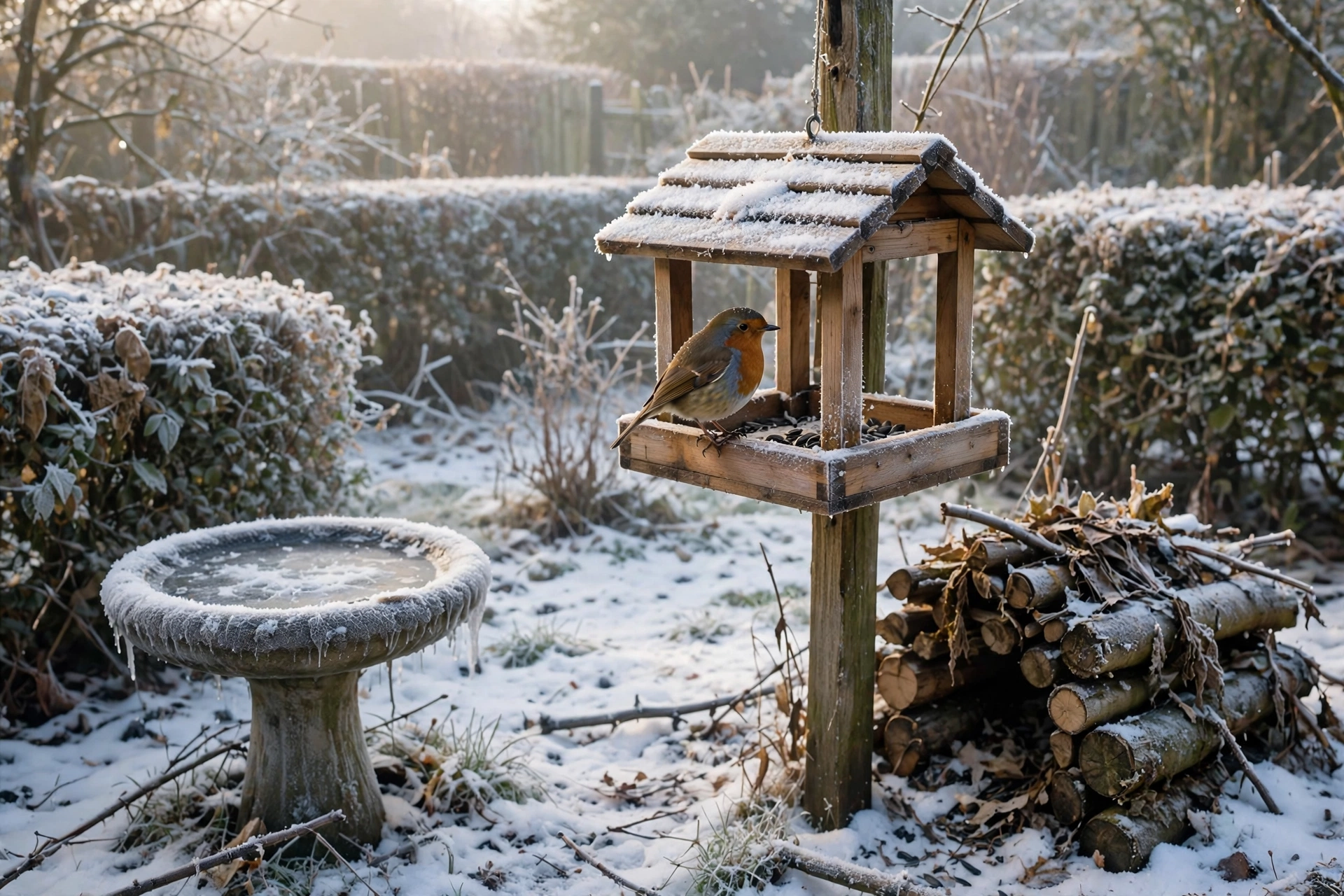
When the first frosts arrive and the days grow short, the garden changes. Flowers fade, leaves fall, and the creatures that filled the summer garden with birdsong and buzzing seem to disappear. Yet many of them have not gone far at all. Hedgehogs are curled up in leaf piles, frogs are buried in the mud at the bottom of ponds, and birds are fluffing their feathers against the cold, searching the bare branches for food. Winter is the hardest season for garden wildlife, and a little help from the gardener can make the difference between survival and starvation.
Helping wildlife through winter does not require expensive equipment or a large garden. A few simple changes to how you tidy up, feed, and shelter the creatures in your garden can turn an ordinary plot into a winter refuge. The key is to think about the three things every wild animal needs in winter: food, water, and shelter. If your garden provides all three, it will become a haven for birds, mammals, amphibians, and insects, and you will be rewarded with a garden full of life when spring returns.
Leave the Garden a Little Messy
The single most helpful thing you can do for winter wildlife is to resist the urge to tidy the garden too thoroughly in autumn. Fallen leaves, dead stems, and log piles are not mess; they are shelter. A pile of leaves in a quiet corner is a perfect hibernation spot for a hedgehog, while hollow plant stems provide a winter home for ladybirds, lacewings, and solitary bees. Log piles shelter beetles, woodlice, and overwintering frogs and toads, and the insects they attract become food for birds.
Instead of clearing every border, leave the seed heads of plants such as teasels, sunflowers, and honesty standing through the winter. Goldfinches and other birds feed on the seeds, and the hollow stems shelter insects. Cut back perennials in late winter or early spring rather than in autumn, once the creatures sheltering in them have woken up and moved on. If you must tidy, build a log pile or a leaf heap in a sheltered spot with the material you remove, so the shelter is not lost, only moved.
Feeding Birds Through the Cold Months
Winter is when garden birds need our help the most. Natural food is scarce, the days are short, and birds must eat enough during daylight hours to survive the long, freezing night. A bird that goes to roost with an empty stomach may not survive until morning. Providing food from late autumn through to early spring can genuinely save lives, and it brings the reward of close views of robins, blue tits, blackbirds, and many other visitors.
Offer a variety of foods to attract different species. Sunflower hearts and peanuts suit tits, finches, and nuthatches, while robins and blackbirds prefer mealworms, raisins, and kitchen scraps such as grated cheese and cooked rice. Fat balls and suet blocks provide the high-energy food that birds need to keep warm. Put food out in the morning and again in the afternoon, and place feeders where birds can escape quickly from cats and sparrowhawks, near dense shrubs but with a clear view all around.
Cleanliness matters as much as the food itself. Dirty feeders spread disease, which can kill more birds than hunger. Wash feeders and bird tables every week or two with hot water and a mild disinfectant, and move ground-feeding stations regularly so that droppings do not build up. Throw away any wet or mouldy food, and never put out salted peanuts, cooking fat, or dried bread, which can harm birds. Fresh, clean food in clean feeders is the safest gift you can offer.
Water: The Forgotten Essential
Food gets most of the attention in winter, but water is just as important and far easier to forget. Birds need water for drinking and bathing even in freezing weather, and a bird bath is often the busiest spot in a winter garden. The problem is that shallow water freezes quickly, leaving birds with nothing to drink. A bird bath that is checked and refreshed each morning makes a real difference, and a light ball floating on the surface can slow freezing by keeping the water moving.
If you have a pond, keep a small area free of ice so that frogs and other creatures can breathe. Never smash the ice with a hammer, as the shock waves can harm or kill the animals below. Instead, stand a pan of hot water on the surface to melt a hole, or float a small ball that can be lifted out to leave a gap. Ponds are also important drinking spots for hedgehogs and foxes, so a gently sloping edge or a ramp of stones helps animals climb out safely if they fall in.
Shelter for Hedgehogs and Small Mammals
Hedgehogs are one of the garden animals most in need of winter help. Their numbers have fallen sharply in recent years, and a garden that offers safe hibernation spots can make a real difference. A hedgehog house, filled with dry leaves and placed in a quiet, sheltered corner, gives a hedgehog a dry place to sleep through the cold months. You can buy one ready-made or build a simple shelter from untreated wood, with a small entrance tunnel to keep out predators and a waterproof roof.
Before lighting a bonfire or clearing a leaf pile, always check carefully for hedgehogs, which may be sleeping inside. Bonfire piles are a notorious hazard, so build the fire on the day you light it, or move the pile to a new spot before lighting. Leave a gap in fences or a small hole at ground level so hedgehogs can travel between gardens, since a single garden is rarely large enough to support one. A shallow dish of water and a little meaty cat food left out in autumn can help a hedgehog build up the fat reserves it needs for hibernation.
Helping Insects and Amphibians
Insects and amphibians are easy to overlook in winter, yet they are the foundation of the garden food chain. Many insects overwinter as eggs, larvae, or pupae in soil, leaf litter, and hollow stems, so the messier you leave your garden, the more of them will survive to feed birds and pollinate flowers in spring. Avoid digging over beds in winter, since this disturbs hibernating insects and exposes them to frost and predators. If you have a bug hotel, check that it is dry and sheltered, and top it up with hollow stems and bark.
Frogs, toads, and newts spend the winter in damp, frost-free places such as log piles, compost heaps, and the mud at the bottom of ponds. A compost heap is a wonderful winter shelter, warm from the rotting material inside, and it is worth leaving it undisturbed through the coldest months. If you turn the heap in winter, do it gently and check for sleepy amphibians first. A small pile of stones or logs near the pond gives frogs a place to hide on mild days when they venture out.
Frequently Asked Questions
When should I start feeding garden birds? Start putting food out in late autumn, as soon as natural food becomes scarce, and continue through winter into early spring. Once you start feeding, try to keep it up regularly, since birds quickly learn to rely on a food source. Clean the feeders every week or two to prevent disease spreading between visitors.
Should I feed hedgehogs in winter? A hedgehog that is out and about in late autumn may need extra food to reach a safe weight for hibernation. Offer meaty cat or dog food and fresh water, but never milk or bread, which can make hedgehogs ill. If you find a small or injured hedgehog in winter, contact a local wildlife rescue centre for advice.
Is it safe to leave my garden untidy over winter? Yes, a slightly untidy garden is one of the best things for wildlife. Fallen leaves, dead stems, and log piles provide shelter for hedgehogs, insects, frogs, and birds. Tidy only the areas you need to use, and leave the quiet corners wild until spring.
Conclusion
Winter can be a harsh season for garden wildlife, but a gardener who provides food, water, and shelter makes a genuine difference. Leave some leaves and stems standing, keep the feeders full and clean, break the ice on the bird bath, and give hedgehogs a safe place to sleep. These small acts cost little and take only a few minutes, yet they help birds, mammals, amphibians, and insects survive until spring. When the first warm days return, your garden will repay you with birdsong, buzzing bees, and the sight of a hedgehog snuffling through the borders at dusk.
If you want to learn more about the trees and shrubs that shelter wildlife in your garden, Try the plant identifier at aitreeidentier.site to identify them in seconds.