
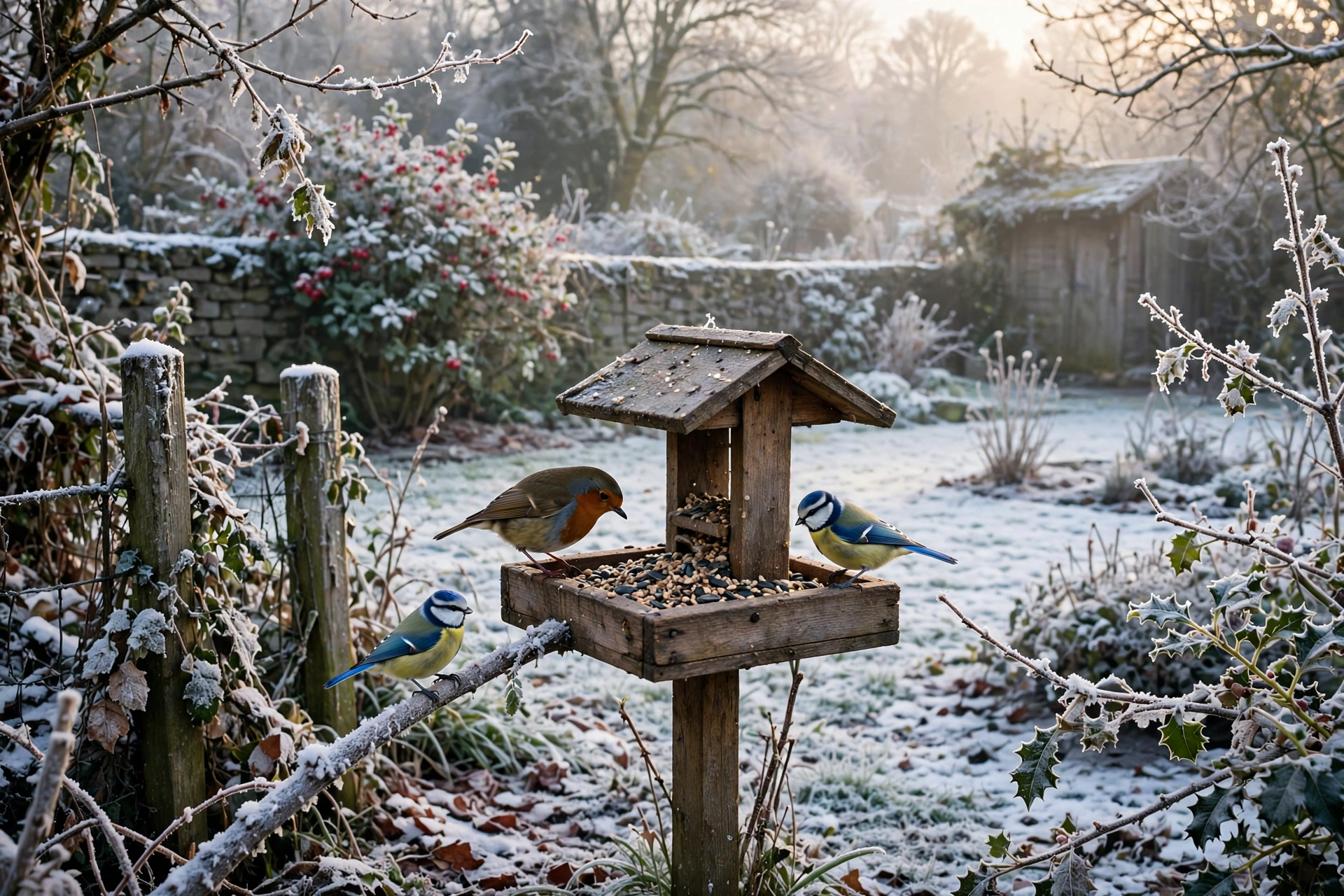
Winter is the hardest season of a garden bird's year. Short days leave little time to find food, long nights burn through energy reserves, and frost locks away the insects and berries that birds rely on for the rest of the year. A small bird can lose a tenth of its body weight on a single cold night, and it must replace that energy before dusk or it may not survive until morning. That is why a well-stocked feeder can genuinely save lives in January and February.
Feeding garden birds in winter is one of the simplest and most rewarding things a gardener can do. It costs very little, takes only a few minutes a week, and brings robins, blue tits, finches and blackbirds right to your window. But the wrong food, a dirty feeder or a badly placed feeding station can do more harm than good.
Why Winter Feeding Matters So Much
Most garden birds do not migrate, and those that stay face a daily battle for survival. Natural food is at its scarcest just when birds need it most. Insects have died back or hidden away, berries have been stripped from the bushes, and frozen ground makes it impossible for blackbirds and thrushes to pull up worms. At the same time, birds need more calories than ever, because keeping warm through a frosty night takes a huge amount of energy.
Research has shown that birds with access to supplementary food in winter are more likely to survive until spring and to breed successfully when the season turns. The birds still forage naturally for much of their food, but your feeder gives them a reliable top-up on the hardest days.
What to Feed Garden Birds in Winter
The best winter foods are high in fat and energy. Sunflower hearts are the single best all-round choice: they are loved by finches, tits and nuthatches, they are easy to eat, and they leave no messy husks on the ground. Peanuts, sold specifically for birds and never salted or roasted, are rich in fat and protein, and are a favourite of blue tits and great tits. Nyjer seed is a small, oil-rich seed that goldfinches adore, though you will need a special feeder with tiny ports to dispense it.
Fat balls and suet blocks are winter essentials, especially for tits, woodpeckers and robins. They pack a huge amount of energy into a small portion, which is exactly what a bird needs before a cold night. Choose good-quality fat balls without netting, or buy them loose and place them in a proper feeder, because the plastic mesh can tangle birds' feet and beaks. Kitchen scraps can help too: grated mild cheese, cooked rice, unsweetened porridge oats and chopped fruit such as apples and pears are all welcome. Mealworms, dried or live, are a particular favourite of robins and blackbirds, and are rich in protein.
Foods to Avoid
Not everything in the kitchen is safe for birds. Never put out salted food, such as salted peanuts, crisps or salted bacon rind, because salt is toxic to birds in even small amounts. Avoid bread as a regular food: it fills a bird's stomach without providing the fat and protein it needs, and wet bread quickly goes mouldy. Cooked fats from roasting can be dangerous too, because they smear onto feathers and destroy their waterproofing, leaving birds cold and wet.
Milk is another food to avoid, as birds cannot digest it properly. Dried coconut and desiccated coconut can swell inside a bird's stomach and should never be offered. Whole peanuts in spring and summer are a choking hazard for chicks, though in winter they are safe for adult birds. As a simple rule, if a food is heavily processed, salted, sweetened or mouldy, do not put it out. Fresh, plain, high-energy food is what winter birds need.
Choosing and Placing Feeders
Different birds prefer different feeders, so offering two or three types will bring the widest variety of visitors. Tube feeders suit sunflower hearts and nyjer seed and are loved by finches and tits. Hopper feeders hold larger quantities of seed and attract a broad mix of birds. A ground tray or a low table suits blackbirds, robins, dunnocks and other birds that prefer to feed on the ground. Fat ball feeders and suet cages are essential for woodpeckers and tits.
Place feeders where birds feel safe. A spot near shrubs or a hedge gives birds somewhere to dart into if a sparrowhawk appears, but keep feeders at least two metres from dense cover where cats can hide and ambush. Hang feeders from a pole or a branch with a baffle if squirrels are a problem, and keep them out of the worst of the wind and driving rain. A feeder that swings wildly or fills with water will be ignored.
Water and Hygiene
Water is just as important as food in winter, and it is often overlooked. Birds need water to drink and to keep their feathers clean and insulating, yet ponds and puddles freeze solid for weeks at a time. A shallow bird bath with fresh water, placed near your feeders, will be visited constantly. On frosty mornings, break the ice and refill it, or float a small ball in the water to keep a patch open. Never add chemicals or antifreeze to keep the water liquid; they are lethal to birds.
Hygiene is the other half of safe feeding. Feeders that are never cleaned spread disease, and in recent years outbreaks of trichomonosis in finches have been linked to dirty feeding stations. Clean your feeders every two weeks with hot water and a brush, and disinfect them with a mild veterinary disinfectant or a weak bleach solution, rinsing well afterwards. Move ground feeding areas regularly, sweep up old seed and husks, and remove any mouldy or wet food promptly. If you notice sick birds, stop feeding for two or three weeks and clean everything thoroughly before starting again.
Helping Birds Through the Worst Weather
During snow and hard frosts, step up your feeding. Put out extra food in the morning, when birds are hungriest after a cold night, and again in the late afternoon, so they can fuel up before roosting. Scatter some seed on the ground for blackbirds and thrushes, which cannot use hanging feeders, and clear a patch of snow so they can reach it. Keep feeding consistently through the whole winter; birds come to rely on your feeders, and a sudden gap during a cold snap can be fatal.
Do not stop when spring arrives, either. Late winter and early spring are when natural food is still scarce but birds are beginning to breed, and they need extra energy more than ever. Keep feeding until insects and berries are plentiful again, usually well into spring.
Frequently Asked Questions
When should I start feeding garden birds in winter? Start in late autumn, before the first frosts, so birds have time to find your feeders and build them into their daily routine. Feed consistently all winter, putting out extra food in the morning and late afternoon during snow and hard frosts, and keep going into spring until natural food is plentiful again.
Are fat balls safe for birds? Yes, good-quality fat balls are one of the best winter foods, packed with the energy birds need for cold nights. Always remove the plastic netting and place them in a proper feeder, because the mesh can tangle birds' feet and beaks. Buy fat balls without netting, or use a suet cage feeder.
Why have birds stopped visiting my feeder? It may be that a sparrowhawk is hunting nearby, that the food has gone stale or mouldy, or that the feeder needs cleaning. Check the food, scrub the feeder, and move it slightly if it is too exposed. Birds are cautious, and they usually return within a few days once they feel safe again.
Conclusion
Feeding garden birds in winter is a small kindness with a real impact. High-energy food, fresh water and clean feeders help robins, tits, finches and blackbirds survive the coldest months and breed successfully in spring. Choose good food, avoid salted and mouldy scraps, keep your feeders clean, and feed consistently from late autumn into spring. In return, your garden will be alive with birdsong and colour on even the greyest winter day.
If you spot a bird you cannot name at your feeder, or you want to identify the trees and shrubs that provide natural food for them, Try the plant identifier at aitreeidentier.site and learn more about the wildlife your garden supports.