
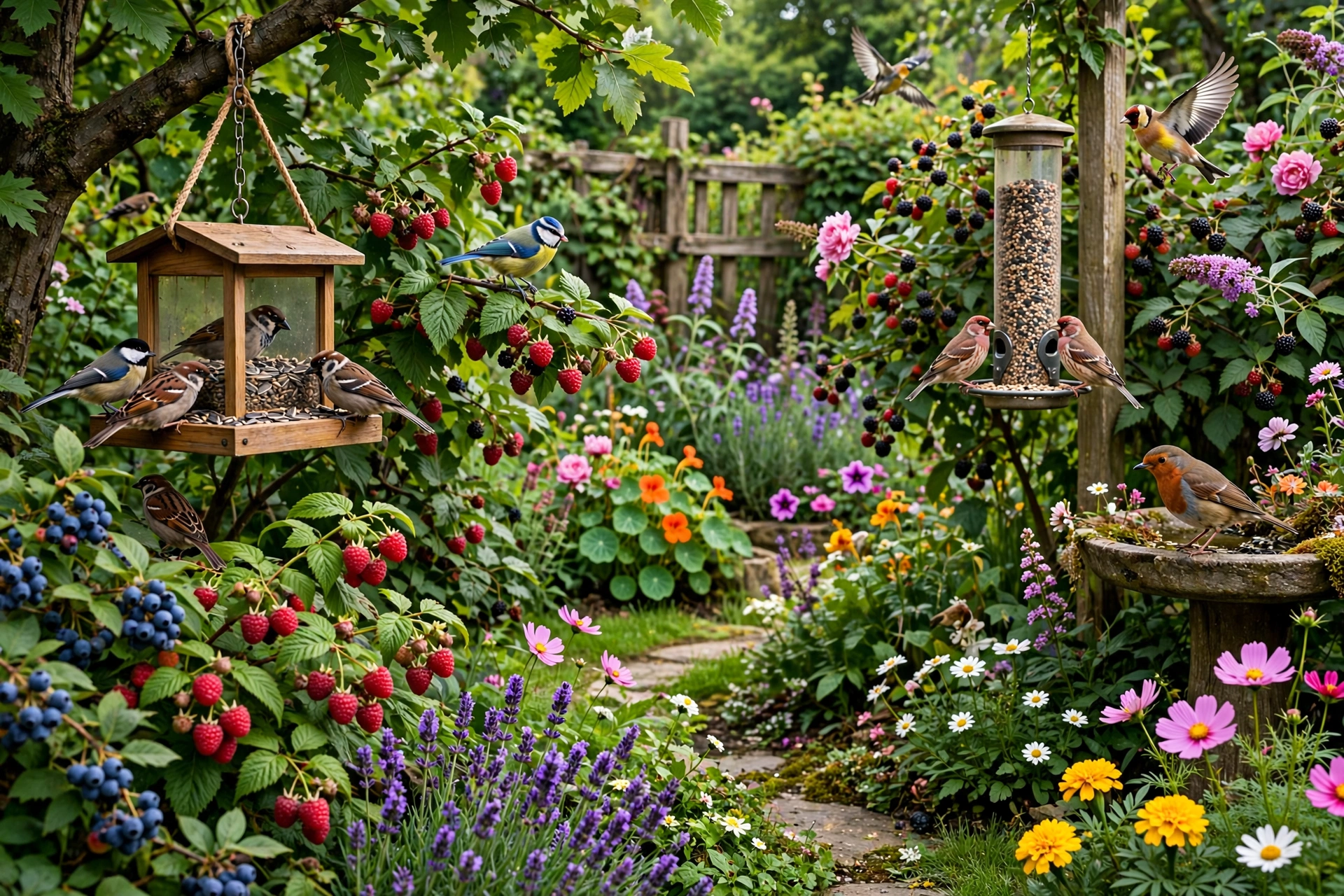
Feeders help, but plants are what make a garden truly attractive to birds over the long term. Trees and shrubs provide food in the form of berries, seeds, and insects, shelter from weather and predators, and safe places to nest and raise young. A garden planted with birds in mind will attract more species, for more of the year, than a garden that relies on feeders alone.
Introduction: A Bird-Friendly Garden Starts with Plants
You do not need a large garden. Even a small space, a balcony with pots, or a single native tree can make a difference. The key is to choose plants that offer something in every season, to provide layers — ground cover, shrubs, and trees — and to leave some areas a little wild.
Step 1: Provide Food Through the Year
Choose Native Trees and Shrubs
Native plants support more insects, which are essential food for many birds, especially in spring when they are feeding chicks. Good choices in many temperate gardens include hawthorn, rowan, elder, crab apple, birch, and oak. Rowan berries feed thrushes and blackbirds in autumn. Hawthorn offers blossom for insects in spring and berries in autumn. Elder provides berries and shelter.
When you choose plants, think about when they fruit, because birds need food in every month, not just in autumn. Elder fruits in late summer, rowan in early autumn, hawthorn in mid-autumn, and holly and ivy hold their berries into late winter, when food is scarcest. If you plant a rowan, a hawthorn, and a holly, you have covered three different seasons with three plants. Also think about insects: oak, birch, and willow support hundreds of insect species, and those insects are the food that parent birds need to raise their chicks. A garden with no insect-supporting trees may have plenty of feeders, but it will raise few young birds, because chicks cannot eat seeds — they need soft, protein-rich caterpillars.
Think About Seeds and Insects
Seed-bearing plants are just as important as berry bushes, and they are often overlooked. Let sunflowers, teasels, and thistles stand through winter instead of cutting them down in autumn, and finches will visit to eat the seeds. A patch of long grass left to go to seed will attract goldfinches and linnets. Even weeds have value: dandelions, groundsel, and chickweed produce seeds that birds eat, and their flowers attract the insects that birds feed to their chicks. You do not need to let your whole garden go wild — a small corner, a strip along a fence, or a few pots of seed-bearing plants is enough. And avoid pesticides: a garden sprayed with insecticide has no insects, and a garden with no insects has no birds in spring, however many feeders it has.
Step 2: Create Shelter and Nesting Sites
Birds need safe places to hide, roost, and nest. Dense, thorny shrubs such as hawthorn, blackthorn, and holly offer protection from cats and sparrowhawks. A mixed hedge is better than a single-species fence or wall: it provides cover at different heights and through the year.
Leave some areas undisturbed. A log pile, a patch of long grass, or a corner with nettles and brambles can shelter insects and ground-feeding birds such as dunnocks and wrens. If you put up nest boxes, place them in a sheltered spot, away from direct sun and prevailing wind, at a height suited to the species you hope to attract, and clean them out in autumn.
Step 3: Add Water and Layered Planting
Clean water is as important as food. A shallow bird bath, a small pond, or even a dish of water on the ground will attract birds to drink and bathe. Keep water clean and unfrozen in winter, and place it near cover so birds can escape quickly if a predator appears, but not so close to dense bushes that a cat can hide and pounce.
Layered planting means growing plants at different heights — ground cover, herbaceous plants, shrubs, climbers, and trees — so that birds can feed, shelter, and nest at every level. A garden with only one layer, such as a flat lawn with a few trees, offers far less than a garden where a bird can move from a log pile to a shrub to a tree without crossing open ground. Climbers help too: honeysuckle and ivy on a fence or wall give cover and insects in a space where a shrub would not fit, and their flowers and berries feed birds and pollinators. If you have a wall or a fence, planting a climber is one of the easiest ways to add a whole new layer to your garden without taking up any ground space at all.
A Simple Plan for Any Garden Size
1. Start with one native tree or large shrub that fits your space — rowan, crab apple, or hawthorn are good choices. 2. Add two or three berry-bearing shrubs for autumn and winter food. 3. Plant climbers such as honeysuckle or ivy on a fence or wall for cover and insects. 4. Leave a small wild area, a log pile, or a patch of long grass. 5. Add a shallow bird bath and keep it clean. 6. Avoid pesticides, and let some seed heads stand through winter. 7. Be patient — it can take a season or two for birds to discover new planting.
Even a balcony can help: pots with lavender, thyme, and sunflowers attract insects and seed-eating birds, and a small dish of water will be used if it is safe and clean.
Common Mistakes
The most common mistake is planting only ornamental, non-native species that offer little food or shelter. Another is tidying too much — removing every dead stem, leaf pile, and seed head removes food and shelter. A third is placing feeders and nest boxes in exposed spots with no nearby cover. Birds need to feel safe, and they will not use a feeder if they have to cross open ground with no escape route. Finally, do not expect instant results. Birds learn new food sources gradually, and a new tree takes time to grow and fruit.
FAQ
What is the best tree for attracting birds? Rowan, hawthorn, crab apple, and birch are all excellent in many gardens. Choose one that suits your soil, space, and climate, and that fruits or supports insects at a useful time.
Do I need a large garden to attract birds? No. A small garden, or even a balcony with pots, can attract birds if it offers food, water, and shelter. Layered planting matters more than size.
Should I use pesticides in a bird-friendly garden? Avoid them where possible. Insects are essential food for birds, especially in spring, and pesticides reduce that food and can harm birds directly.
How long before birds use new planting? It can take a few months to a couple of seasons. Birds discover new food and shelter gradually, so be patient and keep water and food available meanwhile.
What is the best nest box for a small garden? A simple box with a 28-millimetre hole is suitable for blue tits, and a 32-millimetre hole suits great tits. Place it on a wall or tree, facing north or east, away from direct sun and wind, at least two metres high, and clean it out each autumn.
Should I feed birds all year or only in winter? You can feed all year, but it matters most in winter and in late spring, when parent birds are feeding chicks. In summer, keep feeders clean and offer fresh water, and rely more on the plants in your garden to provide natural food.
Conclusion
Attracting birds to your garden with trees and plants is a long-term investment that pays off every season. Choose native trees and shrubs that fruit at different times, provide layered shelter, add clean water, and leave some areas wild. Avoid pesticides, be patient, and watch as more species discover your garden. The result is not just more birds — it is a healthier, more lively garden for everyone.
Try the free Bird Identifier on aitreeidentier.site — upload a clear photo of the bird for instant guidance.
Safety disclaimer: Never disturb nests or wildlife. Observe from a distance, plant only species suited to your area, and consult a local expert if you are unsure about a plant or a sensitive site.