
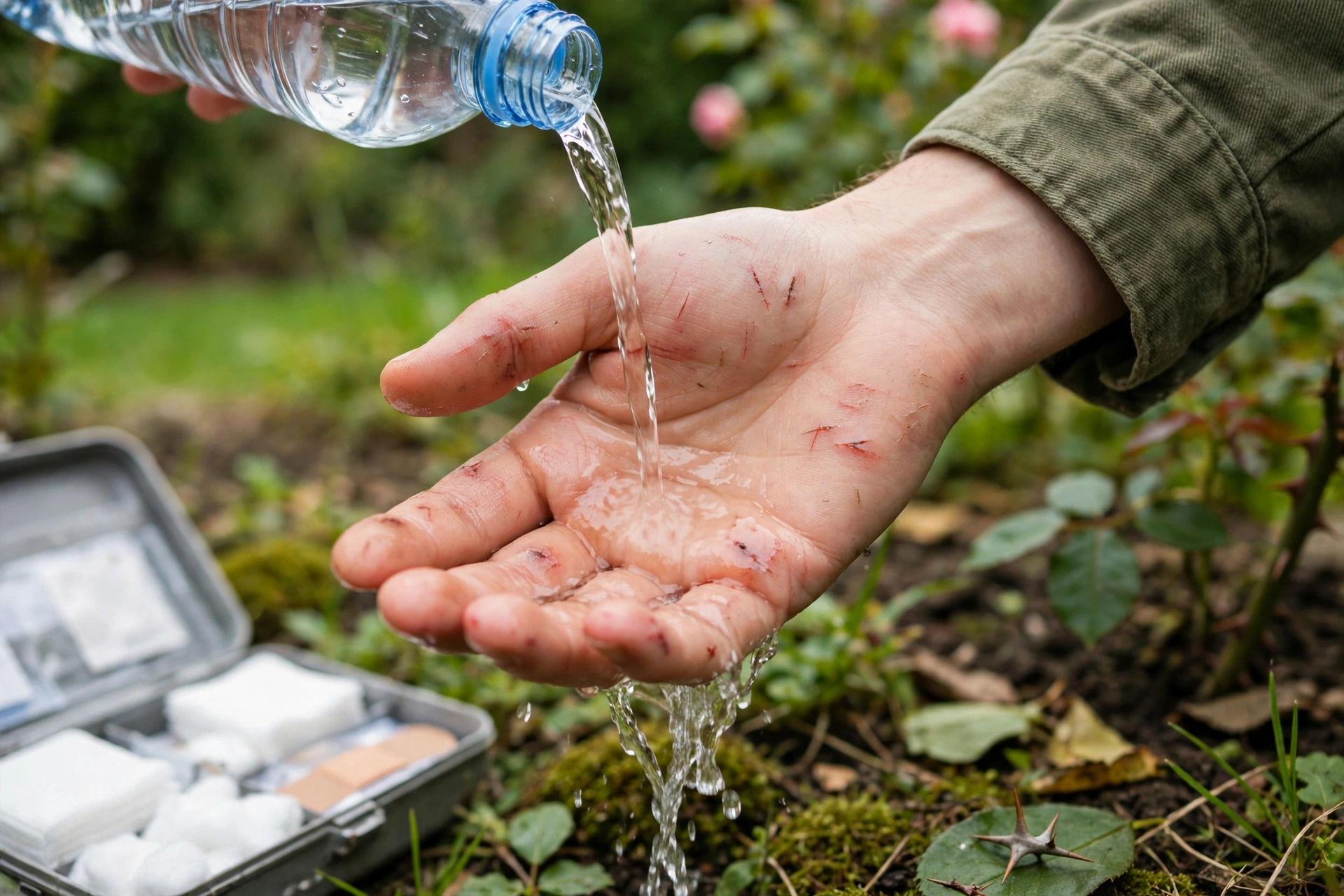
Gardening, walking, and working outdoors often involve thorns, spines, and sap. Most injuries are minor — a small scratch, a thorn in a finger, or sap on the skin — and they settle with simple cleaning. Some, however, need more care: a deep thorn, sap in the eyes, a reaction that spreads, or a wound that becomes infected. Knowing what to do in the first few minutes makes a real difference.
Most garden injuries happen during ordinary jobs — pulling weeds, pruning a rose, or clearing a pile of cut branches — rather than during dramatic accidents. That is good news, because it means a few small habits, such as wearing gloves and keeping a basic first-aid kit within reach, prevent most problems before they start. The rest of this guide covers what to do when prevention was not quite enough.
Try it: Try the free Plant Identifier on aitreeidentier.site — identify the plant that caused a sap or thorn injury, so you can share its name with a clinician if you need care.
Plant Sap Injuries: What to Do First
Sap can irritate skin, especially milky, sticky, or strong-smelling sap, and some saps make skin more sensitive to sunlight. If sap touches your skin, act quickly but calmly.
Step 1: Rinse with water. Rinse the area with plenty of clean, cool water for several minutes. Wash gently with soap, and avoid scrubbing harshly, which can irritate skin further.
Step 2: Remove contaminated clothing. Take off clothing that has sap on it, and wash it separately. Avoid spreading sap to other areas of skin.
Step 3: Avoid sunlight on the affected skin. Some saps can cause a reaction when skin is exposed to sun. Cover the area or stay out of direct sun until you know how your skin reacts, and watch for redness, blistering, or pain.
Step 4: Do not apply creams unless advised. For mild irritation, washing and time are often enough. Do not apply home remedies, bleach, or strong chemicals to the skin. If irritation is painful, spreading, or blistering, seek medical advice.
Step 5: If sap gets in the eyes, rinse immediately. Rinse the eye with clean water for at least 15 minutes, holding the eyelid open gently, and seek urgent medical care. Do not rub the eye.
Step 6: Identify the plant. Photograph the plant, including leaves, stem, and any sap, and use the Plant Identifier on aitreeidentier.site for a first clue. Share the name and photos with a clinician if you seek care, and note when the exposure happened.
Thorn and Splinter Injuries: What to Do First
Thorns, spines, and woody splinters can break the skin and, if left in, can cause pain, swelling, or infection.
Step 1: Wash the area. Wash your hands and the injured area with soap and clean water. This reduces the chance of infection.
Step 2: Remove the thorn if you can see it and it is near the surface. Use clean tweezers, grasp the thorn close to the skin, and pull it out steadily in the same direction it went in. Do not squeeze the area, as this can push the thorn deeper or break it.
Step 3: Clean the wound again. Wash with soap and water, pat dry, and cover with a clean dressing if needed. Apply gentle pressure if there is bleeding, and raise the area if you can.
Step 4: Do not dig for a deep thorn. If a thorn is deep, broken, hard to see, or in a joint, do not dig at it with a needle or knife. Seek medical care, as a clinician can remove it safely and check for infection.
Step 5: Watch for signs of infection. Redness that spreads, increasing pain, swelling, warmth, pus, red streaks, fever, or a wound that does not improve over a day or two are reasons to seek medical care promptly.
Step 6: Check your tetanus vaccination. If the wound is deep, dirty, or caused by soil-contaminated material, and you are unsure about your tetanus vaccination, ask a clinician for advice.
Common Mistakes to Avoid
Sucking a thorn wound. Do not suck a wound to remove a thorn. Wash it and use clean tweezers, or seek medical care if it is deep.
Using dirty tweezers or a needle. Clean tweezers with soap and water or disinfectant before use. Do not dig at a deep thorn — seek care instead.
Ignoring a small wound. Even a small thorn wound can become infected if it is not cleaned. Wash it, cover it if needed, and watch it for a day or two.
Applying sap or plant remedies to a wound. Do not apply plant sap, leaves, or home remedies to a cut. Clean with water and soap and seek medical advice if needed.
What to Keep in a Garden First-Aid Kit
A garden first-aid kit does not need to be large, but it should be easy to reach. Keep it by the back door or in the shed, not buried in a bathroom cabinet. A useful kit includes clean tweezers, a small pair of scissors, soap or wound wash, clean dressings and plasters, a bandage, disposable gloves, and a bottle of clean water for rinsing eyes or skin. A torch is helpful if you garden in the evening, and a phone nearby matters more than any item in the kit.
Check the kit at the start of each gardening season. Replace used dressings, check that tweezers are clean and undamaged, and throw away anything that has expired or become dirty. If you garden with children, add child-sized plasters and keep any medicines out of the kit and in their proper place. Knowing exactly where the kit is, and that it is stocked, saves precious minutes when sap is on skin or a thorn is in a finger.
When a Small Injury Needs Medical Care
Most sap and thorn injuries settle within a day or two, but some need a clinician sooner rather than later. Seek care promptly if a thorn is in or near an eye, in a joint, or under a nail; if bleeding will not stop after ten minutes of firm pressure; or if the wound was caused by a dirty, rusty, or soil-covered object and you are unsure about tetanus. A wound on the hand or face also deserves quicker attention, because swelling there can affect movement or sight.
After the first day, watch the wound rather than forgetting about it. Increasing pain, spreading redness, warmth, swelling, pus, red streaks moving away from the wound, or a fever are all signs of infection and reasons to seek care the same day. Take a photo of the wound when it first happens so you can compare it later, and keep the name or a photo of the plant that caused it. A clinician can work much faster with that information than with a description alone.
FAQ
What should I do first if plant sap touches my skin? Rinse with plenty of clean water, wash gently with soap, remove contaminated clothing, and avoid sunlight on that skin. Seek medical advice if the reaction is painful, spreading, or blistering.
How do I remove a thorn safely? Wash the area, use clean tweezers to pull the thorn out steadily in the direction it went in, wash again, and cover with a clean dressing. Do not dig for a deep thorn — seek medical care.
When is a thorn injury serious? Seek care if the thorn is deep, broken, in a joint or eye, if bleeding will not stop, or if you see signs of infection such as spreading redness, swelling, pus, or fever.
Can I use antiseptic cream on a thorn wound? Cleaning with soap and clean water is the most important step. An antiseptic or plain dressing is fine for a minor wound if you wish, but do not use bleach, strong chemicals, or plant sap on it, and seek advice if the wound is deep or shows signs of infection.
Conclusion
Most sap and thorn injuries are minor and settle with washing, careful removal, and watching the wound. The key steps are simple: rinse sap promptly, remove surface thorns with clean tweezers, clean the wound, and seek medical care if the injury is deep, in a sensitive area, or shows signs of infection. With gloves, eye protection, and a little care, you can enjoy gardening while keeping these injuries rare and minor.
Safety Disclaimer: Never eat or use a plant, mushroom, or fruit based on AI identification alone. AI results can be wrong. Always consult a local expert or medical professional after a plant injury, especially if symptoms worsen. This article is general information only and is not medical advice.