
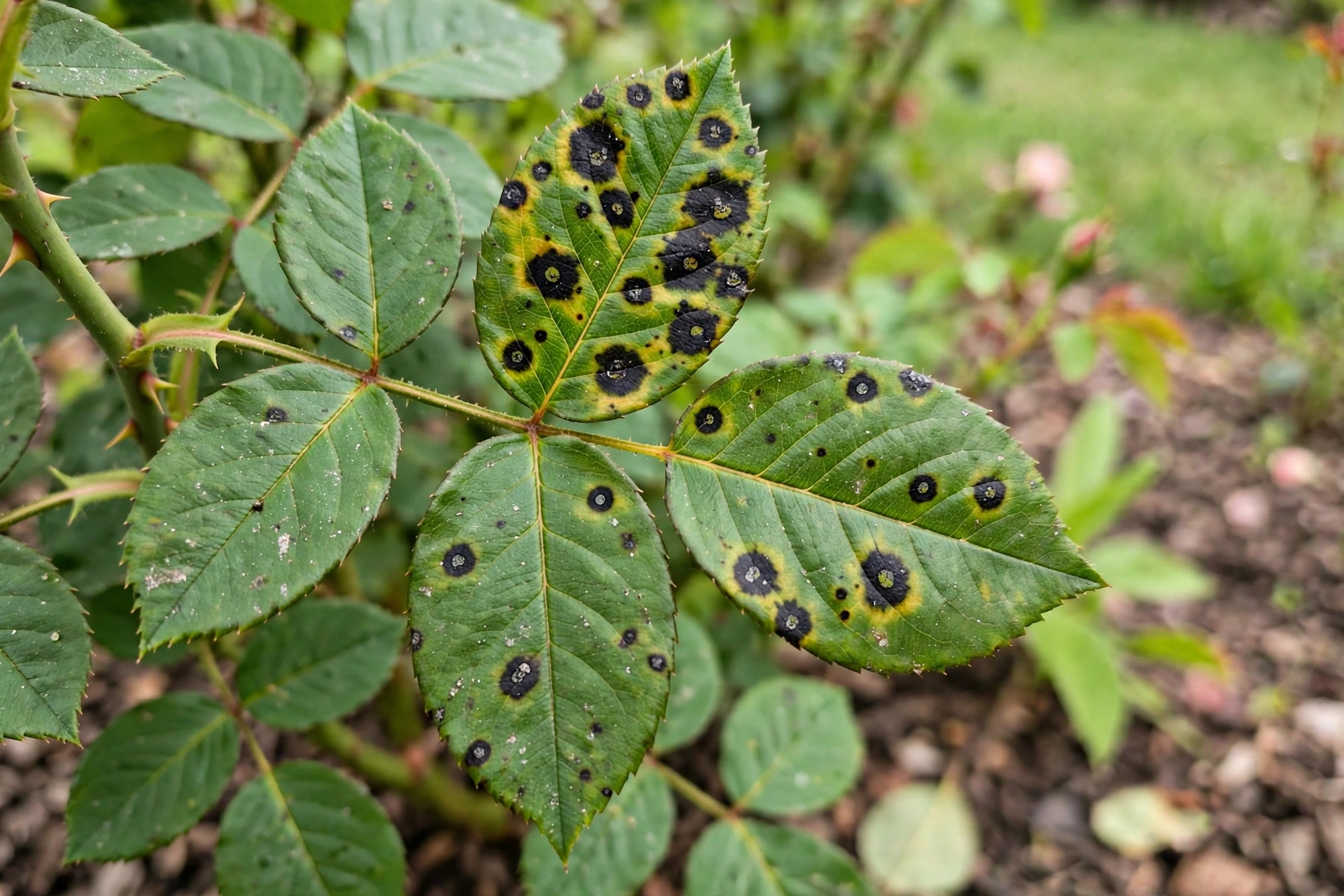
Black spot is the most common rose disease in many gardens, and one of the most disheartening. It starts with a few dark spots on lower leaves, then those leaves yellow, drop, and the plant slowly weakens. Flowering reduces, stems become bare, and the rose looks tired by midsummer — even though it was glorious in spring.
The good news is that black spot is well understood, and it is very manageable with the right routine. You do not need to give up your roses, or spray constantly. Cleanliness, airflow, watering habits, and choosing the right varieties will control most cases, and prompt action in spring will prevent the worst of the summer damage.
What Is Black Spot?
Black spot is a fungal disease caused by Diplocarpon rosae. It thrives in warm, wet conditions, especially when leaves stay wet for many hours. Spores spread by splashing water, so rain and overhead watering are the main routes of infection. The fungus overwinters in fallen leaves and on infected canes, ready to infect new growth in spring.
It is specific to roses, so it will not spread to your tomatoes or courgettes, but it can move quickly from one rose to another, especially if plants are crowded or leaves are left on the ground over winter.
How to Identify Black Spot
Look for circular black or dark-brown spots, five to fifteen millimetres across, on the upper surface of leaves, often with fringed or feathery edges. Spots may have a yellow halo, and the leaf around them often turns yellow. Leaves usually drop, starting with the lower leaves and moving upward. In severe cases, the plant may lose most of its leaves by late summer.
Young, soft growth is most vulnerable. Stems may also develop dark, raised spots, and flowers may be fewer and smaller. Do not confuse black spot with other rose problems: powdery mildew is white and powdery, rust shows orange pustules underneath leaves, and nutrient deficiency usually causes even yellowing without distinct black spots.
Step-by-Step: What to Do Now
Step 1: Remove affected leaves
Pick off spotted and yellowed leaves, including fallen leaves on the ground. Bag them and bin them — do not compost them. Do this on a dry day, and wash your hands and tools afterwards.
Step 2: Prune for airflow
Thin out crowded, crossing, and weak stems so air can move through the centre of the plant. Aim for an open, vase-like shape. Cut back to healthy wood, just above an outward-facing bud, and disinfect secateurs between plants.
Step 3: Change how you water
Water at the base in the morning, keeping leaves dry. Avoid sprinklers and overhead watering, especially in the evening. Mulch the soil to reduce splashing, keeping mulch away from the stem.
Step 4: Feed and mulch for strength
Feed roses in spring with a balanced rose fertiliser and mulch with well-rotted compost or bark. A healthy, well-fed rose resists disease better than a stressed one, but avoid excess nitrogen, which produces soft, susceptible growth.
Step 5: Consider a treatment
For mild cases, removal and better care may be enough. For severe or recurring cases, a fungicide labelled for black spot on roses may help if used early in the season and repeated as directed. Follow label instructions exactly, and check local rules. Organic options such as sulphur or copper-based products are available in some regions — again, follow the label.
Common Mistakes
- Leaving fallen leaves under the rose. Spores overwinter there and reinfect the plant in spring.
- Watering from above in the evening. Wet leaves overnight are ideal for black spot spores to germinate.
- Spraying only when the plant is already bare. Treatments work best as prevention in spring, not as a cure in late summer.
- Overcrowding roses. Dense, still air and leaves that touch are perfect for fungal spread.
- Expecting one spray to fix it. Black spot control is a season-long routine of hygiene, airflow, and timely treatment.
Choosing Resistant Rose Varieties
The easiest black spot control happens before you buy the plant. Many modern roses have been bred for disease resistance, and the difference in a wet summer is striking: a resistant variety may stay leafy with only a few spots, while a susceptible one beside it loses most of its leaves. When buying roses, look for varieties described as resistant to black spot, and ask your local nursery which ones perform best in your area, because resistance varies with local conditions. Shrub roses, ground-cover roses, and many modern floribundas tend to cope better than some older hybrid teas, though there are resistant varieties in every group. A rose that suits your soil and climate, and is planted in sun with good airflow, will always resist disease better than a variety chosen for flower colour alone.
Black Spot Through the Year
Black spot follows a clear seasonal pattern, and timing your care to it makes control much easier. In spring, as leaves open, spores left in fallen leaves and on canes infect the new growth — this is when cleaning up debris and starting preventive treatment matters most. In early summer, spots appear on lower leaves first and spread upward after rain; weekly leaf removal now stops the disease building up. By midsummer, a neglected rose may be bare at the base, but a well-tended one will still be leafy and flowering. In autumn, the most important job is the clean-up: rake up every fallen leaf, prune out weak and crossing stems, and mulch the soil so spores are buried and cannot splash up in spring. Do that every year, and black spot pressure falls steadily, because fewer spores survive each winter.
FAQ
Will black spot kill my rose? It rarely kills an established rose outright, but repeated severe defoliation weakens the plant, reduces flowering, and makes it more vulnerable to frost and other diseases. Prompt care usually restores it.
Can I still enjoy roses with black spot? Yes. Many gardeners live with a low level of black spot and still enjoy good flowering, especially if they choose resistant varieties and keep up with leaf removal and watering habits.
Is black spot the same as rust or mildew? No. Black spot causes dark spots with yellow halos and leaf drop; rust causes orange pustules under leaves; powdery mildew causes a white powdery coating. Each needs slightly different care.
Can black spot spread from roses to other plants? No. Black spot is specific to roses, so it will not infect your tomatoes, vegetables, or other shrubs. It can, however, spread quickly from one rose to another, especially in wet, crowded conditions.
Should I stop deadheading roses with black spot? No, keep deadheading spent flowers as usual, but do it on a dry day and wash your hands and secateurs afterwards. Removing spent blooms encourages more flowering, and a flowering rose is a sign the plant still has energy despite the disease.
When is the best time of year to treat black spot? Spring is the best time, as new leaves open and spores become active. Start removing spotted leaves and improving airflow early, and apply any preventive treatment before the disease builds up in summer, rather than waiting until the plant is already bare.
Conclusion
Black spot on rose leaves is a sign that conditions favour the fungus — wet leaves, still air, and spores left from last year — not a sign that you are a bad gardener. Remove spotted leaves, water at the base, prune for airflow, feed wisely, and clean up in autumn. Do that consistently, and your roses will stay leafy, healthy, and floriferous for far longer each year.
Try it: Try the free Plant Disease Identifier on aitreeidentier.site — upload a clear photo of the spotted or discoloured leaves for instant guidance.
Safety disclaimer: Never eat or use a plant, or treat a disease, based on AI identification alone. AI results are guidance only — consult a local expert before applying treatments, especially near children, pets, or food crops.