
Most plant diseases are far easier to manage when caught in the first few days. A single spotted leaf can be removed in seconds; a garden-wide outbreak can take a season to control. The trick is knowing what to look for — and checking your plants regularly enough to notice small changes before they become big ones.
This guide covers ten of the most common plant diseases you are likely to meet in a home garden, vegetable patch, or houseplant collection. For each one, you will learn the early signs, the conditions that favour it, and the first steps to take.
1. Powdery Mildew
White or grey powdery patches appear on leaves, stems, and buds, often starting on young growth. Leaves may curl, yellow, and drop. It thrives in warm days, cool nights, poor airflow, and shade. Improve air circulation, space plants out, avoid wetting leaves, and remove badly affected foliage.
2. Downy Mildew
Pale yellow patches appear on the upper leaf surface, with a greyish, fuzzy growth underneath. Unlike powdery mildew, it needs leaf wetness to spread. It is common on lettuce, cucumbers, grapes, and roses. Water at soil level, increase spacing, and remove infected leaves promptly.
3. Early Blight
Dark brown spots with concentric rings — like a target — appear on older, lower leaves first, often with yellowing around them. It affects tomatoes, potatoes, and other members of the same family. Mulch the soil, water at the base, rotate crops, and remove affected lower leaves.
4. Late Blight
Large, water-soaked, dark patches spread rapidly on leaves and stems, often with white mould on the underside in damp weather. Fruit rots quickly. It spreads fast in cool, wet conditions and can destroy a tomato or potato crop in days. Remove and dispose of infected plants; do not compost them.
5. Rust
Small orange, yellow, or brown pustules appear on the undersides of leaves, like rust on metal. Leaves may yellow and drop. Rust is common on roses, beans, hollyhocks, and lawns. Remove affected leaves, avoid overhead watering, and clean up fallen foliage in autumn.
6. Leaf Spot (Fungal and Bacterial)
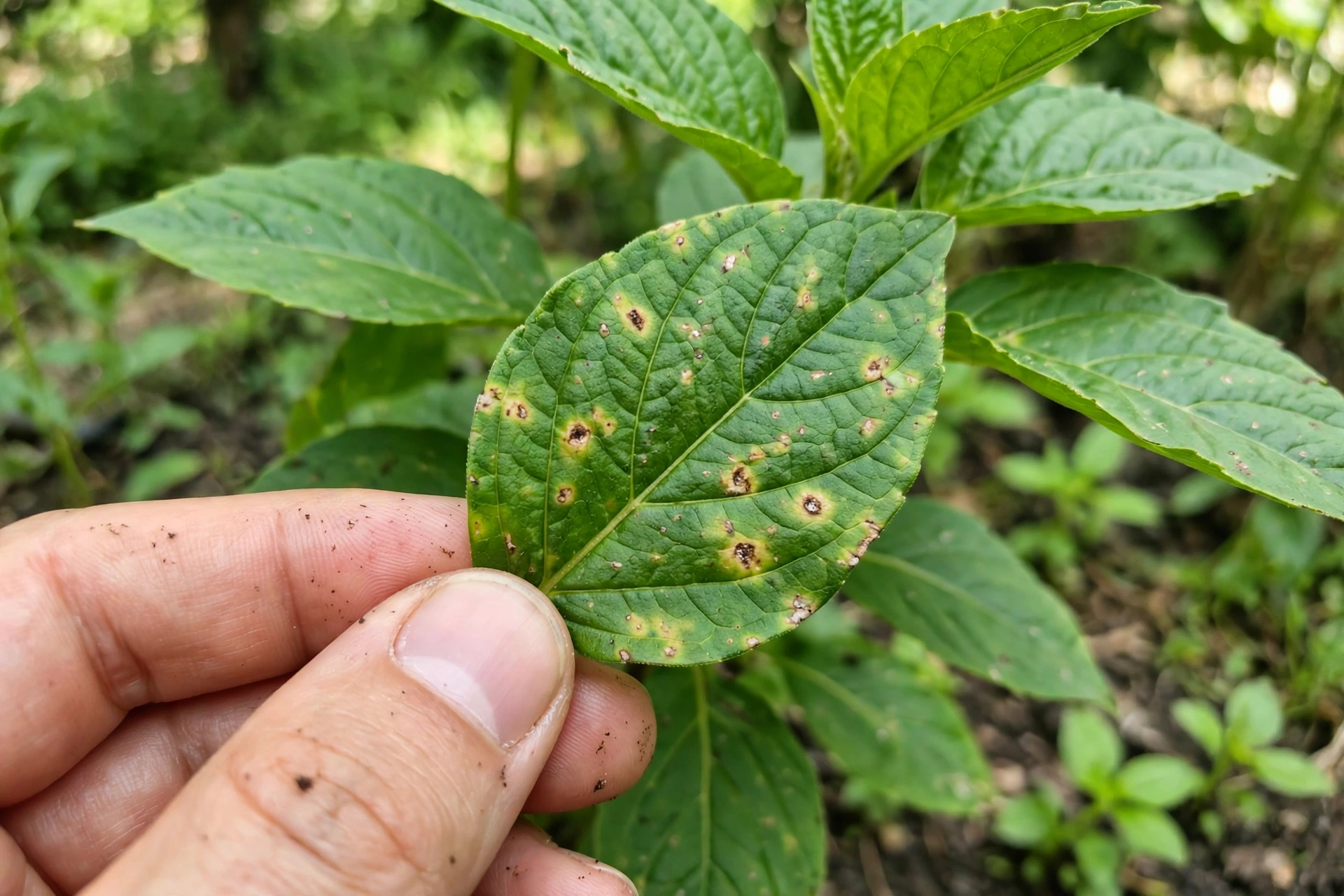
Circular or angular spots with dark edges and pale or grey centres appear on leaves. Bacterial spots often look water-soaked at first and may have yellow halos. Fungal spots may show tiny black dots in the centre. Remove spotted leaves, avoid splashing water, and improve airflow.
7. Root Rot
The plant wilts despite wet soil, growth slows, leaves yellow, and roots look dark, soft, and mushy instead of firm and pale. It is usually caused by overwatering or poorly draining soil. Let soil dry between waterings, improve drainage, and repot houseplants in fresh, free-draining mix if caught early.
8. Grey Mould (Botrytis)
Soft, grey, fuzzy mould grows on flowers, fruit, stems, and leaves, especially in cool, damp, crowded conditions. Strawberries, grapes, roses, and tomatoes are frequent victims. Remove affected parts, improve ventilation, avoid wetting flowers, and clear dead plant material.
9. Anthracnose
Dark, sunken spots appear on leaves, stems, and fruit, sometimes with pink or orange spores in the centre in damp weather. It affects beans, cucumbers, tomatoes, and many trees. Clean up debris, rotate crops, water at the base, and avoid working with wet plants.
10. Virus Diseases
Viruses cause mottled, mosaic-like patterns, yellowing, stunting, distorted growth, and streaks on leaves or fruit. There is no cure. Insects such as aphids often spread them. Remove infected plants, control sap-feeding insects, disinfect tools, and buy certified disease-free seed and plants where possible.
Step-by-Step: A Weekly Early-Detection Routine
Step 1: Walk the garden once a week
Make it a habit. Walk slowly, look at both sides of leaves, and check new growth, lower leaves, and the soil surface.
Step 2: Photograph anything unusual
A dated photo helps you see whether a spot is spreading, and makes it easier to compare with identification guides or ask an expert.
Common Mistakes
- Composting diseased material. Home compost rarely gets hot enough to kill disease spores. Bag and bin infected plants instead.
When to Act Fast — and When to Watch and Wait
Not every spot deserves the same urgency. A few powdery patches on a courgette in late summer can be pruned off and monitored, but large water-soaked patches spreading across tomato leaves in wet weather need same-day action, because late blight can destroy a crop in days. Learn to sort problems into three groups: act today, act this week, and watch. Act today for fast-spreading blight, wilting that spreads from branch to branch, and anything oozing or rotting quickly. Act this week for mildew, rust, and leaf spot that is still limited to a few leaves. Watch for a single spotted leaf on an otherwise healthy plant — remove the leaf, note the date, and check again in three or four days.
Weather is your best early warning. After a wet, warm spell, check susceptible plants the next morning, especially tomatoes, roses, cucumbers, and beans. After a dry, dusty spell, look for mildew on roses and squash. Keeping a simple note of the weather alongside your photos helps you spot patterns over the season and predict the next outbreak before it starts.
Keeping a Disease Diary
A short diary turns guesswork into knowledge. For each problem, note the date, the plant and variety, where the symptoms first appeared, the recent weather, and what you did. Add a dated photo each week. Over a season you will learn which plants in your garden are most vulnerable, which beds stay damp longest, and which treatments actually helped. Next year, that diary is worth more than any general guide, because it is written for your soil, your climate, and your plants. It also helps enormously if you ask a local expert for advice, because you can show them the history instead of trying to remember it.
Finally, remember that healthy plants resist disease far better than stressed ones. Correct watering, the right plant in the right place, good soil with plenty of organic matter, and enough space for air to move are not extras — they are the foundation of disease control. A plant that is well fed, well watered, and not crowded will often fight off a mild infection on its own, while a stressed plant in the same bed may lose all its leaves.
FAQ
What is the most common plant disease? Powdery mildew is one of the most widespread, especially on roses, courgettes, cucumbers, and many ornamentals. It is easy to recognise by its white powdery coating.
How can I tell if a leaf spot is fungal or bacterial? Fungal spots often have concentric rings or tiny black dots in the centre; bacterial spots often look water-soaked first and may have yellow halos. A photo-based check and local advice can help narrow it down.
Can diseased plants recover? Many can, if the cause is caught early and the plant is otherwise healthy. Remove affected parts, improve conditions, and give the plant time. Severe root rot and viral infections are harder to reverse.
How quickly can a plant disease spread? It depends on the disease and the weather. Late blight can spread across a tomato crop in a few days in cool, wet weather, while powdery mildew and early blight usually spread over weeks. That is why a weekly check matters: it catches fast diseases before they take hold.
Should I treat the whole garden when one plant is sick? Usually not. Treat or remove the affected plant, improve airflow and watering for its neighbours, and watch them closely for a week or two. Spraying healthy plants as a precaution is rarely needed and can harm beneficial insects.
Conclusion
You do not need to memorise every disease to be a good gardener. You need a regular habit of looking closely, a basic knowledge of the ten common problems above, and the discipline to act early — remove, clean up, improve airflow, and water wisely. That routine alone will prevent most outbreaks from taking hold.
Try it: Try the free Plant Disease Identifier on aitreeidentier.site — upload a clear photo of the spotted or discoloured leaves for instant guidance.
Safety disclaimer: Never eat or use a plant, or treat a disease, based on AI identification alone. AI results are guidance only — consult a local expert before applying treatments, especially on food crops or near children and pets.