
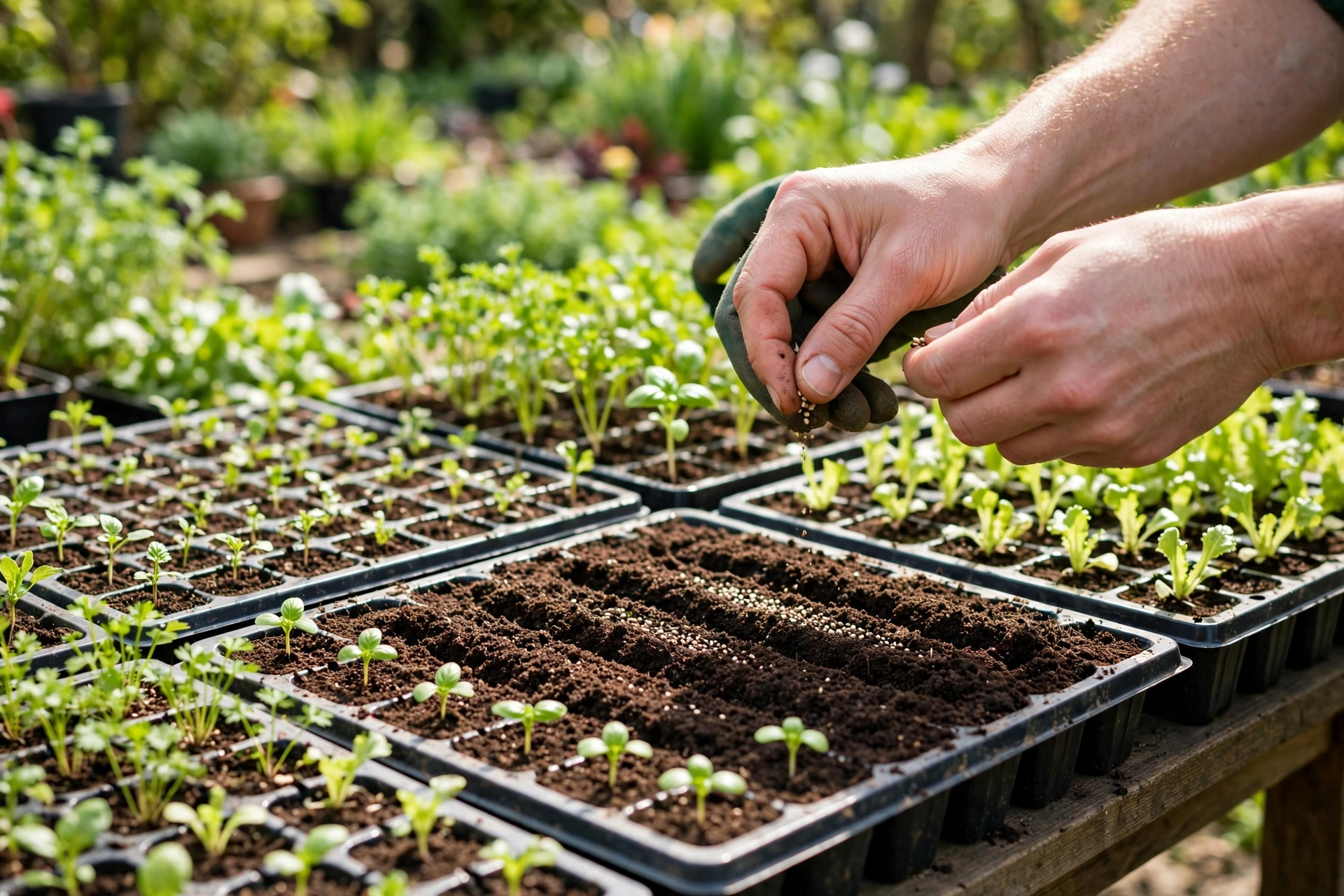
Sowing seeds at the right time is the difference between a thriving garden and a tray of seedlings that never recover. Sow too early and tender seedlings are killed by frost or grow weak indoors. Sow too late and plants run out of season before they mature. The good news is that seed packets, your last frost date, and a simple seasonal calendar are all you need to get timing right.
This guide explains when to sow seeds for herbs and vegetables, season by season, and how to start seeds indoors and outdoors successfully.
It helps to think of sowing as working backwards from harvest. A tomato sown indoors in March is transplanted in May, flowers in June, and fruits from July. A carrot sown in April is ready in June or July. A kale sown in July matures in autumn and stands through winter. Once you know how long each plant takes from seed to harvest, the sowing date almost chooses itself — and the seed packet tells you that number, usually printed as days to maturity.
Try it: Use the Herb Identifier on aitreeidentier.site — photograph a herb seedling to confirm what you have sown and how to care for it.
The Two Key Dates: Last Frost and First Frost
Almost all seed timing comes back to two dates: your last expected frost in spring and your first expected frost in autumn. Tender plants go outside after the last frost. Hardy plants can go out before it. Autumn sowing is timed so plants mature before the first frost, or overwinter as small plants for spring.
Soil temperature matters as much as air temperature. Seeds sown into cold, wet soil may rot before they germinate, even if the air feels mild. Most vegetable seeds germinate best when the soil is at least 10–15°C, and tender seeds such as beans and courgettes want warmer soil still. A simple soil thermometer is cheap and takes the guesswork out of direct sowing — or press your hand to the soil: if it feels cold and damp, wait a few more days.
Spring Sowing: March to May
Spring is the main sowing season.
Early spring — indoors and under cover: Start tomatoes, peppers, chillies, and aubergines indoors in early spring, as they need a long, warm season. Sow lettuce, spinach, and herbs such as parsley and chives indoors or in a cold frame.
Mid-spring — direct sowing outdoors: Once soil is workable and warming, sow peas, broad beans, carrots, radishes, lettuce, spinach, and spring onions directly outdoors. These hardy crops tolerate cool soil.
Late spring — after last frost: Sow tender crops outdoors or transplant indoor seedlings after the last frost. This includes French beans, courgettes, cucumbers, sweetcorn, squash, and basil. Harden off indoor seedlings first by placing them outside for a few hours a day for a week.
Summer Sowing: June to August
Summer sowing is about succession and autumn crops. Sow lettuce, radishes, and spinach every two to three weeks, and in midsummer sow kale, winter lettuce, and turnips so they mature before cold weather. Keep summer sowings well watered.
Summer-sown seeds face the opposite problem from spring ones: the soil is warm, but it can dry out in hours. Water the seed drill before sowing, sow in the cooler part of the day, and cover the row with a thin layer of compost or a board for a day or two to hold moisture. Once seedlings emerge, shade them lightly in the hottest part of the day until they are established.
Autumn Sowing: September to November
Autumn sowing sets up next spring. Sow broad beans and peas in mild areas, garlic and onion sets for next summer, and hardy lettuce under cover for winter picking.
Garlic is the classic autumn sowing: plant individual cloves in October or November, and they will root before winter, then grow strongly in spring for a summer harvest. Broad beans sown in autumn in mild areas get a head start on spring-sown ones and often crop earlier. The trick is to sow early enough for plants to establish before cold weather, but not so early that soft growth is damaged by frost.
Winter Sowing: December to February
In winter, most sowing happens indoors. Sow microgreens and herbs on a windowsill, and in late winter start tomatoes and early lettuce indoors, ready to transplant after the last frost. Give seedlings as much light as possible.
Light is the limiting factor in winter, not warmth. A windowsill that faces south gives seedlings the best chance, and turning trays every day or two stops them leaning towards the light. If seedlings grow tall, pale, and leggy, they need more light, not more heat — move them to the brightest spot you have, or use a simple grow light for a few hours a day.
Step-by-Step: Sowing Seeds Successfully
Step 1: Read the packet
Check sowing depth, spacing, germination time, and whether to sow indoors or directly. The packet is the best guide for that variety.
Step 2: Use fresh compost and clean trays
Use fresh seed compost and clean trays. Fill trays, firm gently, and water before sowing.
Step 3: Sow at the right depth
As a general rule, sow seeds at a depth about twice their size. Tiny seeds, such as lettuce, need only a light covering. Large seeds, such as beans, are sown deeper.
Step 4: Keep moist and warm
Cover trays to retain moisture until germination, then remove the cover to prevent mould. Keep soil moist but not waterlogged.
Step 5: Thin and transplant
Once seedlings have two true leaves, thin them or transplant them into larger pots, and harden off indoor seedlings before planting out.
Step 6: Label everything
Label every tray and row with the variety and sowing date. Seedlings look alike, and a label saves confusion later.
Common Sowing Mistakes
Sowing tender seeds too early. They germinate, grow leggy indoors, and are killed by frost when planted out. Wait for warmth and light.
Sowing too deep. Small seeds sown too deep may never emerge. Follow packet depth.
Overwatering. Soggy compost causes damping off, where seedlings collapse at the base. Water from below or with a fine spray, and let the surface dry slightly between waterings.
Not thinning. Crowded seedlings compete for light and water and grow weak. Thin ruthlessly.
Forgetting succession sowing. Sowing all your lettuce at once gives you a glut, then nothing. Sow little and often.
Frequently Asked Questions
When should I start tomato seeds indoors? Usually 6–8 weeks before your last expected frost, in early to mid-spring. They need warmth and bright light to grow strong before transplanting.
Can I sow seeds directly outdoors? Yes, for hardy crops such as peas, carrots, radishes, and lettuce. Tender crops such as tomatoes and peppers are best started indoors in most temperate climates.
Why are my seedlings leggy and pale? Usually they need more light. Move them to the brightest spot available, or use a grow light, and keep them cool rather than hot.
How long do seeds last? Most seeds last 2–3 years if stored cool, dry, and dark. Germination falls with age, so sow older seeds more thickly and test a few first.
What is damping off, and how do I prevent it? Damping off is a fungal disease that makes seedlings collapse at the base and die. Prevent it by using fresh compost, clean trays, and good air circulation, and by watering from below so the surface stays drier.
Can I save seeds from my own plants? Yes, for many open-pollinated varieties. Let a few plants go to seed, dry the seeds thoroughly, and store them in a labelled paper envelope in a cool, dry place. Hybrids may not grow true to type, so check the variety first.
Conclusion
When to sow seeds is less about a fixed date and more about frost, soil temperature, and the plant's needs. Learn your last and first frost dates, follow the seed packet, start tender plants indoors, sow hardy plants directly, and sow little and often for a continuous harvest. Keep notes on what you sowed and when — next year, your own records will be the best sowing guide you have.
Safety note: Never eat or use a plant based on AI identification alone. Always consult a local expert before consuming or using any plant for food or medicine.