
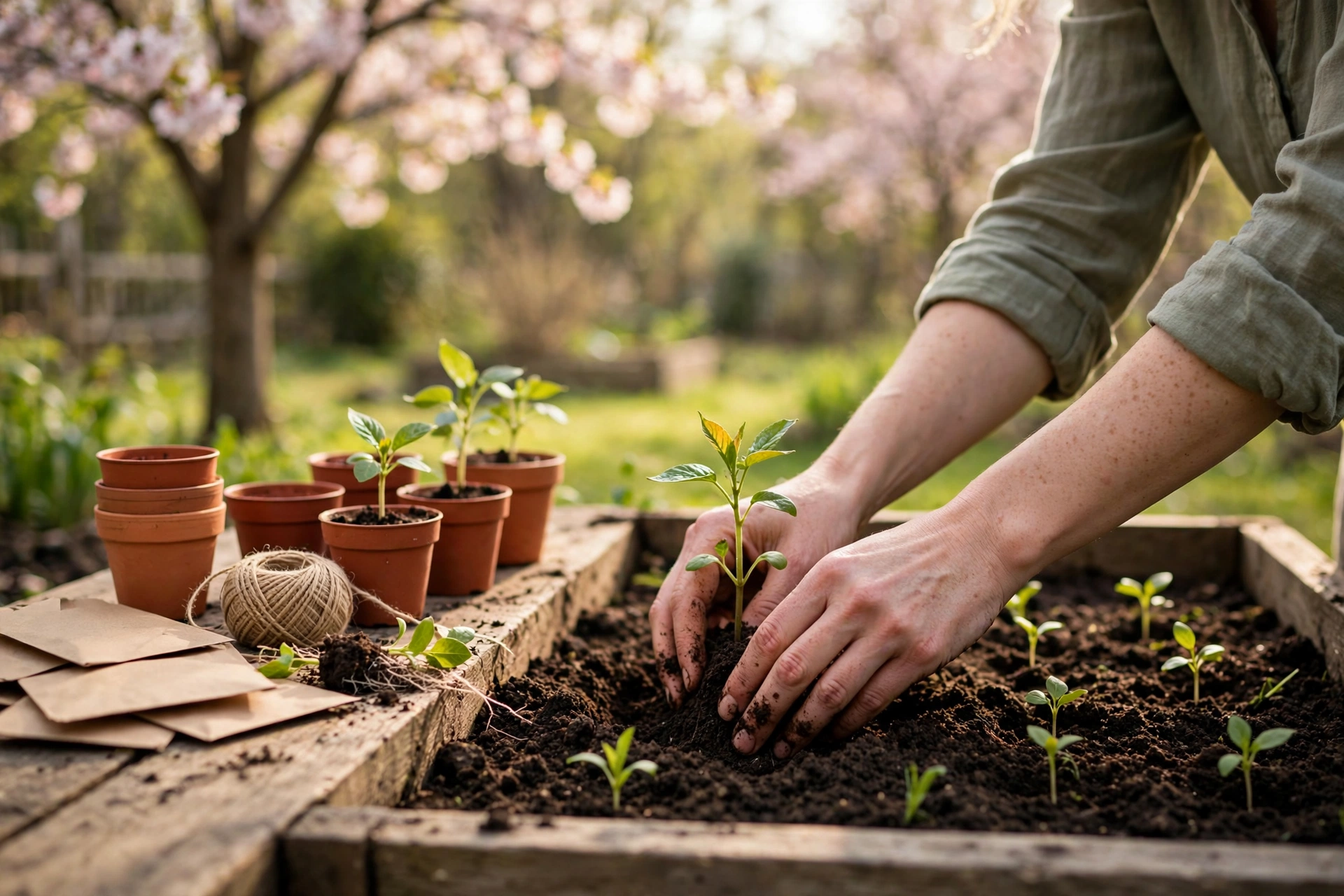
Spring is the season most new gardeners wait for. The soil warms, the days lengthen, and garden centres fill with seedlings. But planting too early, choosing the wrong plants for your space, or crowding beds can turn excitement into disappointment. The good news is that spring planting is simple once you understand timing, soil, and what each plant needs.
This beginner's guide covers what to plant in spring, when to plant it, and how to give new plants the best start — whether you have a large garden, a small balcony, or just a few pots.
Start small. A beginner who plants one raised bed or a handful of pots well will learn more — and enjoy it more — than someone who fills a whole garden in a single weekend and then struggles to keep up with watering, weeding, and thinning. Choose three or four plants you actually like to eat or look at, learn how they grow, and add more next year. Gardening is a skill that builds season by season, and spring is the best season to begin.
Try it: Use the Garden Plant Identifier on aitreeidentier.site — photograph a seedling or plant label to check what you are growing.
Start With Your Last Frost Date
The most important spring date is your last expected frost. Tender plants such as tomatoes, courgettes, beans, and basil are damaged by frost and should go outside only after that date has passed. Hardy plants such as peas, lettuce, spinach, and broad beans tolerate cool weather and can be sown weeks earlier.
If you do not know your last frost date, check a local gardening guide or weather service for your area. Keep a simple note of it each year — it will guide almost every spring decision you make.
Remember that the last frost date is an average, not a guarantee. In some years the last frost comes two weeks early, in others two weeks late. Watch the forecast in the weeks around that date, and keep fleece or old sheets handy to cover tender plants on a cold night. A single unexpected frost can wipe out a whole bed of tomatoes, while a simple overnight cover can save them.
What to Plant in Early Spring
Early spring, when soil is cool but workable, suits hardy crops and flowers.
- Vegetables: Peas, broad beans, lettuce, spinach, radishes, spring onions, and carrots.
- Herbs: Parsley, chives, and mint in pots — mint spreads quickly, so keep it contained.
- Flowers: Sweet peas, pansies, primroses, and hardy bulbs that were planted in autumn and are now emerging.
Sow seeds directly where they will grow when the packet says so, and start other seeds indoors in trays for transplanting later.
Early spring is also a good time to plant bare-root fruit bushes, roses, and shrubs, while they are still dormant. They establish quickly in cool, moist soil and are ready to grow strongly once the weather warms. If you buy a bare-root plant, keep its roots moist and plant it the same day if you can.
What to Plant in Late Spring
Once frost risk has passed, plant tender crops and summer flowers.
- Vegetables: Tomatoes, peppers, courgettes, cucumbers, sweetcorn, French beans, and squash.
- Herbs: Basil, coriander, and dill, which love warmth and sun.
- Flowers: Marigolds, sunflowers, zinnias, cosmos, and dahlias.
These plants grow fast in warm soil. Give them space — a tomato plant that looks small in May can be over a metre tall by July.
Late spring is also when container gardening really takes off. A sunny balcony can hold tomatoes, peppers, herbs, and flowers in pots, and containers warm up faster than garden soil, so plants often grow quicker. Just remember that pots dry out fast in warm weather, so check them daily and water when the top few centimetres of compost feel dry.
Step-by-Step: Planting for Success
Step 1: Prepare the soil
Remove weeds, loosen the top 15–20 cm of soil with a fork, and mix in compost. Healthy soil holds moisture, drains well, and feeds young roots. If soil is wet and sticky, wait a few days — working wet soil damages its structure.
Step 2: Read the label or seed packet
Check spacing, depth, sun needs, and watering. Planting depth matters: seeds sown too deep may not emerge, while those sown too shallow can dry out.
Step 3: Water before and after planting
Water the soil before you plant, place the seedling at the same depth it was growing in its pot, firm the soil gently around it, and water again. This settles soil around roots and prevents air pockets.
Step 4: Mulch and label
A thin layer of mulch around plants keeps moisture in and weeds down, but keep it away from stems. Label everything — in a month, seedlings can look surprisingly alike.
Step 5: Watch and adjust
Check new plants daily for the first two weeks. Water when the top few centimetres of soil feel dry, and thin seedlings so each plant has room to grow.
Choosing Plants for Your Space
Match plants to your conditions, not just to what looks appealing. A sunny balcony suits tomatoes, herbs, and sunflowers. A shady corner suits lettuce and spinach, while larger gardens can host shrubs and fruit bushes.
Light is the factor beginners most often underestimate. Most vegetables need at least six hours of direct sun a day, and tomatoes and peppers want even more. If your space gets only three or four hours, focus on leafy greens, herbs, and shade-tolerant flowers instead — they will thrive where a tomato would struggle. Watch your space for a day and note where the sun falls before you decide what to plant.
Common Mistakes Beginners Make
Planting tender crops too early. One frost can kill tomatoes and basil overnight. Wait for your last frost date, and harden off indoor seedlings by placing them outside for a few hours a day before transplanting.
Overcrowding. Plants need air and light. Follow spacing guidance even when seedlings look tiny.
Overwatering. Soggy soil causes root rot. Water deeply but less often, and let the surface dry between waterings.
Forgetting to feed and support. Tall plants need stakes, and heavy feeders such as tomatoes benefit from regular feeding once they start flowering.
Frequently Asked Questions
What is the easiest vegetable to grow in spring? Lettuce, radishes, and peas are excellent for beginners. They germinate quickly, tolerate cool weather, and give fast results.
Can I plant in spring if I only have pots? Yes. Herbs, lettuce, tomatoes, peppers, and flowers all grow well in containers, provided pots have drainage holes and you water regularly.
Should I start seeds indoors or sow directly? Start tender plants such as tomatoes and peppers indoors, and sow hardy plants such as peas, carrots, and radishes directly outdoors. Follow the seed packet for each variety.
How often should I water new spring plants? Check daily at first. Water when the top few centimetres of soil are dry, aiming for the soil rather than the leaves, preferably in the morning.
What does hardening off mean? It means getting indoor seedlings used to outdoor conditions gradually. Put them outside in a sheltered spot for a few hours a day, increasing the time over a week, and bring them in at night. Seedlings put straight outside can be scorched by sun, damaged by wind, or killed by a cold night.
When should I start feeding spring plants? Most plants do not need feeding for the first few weeks if the soil has compost mixed in. Start feeding heavy crops such as tomatoes once they begin flowering, using a balanced liquid feed according to the label.
Conclusion
Spring planting rewards planning more than effort. Know your last frost date, choose plants that suit your space and light, prepare the soil, and give seedlings room and regular water. Start small, learn what grows well where you live, and expand next year. A modest spring bed, well cared for, will teach you more than an ambitious one planted all at once.
Safety note: Never eat or use a plant based on AI identification alone. Always consult a local expert before consuming or using any plant for food or medicine.