
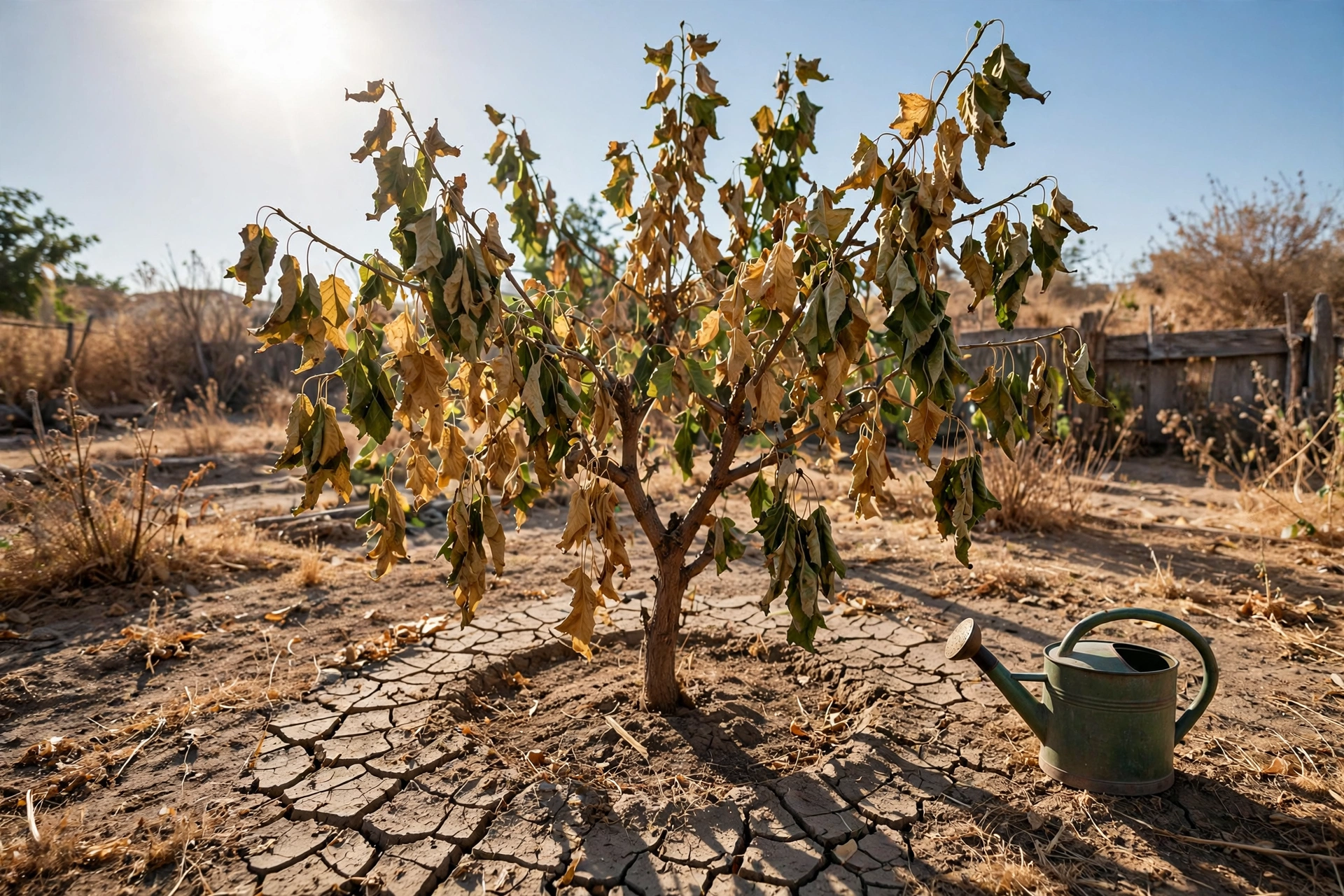
A hot, dry summer can be hard on trees, even on species that look tough. When soil dries out and rain stays away for weeks, a tree cannot take up enough water to replace what it loses through its leaves. The result is drought stress: wilting, scorched leaf edges, early leaf fall, and slow growth. Drought stress is usually easy to spot, and deep watering, mulching, and reducing competition can help.
It is worth learning the signs early, because drought stress is far easier to fix in its first week than in its sixth. A tree that wilts in the afternoon but recovers overnight is asking for water; a tree that stays wilted all day, drops leaves in July, and shows brown, crispy edges is already in serious trouble. Check your trees at least once a week in dry weather, especially young trees planted in the last two or three years, and act on the first signs rather than waiting for the problem to become obvious.
Try it: Try the free Tree Identifier on aitreeidentier.site — upload a clear photo of the leaves or crown if you are unsure what tree is showing stress.
What Is Drought Stress?
Drought stress happens when a tree loses more water than its roots can absorb. In hot weather, leaves lose water quickly through tiny pores, and if the soil is dry, the roots cannot keep up. The tree responds by closing those pores, slowing growth, and eventually shedding leaves. In a long drought, fine roots begin to die, and the damage becomes harder to reverse. Compacted soil and paving over roots can make it worse.
Soil type makes a big difference. Sandy soil drains quickly and dries out in days, while clay soil holds water for much longer but can become hard and cracked when it finally dries. Trees in shallow soil, in containers, or surrounded by paving have less soil to draw from and dry out fastest of all. That is why two trees of the same species, on the same street, can look completely different in a drought — one has deep, open soil, and the other is growing in a narrow pit between pavements.
Signs of Summer Drought Stress in Trees
Leaves wilt, curl, or droop
The earliest sign is often leaves that wilt or droop in the afternoon, then recover overnight. As stress continues, leaves may curl inward or hang limply even in the morning. If wilting lasts all day, the tree needs water soon.
Leaf edges turn brown and crispy
Leaf scorch is one of the clearest signs of drought stress. The edges and tips of leaves turn brown, dry, and crispy, while the centre may stay green for a while. Scorch usually starts on the sunniest side of the tree.
Leaves drop early and growth slows
A stressed tree may shed leaves in midsummer, weeks or months before autumn: fewer leaves means less water loss. A heavy early leaf fall is a sign of serious trouble. Drought-stressed trees also put on very little new growth, with short shoots and a thin crown.
Do not confuse drought stress with disease or nutrient deficiency, which can look similar. Drought scorch usually starts at the leaf edges and tips and affects the sunniest side of the tree first, while many diseases show as spots or patches in the middle of the leaf. If the soil is dry and the weather has been hot and rainless, drought is the most likely cause — check the soil before assuming disease.
Which Trees Are Most at Risk?
Young and newly planted trees are the most vulnerable, because their roots are still small and shallow and cannot reach deeper, moister soil. A tree planted in the last two or three years can suffer badly in its first dry summer. Container-grown trees and trees in shallow or sandy soil are also at high risk, because the soil dries out quickly.
Some species cope better than others. Birches, willows, and alders naturally grow in moist soil and suffer quickly in a drought, while oaks, pines, and many Mediterranean species tolerate dry conditions better once established. Even tough species, though, need help in their first few years. When choosing a tree for a dry or exposed site, ask the nursery which species handle drought well in your area — the right choice at planting time prevents years of struggle.
Step-by-Step: How to Help a Drought-Stressed Tree
Step 1: Check the soil before you water
Push a finger or a thin stick into the soil under the canopy. If it feels moist a few centimetres down, the tree may not need water yet. If the soil is dry, hard, and dusty, water is needed.
Step 2: Water deeply and slowly
Give the tree a deep, slow watering, not a quick sprinkle. A hose on a slow trickle or a soaker hose is far better than a short blast that runs off the surface. Water the soil under the canopy, out to the drip line, where most absorbing roots are. For a young tree, deep watering once or twice a week beats light daily watering.
Step 3: Water at the right time and mulch well
Water early in the morning or in the evening, when the sun is low and evaporation is slower. Avoid wetting the leaves — water the soil, not the crown. Then spread bark, wood chips, or compost in a wide ring around the tree, keeping it away from the trunk.
Step 4: Reduce competition and keep helping
Remove grass and weeds from around the base of the tree, at least out to the drip line, so they do not steal water. Do not prune a drought-stressed tree heavily, and avoid fertiliser during a drought. Keep checking the soil, and water deeply whenever it dries out again.
Common Mistakes Beginners Make
- Watering lightly every day. A quick sprinkle only wets the surface and encourages shallow roots; water deeply and less often.
- Watering the leaves, not the soil. Wet leaves waste water and can scorch in strong sun — water the soil under the canopy.
- Piling mulch against the trunk. Mulch touching the bark traps moisture, encourages rot, and gives pests a hiding place.
- Pruning or feeding a stressed tree. Heavy pruning and fertiliser force new growth that a stressed tree cannot support.
- Assuming early leaf fall means the tree is dead. Many trees shed leaves to survive a drought and recover the following spring.
FAQ
How much water does a drought-stressed tree need?
It depends on the size of the tree and the soil, but a deep, slow watering that soaks the root zone is the goal. For a young tree, that may mean several watering cans, once or twice a week.
Should I water an established tree in a drought?
Yes, if the soil is dry and the tree is showing signs of stress. A deep watering every week or two can make a real difference.
Will a drought-stressed tree recover?
Many trees recover well once rain returns, especially if they were watered and mulched during the drought. A tree with living buds and healthy bark usually bounces back.
How can I tell if a tree is dead or just drought-stressed?
Scratch a small patch of bark on a twig: green, moist tissue underneath means the tree is alive. Brown, dry tissue on many branches, with brittle twigs that snap easily, suggests the tree has died. Wait until the following spring before deciding — some drought-stressed trees leaf out late.
Can I use rainwater or grey water during a drought?
Rainwater collected in a water butt is ideal. Grey water from baths or washing can be used on ornamental trees with care, but avoid water containing bleach or harsh detergents, and do not use it on fruit trees or vegetables.
Conclusion
Summer drought stress is common, but it is also one of the most manageable tree problems if you catch it early. Learn the signs — wilting, leaf scorch, early leaf fall, and slow growth — check the soil before you water, water deeply and slowly, and mulch to hold moisture in. Young trees need the most help.
Safety disclaimer: Never eat or use any part of a tree, or treat a tree problem, based on AI identification alone. AI results are guidance only — consult a local arborist or plant expert before pruning large limbs, applying treatments, or working at height, especially near people, pets, power lines, or buildings.