
Introduction: Soil Is Alive
Good gardening starts underground. Soil is not just dirt to hold plants upright; it is a living system of minerals, organic matter, water, air, and billions of organisms. Healthy soil feeds plants, holds water, drains excess, and protects roots from disease. Poor soil, by contrast, can make even the best plants struggle.
This guide explains soil science in practical terms: what soil is made of, what pH means, which nutrients plants need, why microbes matter, and how to test and improve your soil step by step.
What Is Soil Made Of?
Soil has four main parts: mineral particles, organic matter, water, and air. Mineral particles are sand, silt, and clay, in different proportions. Sand drains quickly but holds few nutrients. Clay holds nutrients and water but can become waterlogged and hard. Silt is in between. Loam, a mix of all three, is often ideal for gardening because it balances drainage and nutrient holding.
Soil Texture by Hand: The Ribbon and Jar Tests
You can learn a great deal about your soil without a laboratory. The ribbon test is the simplest: take a handful of moist soil, squeeze it into a ball, then press it between thumb and forefinger to form a ribbon. If it crumbles before forming a ribbon, your soil is sandy. If it forms a short ribbon of 2 to 3 centimetres before breaking, it is a loam. If it forms a long, smooth ribbon of 5 centimetres or more, it is clay. Each result tells you how the soil will behave: sand drains fast and dries quickly, clay holds water but can become waterlogged and hard, and loam sits in the middle.
The jar test adds numbers to the picture. Fill a jar one third full with soil, add water and a pinch of salt, shake it, and leave it to settle for a day. Sand sinks within a minute, silt settles over hours, and clay stays cloudy for a day or more, leaving visible layers you can measure. A soil that is roughly 40 percent sand, 40 percent silt, and 20 percent clay is a classic loam, the ideal most gardeners aim for. Neither test replaces a laboratory analysis for nutrients and pH, but together they give you a practical picture of your ground in an afternoon.
Soil pH: Why It Matters
Soil pH measures how acidic or alkaline soil is, on a scale from 0 to 14, with 7 neutral. Most garden plants prefer slightly acidic to neutral soil, roughly pH 6.0 to 7.0, but some prefer more acidic or alkaline conditions.
Nutrients Plants Need
Plants need three main macronutrients in larger amounts: nitrogen, phosphorus, and potassium, often written as NPK on fertiliser labels.
- Nitrogen (N): Promotes leafy growth. Deficiency causes pale, yellowing older leaves and slow growth. Excess causes lush leaves but few flowers or fruit.
- Phosphorus (P): Supports roots, flowering, and fruiting. Deficiency can cause purple leaves and poor flowering.
- Potassium (K): Supports overall health, drought resistance, and fruit quality. Deficiency can cause brown leaf edges and weak stems.
Microbes: The Hidden Workforce
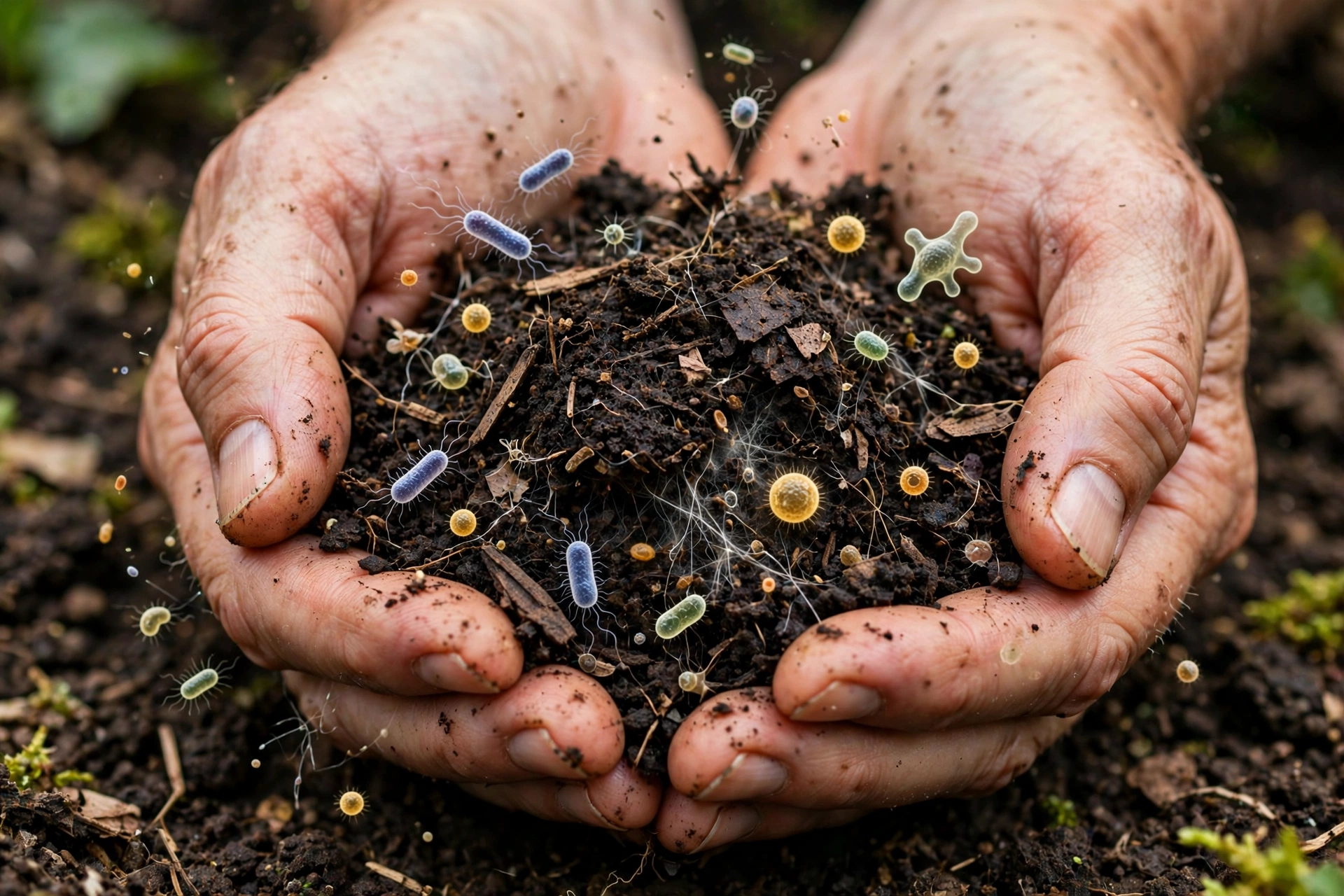
A teaspoon of healthy soil can contain billions of bacteria, fungi, and other microbes. They break down organic matter, release nutrients, fix nitrogen, protect roots from disease, and help soil hold together.
How to Test and Improve Your Soil: Step by Step
1. Identify your plants and their needs. Use the Garden Plant Identifier on aitreeidentier.site to learn what soil your garden plants prefer, especially for acid-lovers or lime-lovers. 2. Test your soil. Use a home pH and nutrient kit, or send a sample to a local lab for a fuller report. Take samples from several spots and at root depth, not just the surface. 3. Check texture and drainage. Squeeze a handful of moist soil: sandy soil falls apart, clay forms a sticky ribbon, loam holds together but crumbles. Dig a hole, fill it with water, and see how fast it drains. 4. Add compost regularly. Spread 5 to 8 centimetres of well-rotted compost on beds in autumn or spring, and let worms work it in. This is the single most useful soil improvement for most gardens. 5. Mulch to protect soil. Mulch keeps soil moist, cool, and covered, reduces weeds, and feeds microbes as it breaks down. Keep mulch away from stems and trunks. 6. Avoid compaction. Do not walk or drive on wet soil. Use paths and beds to keep growing areas loose and aerated. 7. Adjust pH only if needed, and slowly. Add lime to raise pH or sulphur to lower it, only based on a test, in small amounts, and retest after several months. For acid-loving plants in alkaline soil, growing in pots with ericaceous compost is often easier. 8. Rotate and diversify. Grow different plant families in different beds each year, include legumes, and avoid planting the same crop in the same spot repeatedly.
Common Mistakes
Adding fertiliser without testing. Without a test, you may add what is already plentiful and miss what is actually lacking. Test first, feed second.
Tilling too often. Frequent digging breaks up soil structure, dries it out, and harms fungi and worms. Dig only when necessary, and use no-dig methods where possible.
Ignoring drainage. No amount of fertiliser will help a plant whose roots are sitting in waterlogged soil. Fix drainage and structure first.
Feeding the Soil, Not Just the Plant
The old gardening advice to feed the soil rather than the plant captures an important truth. Synthetic fertilisers deliver nutrients directly to the plant, but they do little for soil structure or biology, and excess nitrogen and phosphorus can wash into waterways. Compost and well-rotted manure work more slowly, but they feed the microbes, improve structure, and release nutrients gradually, which is why plants grown in compost-rich soil are often healthier and more resilient.
Cover crops, also called green manures, take the idea further. Sowing clover, phacelia, or winter rye on bare beds protects the soil from erosion, suppresses weeds, and, when dug in or cut down, adds organic matter and, in the case of legumes, nitrogen. A no-dig approach, where compost is spread on the surface and worms do the mixing, preserves soil structure and fungal networks that digging disrupts. None of this means fertilisers have no place: a hungry crop such as tomatoes may still need a targeted feed, but it should be the top-up, not the foundation.
Frequently Asked Questions
Can I improve clay soil?
Yes, gradually. Add compost and organic matter, avoid digging when wet, and use mulch and cover crops. Do not add sand to clay, as it can make it harder, like concrete, unless you add very large amounts.
Why are earthworms good for soil?
Earthworms aerate soil, improve drainage, mix organic matter, and leave castings rich in nutrients. Their presence is a good sign of healthy soil.
What is the best mulch for soil?
Compost, bark, and straw all work well. Choose compost for beds, bark for shrubs, and straw for vegetables, and keep mulch away from stems.
How often should I test my soil pH?
Test once a year, in autumn or early spring, and always test again after adding lime or sulphur, since changes take months to take effect. A simple probe or test kit is accurate enough for most gardens, and a laboratory test every few years gives a fuller picture of nutrients as well.
Is homemade compost enough fertiliser?
For most plants, yes, if the compost is well made and applied generously, about 5 centimetres a year as a mulch. Heavy feeders such as tomatoes, roses, and brassicas may still benefit from an extra feed during the growing season, but compost alone is enough for herbs, shrubs, and most perennials.
Conclusion
Soil science is practical gardening: know your texture, check your pH, feed the soil with compost, and protect the microbes that do much of the work. Test before you treat, improve structure before you add fertiliser, and be patient — healthy soil builds over seasons, not weekends. Identify your plants, learn what soil they prefer, and match them to the soil you have, improving it gradually. When the soil is alive and balanced, plants grow stronger, need less intervention, and are more resilient to drought, pests, and disease.
Try it: Try the free Tree Researcher on aitreeidentier.site — identify a tree from a photo and learn more about the science behind it.
Safety note: This guide is for general learning only. Never eat or use a plant based on AI identification alone, and consult a local expert before using any plant for food or medicine. Wear gloves when handling soil and compost, and wash hands afterwards.