
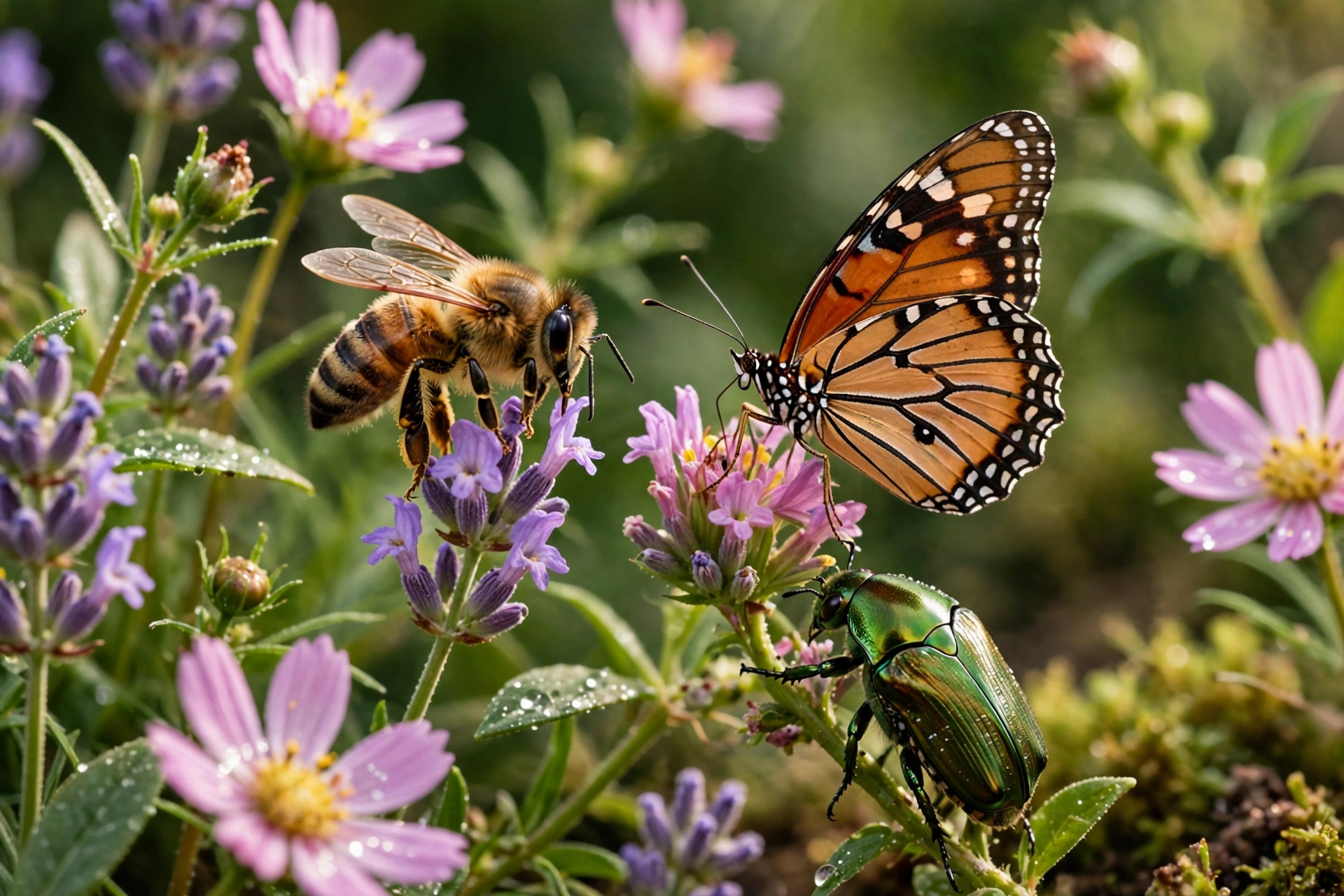
For a gardener, insects are not just visitors — they are workers, pollinators, pest controllers, and indicators of garden health. Bees pollinate fruit and vegetables. Butterflies pollinate flowers and signal a healthy ecosystem. Beetles can be predators that eat slugs, or pests that eat roots and leaves. Telling them apart helps you protect the helpful ones, tolerate the harmless ones, and act early when a real pest appears.
This guide focuses on the three groups gardeners meet most often: bees, butterflies, and beetles. You will learn how to recognise them, what they do in the garden, and how to identify them from photos. You will also learn when to leave insects alone, when to encourage them, and when to take action. A useful rule of thumb: if you do not know what an insect is, photograph it first and decide later. Most of the time, the answer will be that it is harmless or helpful.
Bees: Pollinators in Many Shapes
Bees come in many sizes and colours, and not all of them look like honeybees. Honeybees are slim, golden-brown, and slightly hairy, and they often work in groups. Bumblebees are larger, rounder, and very hairy, with bands of black, yellow, orange, or white. Solitary bees are often smaller and may be dark, metallic, or reddish; they nest alone in soil, walls, or hollow stems.
All bees have two pairs of wings, branched hairs for collecting pollen, and a focus on flowers. They are generally gentle and sting only if threatened. If you see an insect visiting flowers methodically, moving from bloom to bloom, it is likely a bee or a hoverfly. Bees are essential for apples, beans, courgettes, tomatoes, and many other crops. A garden without bees will produce far less fruit.
Butterflies: Pollinators and Indicators
Butterflies are the most recognisable garden insects, and they are also useful indicators of garden health. Peacocks, red admirals, small tortoiseshells, commas, and brimstones are common visitors, each with distinctive wing patterns. Butterflies feed on nectar with a long, coiled tongue, and they prefer flat, open flowers in sunny, sheltered spots. Buddleia, lavender, marjoram, and sedum are all strong butterfly magnets.
The caterpillars are the part gardeners worry about, and with reason: cabbage white caterpillars can strip a brassica in days. But most butterfly caterpillars feed on wild plants such as nettles, thistles, and grasses, not on crops, and a garden that supports caterpillars supports the birds that feed on them. If you find caterpillars on a crop, identify them first — many are harmless, and those that are pests can often be moved to a wild patch or picked off by hand rather than sprayed.
Beetles: Predators and Pests
Beetles are the largest insect group, and garden beetles range from helpful to harmful. Ground beetles are dark, fast, and nocturnal, hunting slugs and other pests in the soil. Ladybirds are beetles too, and their larvae eat aphids by the hundred. Rove beetles are long, thin, and quick, and they hunt small pests in compost and leaf litter. Stag beetles, where they occur, are harmless giants whose larvae live in rotting wood for years.
Some beetles are pests. Vine weevil larvae eat the roots of potted plants, while the adults notch leaf edges at night. Lily beetles are bright red and easy to spot — and easy to pick off by hand. Flea beetles make tiny holes in the leaves of young brassicas. The rule is the same as with other insects: identify the beetle, check whether it is causing real damage, and act only if it is. A single beetle on a leaf is not an infestation.
Step-by-Step: Identify a Garden Insect
Step 1: Photograph it clearly and safely
Take a photo from above and from the side, showing wings, body, and markings. For butterflies, try to capture both open and closed wings. For bees, note the size, hairiness, and colour bands. Do not handle insects you do not know.
Step 2: Count wings and note antennae
Bees and butterflies have two pairs of wings; flies have one pair. Beetles have hard wing cases that meet in a straight line down the back. Antennae shape also helps: butterflies have clubbed antennae, moths have feathery or tapered ones, and beetles have varied, often short antennae.
Step 3: Note size, colour, and pattern
Record the main colours, spots, stripes, and bands. For butterflies, note the upper and lower wing patterns. For bees, note the bands and hairiness. For beetles, note the shape, shine, and any spots or ridges.
Step 4: Note behaviour and plant
Was it on a flower, on a leaf, on the soil, or flying? What plant was it on? A bee on lavender, a butterfly on buddleia, and a beetle under a log each tell a different story.
Step 5: Confirm with an AI tool
Upload your clearest photo to the Insect Identifier on aitreeidentier.site and compare the result with your observations. Use it to learn the species name and whether it is generally helpful, harmless, or a pest to watch.
Common Mistakes to Avoid
Confusing butterflies with moths. Butterflies usually rest with wings closed upright and have clubbed antennae; many moths rest flat and have feathery antennae. Both can be pollinators, so learn the difference before you act.
Mistaking hoverflies for bees or wasps. Hoverflies mimic bees and wasps but have one pair of wings, hover in mid-air, and do not sting. They are excellent pollinators.
Killing beetles on sight. Many beetles are predators or pollinators. Identify first, and only act if you have a confirmed pest causing real damage.
Spraying to control one pest. Broad sprays kill bees, butterflies, ladybirds, and other helpers. Targeted, minimal action — or no action — is often better.
Removing nettles and wild corners. Nettles feed the caterpillars of peacock, red admiral, and small tortoiseshell butterflies, and a wild corner shelters beetles, bees, and other helpers. Keep one small wild patch if you can.
FAQ
How can I tell a bee from a hoverfly? Bees have two pairs of wings and branched hairs; hoverflies have one pair of wings, hover in mid-air, and are often smoother. Hoverflies do not sting and are harmless.
Are all butterflies helpful in the garden? Most are helpful as pollinators, although some caterpillars eat crops. Light damage is normal. Only act if caterpillars are seriously damaging young plants, and identify the species first.
What beetles should gardeners welcome? Ground beetles, ladybirds, and rove beetles are valuable predators. They eat slugs, aphids, and other pests. Provide logs, leaves, and undisturbed corners to encourage them.
Can AI identify bees, butterflies, and beetles from photos? Yes, often well, if the photo is clear and shows wings, body, and markings. A sharp photo in good light, with the plant noted, gives the best result.
How do I tell a butterfly from a day-flying moth? Check the antennae and the resting position. Butterflies have thin antennae with a small club at the tip and usually rest with wings held upright. Day-flying moths, such as the six-spot burnet, often have thicker or feathery antennae and rest with wings flat or folded. Wing pattern and the plant it is on help too.
Conclusion
Bees, butterflies, and beetles each play a different role in the garden, and learning to tell them apart makes you a better gardener. Look at wings, antennae, colour, size, and behaviour. Note the plant and the time of day. Photograph before you act, and use the Insect Identifier on aitreeidentier.site to confirm what you saw. Welcome pollinators and predators, tolerate light damage, and act only when a confirmed pest is causing real harm. A garden full of insects is a garden that is alive.
Safety note: Do not handle unfamiliar insects, keep a safe distance from bees and wasps if you are allergic to stings, and never eat or use a wild plant or mushroom based on AI alone. Consult a local expert if you are unsure.