
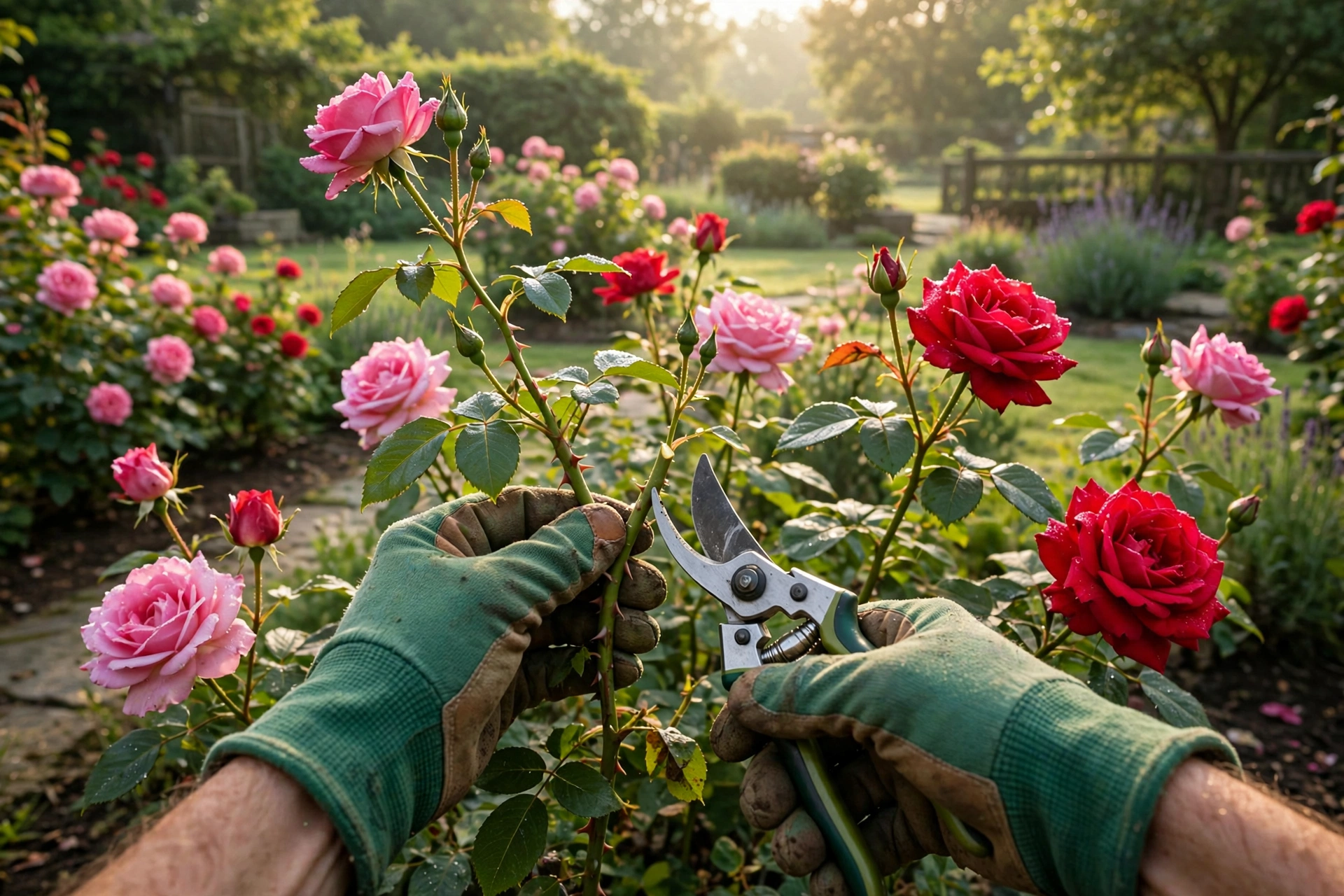
Roses are among the most rewarding plants in the garden, but they are also among the most demanding when it comes to pruning. A rose that is never pruned becomes a tangled thicket of old wood, producing fewer and smaller flowers each year, while a rose pruned well will reward you with vigorous new growth, bigger blooms and a healthier plant overall. Pruning is not difficult once you understand the principles, and a few confident cuts each year make all the difference.
Pruning a rose is really about three things: removing dead, diseased or damaged wood, opening up the centre of the plant so air and light can reach the inner stems, and encouraging strong new shoots that will carry the season's flowers. Roses flower on new growth, so cutting back old stems stimulates the plant to produce fresh, flowering shoots. The timing and severity of the pruning depend on the type of rose you are growing, but the basic technique is the same for all of them.
When to Prune Roses
For most garden roses, the main pruning is done in late winter or early spring, just as the buds begin to swell but before the leaves open. In Britain and similar climates, this usually falls between late February and early April, depending on the weather. Pruning at this time lets you see the structure of the bare plant clearly, and the plant is about to burst into growth, so the cuts heal quickly and new shoots follow within weeks.
Some roses need different timing. Once-flowering old roses and species roses, which flower on the previous year's wood, should be pruned just after flowering in summer, since pruning them in spring would remove the wood that carries the coming season's blooms. Rambling roses, which produce long, flexible stems and a single flush of flowers, are also pruned after flowering. Repeat-flowering shrub roses, hybrid teas and floribundas, which flower on new growth, are the ones that benefit from the classic late-winter prune.
Tools and Preparation
Good pruning starts with good tools. You need a pair of sharp secateurs for stems up to about the thickness of your thumb, and a pair of loppers for thicker branches. For very old or neglected roses, a pruning saw may be needed for the thickest stems. Blunt tools crush stems rather than cutting them cleanly, leaving ragged wounds that heal slowly and invite disease, so keep your blades sharp and clean.
Clean your tools before you start and between plants, especially if you suspect disease. A wipe with disinfectant or a solution of diluted household cleaner will do. Wear thick gloves, since rose thorns are no joke, and consider long sleeves and eye protection when working on a large or overgrown shrub. Bring a bucket or barrow for the prunings, and burn or bin diseased material rather than composting it.
The Basic Pruning Technique
Every cut on a rose should be made at an angle, about 5 millimetres above an outward-facing bud, with the slope of the cut falling away from the bud so rainwater runs off rather than pooling on it. An outward-facing bud is one that points away from the centre of the plant, and cutting above it encourages the new shoot to grow outwards, keeping the centre of the bush open. Cutting above an inward-facing bud does the opposite, sending growth into the middle of the plant where it will crowd and rub.
Start by removing all dead, diseased and damaged wood, cutting back to healthy tissue where the centre of the stem is white or pale green rather than brown. Then remove any stems that cross or rub against each other, keeping the stronger and better-placed one. Next, cut out weak, thin, spindly growth that is thinner than a pencil, since it will only produce weak flowers. Finally, shorten the remaining healthy stems by about a third to a half, cutting to an outward-facing bud each time.
For hybrid tea roses, which are grown for large single flowers on long stems, prune harder, leaving three to five strong stems cut back to around 15 to 20 centimetres from the base, or to about knee height. For floribunda roses, which produce clusters of flowers, prune more lightly, leaving the framework a little taller and keeping more stems. Shrub roses need the lightest touch of all: remove dead and crossing wood and shorten the longest stems by about a third to keep the shape balanced.
Pruning Different Types of Roses
Climbing roses are pruned differently from bush roses. Their main stems should be trained horizontally or at an angle along a wall, fence or trellis, since a horizontal stem produces far more flowering shoots than a vertical one. In late winter, cut back the side shoots that flowered the previous year to two or three buds from the main stem, and remove any old, unproductive main stems at the base, replacing them with strong young shoots. Never cut a climbing rose back hard in the way you would a bush rose, or you will lose its height and structure.
Rambling roses, which produce masses of small flowers on long, arching stems, are pruned after flowering in late summer. Cut out the stems that have flowered, right back to the base, and tie in the strong new shoots that will flower next year. This annual renewal keeps the plant vigorous and prevents it from becoming a mass of old, flowerless wood.
After Pruning: Feeding and Care
Pruning is only half the job. After you have finished, clear away all the fallen leaves and prunings from around the base of the plant, since these can harbour fungal spores. Apply a generous mulch of compost or well-rotted manure around the base, keeping it clear of the stems themselves, and feed the rose with a specialist rose fertiliser or a balanced general fertiliser as growth begins in spring.
Water the plant well after pruning if the soil is dry, and keep an eye on the new shoots as they emerge. If black spot or mildew appears, remove affected leaves promptly and improve air circulation by thinning crowded growth. A well-pruned rose, with an open centre and good airflow, is far less likely to suffer from fungal disease than a dense, tangled bush.
Common Pruning Mistakes to Avoid
The most common mistake is not pruning at all, usually out of fear of harming the plant. Roses are far tougher than they look, and a rose that is never pruned will become woody, crowded and unproductive. A close second is pruning too timidly, snipping off just the tips of the stems. This leaves the plant tall and leggy with weak growth at the top, when a bolder cut would have produced strong new shoots from lower down.
Another frequent error is cutting above an inward-facing bud, which sends new growth into the centre of the bush, creating congestion and rubbing stems. Leaving long stubs above the bud is also a mistake: the stub dies back and can become an entry point for disease. Always cut close to the bud, at an angle, and remove the cut material from the plant.
Frequently Asked Questions
When is the best time to prune roses? For most repeat-flowering roses, late winter or early spring is best, just as the buds begin to swell. Once-flowering roses and ramblers should be pruned after flowering in summer, so you do not cut off the wood that will carry next year's blooms.
How hard should I prune my roses? It depends on the type. Hybrid teas can be cut back hard, to around 15 to 20 centimetres, while floribundas and shrub roses need lighter pruning. As a rule, remove dead, diseased and crossing wood first, then shorten the remaining healthy stems by about a third to a half.
Do I need to deadhead roses? Yes, for repeat-flowering types. Removing spent flowers stops the plant putting energy into seed production and encourages it to produce more blooms. Cut back to the first strong leaf with five leaflets below the faded flower.
Conclusion
Pruning roses is a skill that improves with practice, and the plants themselves are forgiving teachers. A few well-placed cuts each spring, made with sharp tools above outward-facing buds, will keep your roses healthy, open and full of flowers. Learn the type of rose you are growing, prune it at the right time, feed and mulch it afterwards, and it will reward you with season after season of blooms. The bare, pruned bush of March becomes the flowering glory of June, and that transformation is one of the great satisfactions of gardening.
Wondering which rose is growing in your garden? Try the plant identifier at aitreeidentier.site to identify it from a photo and learn more about its care.