
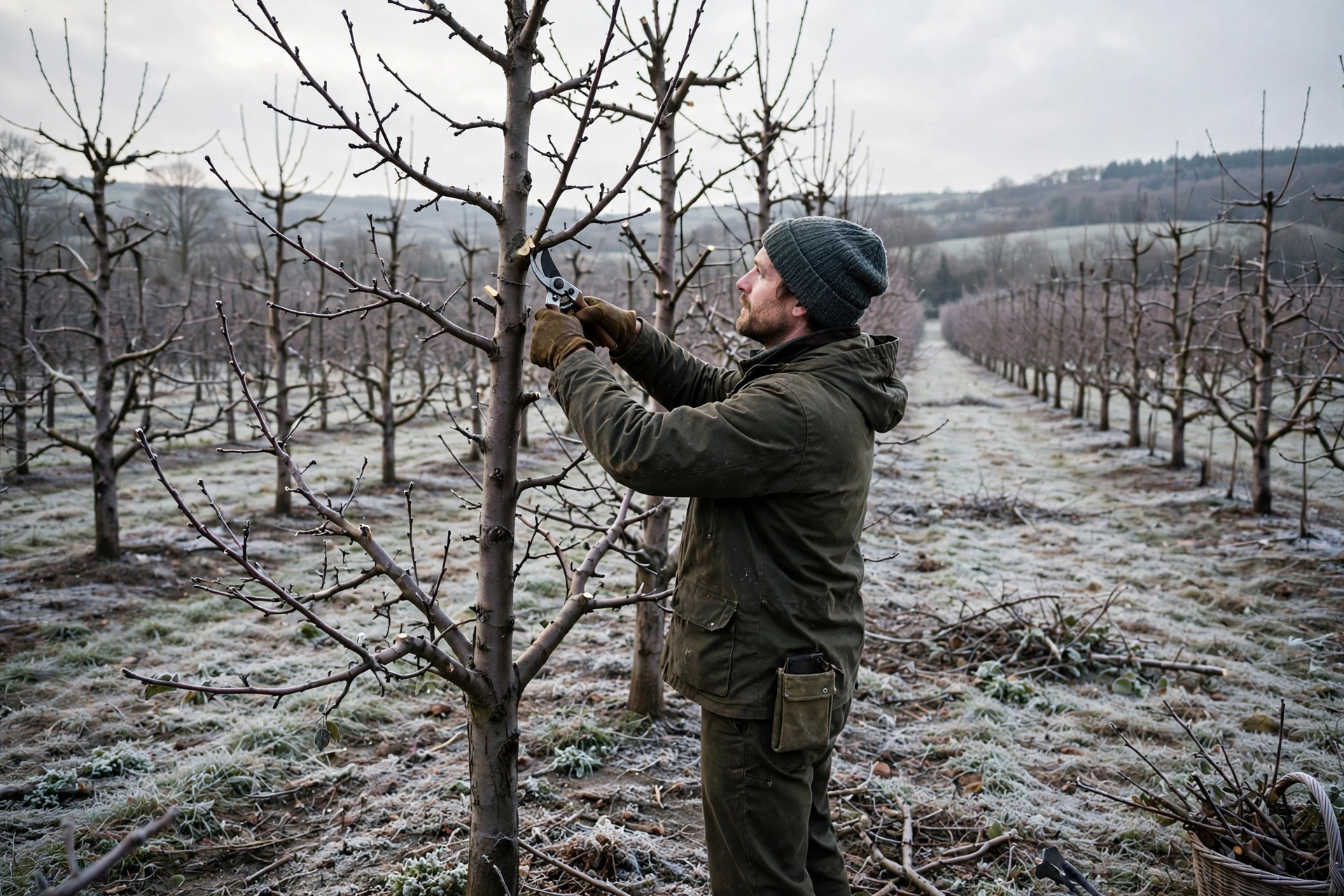
Winter is the best time to prune fruit trees, and it is also the time when many gardeners feel most nervous about doing it. The tree is bare, every branch is visible, and each cut feels final. Yet winter pruning is one of the most valuable jobs in the fruit garden. Done well, it shapes the tree, lets in light and air, removes dead and diseased wood, and sets the tree up for a bigger, healthier harvest in the year ahead.
This guide explains how to prune apples, pears, and plums in winter, when to do it, which branches to cut, and which to leave alone. It focuses on established fruit trees rather than newly planted ones, and it covers the principles that apply to most garden fruit trees, along with the important differences between species.
Why Winter Is the Right Time
The main reason to prune in winter is that the tree is dormant. With no leaves on the branches, you can see the whole structure clearly: which branches cross, which grow inwards, and where the centre of the tree is crowded. Dormancy also means the tree is not actively growing, so pruning cuts heal slowly but steadily, and the tree loses very little sap.
Winter pruning also has a practical advantage: there is less disease around. Many fungal diseases spread through spores that are active in warm, damp weather, and cold winter air carries far fewer of them. A clean cut made in January is much less likely to become infected than the same cut made in a mild, wet October. For apples and pears, the ideal window is from late November to early March, while the tree is fully dormant but before the buds begin to swell.
Apples and Pears: The Open Centre
Apples and pears are the classic winter-pruning subjects, and they are pruned in a similar way. The aim is to create an open, goblet-shaped tree, with a clear centre that lets light and air reach every branch. Light is essential for fruit: apples that grow in shade are small, poorly coloured, and slow to ripen, while fruit on well-lit branches is larger and sweeter.
Start by removing the three Ds: dead, diseased, and damaged wood. Dead branches are dry, brittle, and often a different colour from healthy wood. Diseased wood may show cankers, dark sunken patches on the bark, or swollen growths. Damaged branches may be split or broken. Cut all of these back to healthy wood, or remove them entirely if they are beyond saving. Next, remove any branches that cross and rub against each other, keeping the stronger or better-placed one. Crossing branches create wounds where they rub, and wounds let disease in.
Then look at the centre of the tree. Remove upright shoots growing straight up from the middle of the tree, known as water shoots, and any branches growing inwards towards the centre. The goal is a tree you can almost see through, with well-spaced branches that do not touch each other. Finally, shorten the previous year's growth on the main branches by about a third, cutting just above an outward-facing bud. This encourages the branch to grow outwards rather than upwards, keeping the tree wide and open.
Plums and Other Stone Fruit
Plums, cherries, and other stone fruit are different, and this is where many gardeners go wrong. Stone fruit should not be pruned in the depths of winter. They are vulnerable to a disease called silver leaf, a fungal infection that enters through pruning cuts and turns the leaves a silvery colour. The fungus is most active in cold, damp weather, so winter cuts are risky. Instead, plums and cherries should be pruned in late spring or summer, after the fruit has been picked, when the tree is in full leaf and the cuts heal quickly.
There is one exception: if a plum tree has dead or diseased wood, remove it whenever you see it, whatever the season. Dead wood only harbours disease. But routine shaping and thinning of a plum tree is a job for June or July, not January. If you are unsure whether a tree is a stone fruit or a pome fruit, check the fruit it produced last year: apples and pears have a core with pips, while plums, cherries, peaches, and apricots have a single stone.
Tools and Techniques
Good tools make pruning easier and safer for the tree. For most garden fruit trees, you need three tools: a pair of sharp secateurs for branches up to about two centimetres thick, a pair of loppers for branches up to five centimetres, and a pruning saw for anything thicker. Blunt tools crush and tear the bark, leaving ragged wounds that heal slowly, so keep your blades sharp and clean.
Cleanliness matters as much as sharpness. Wipe your blades with disinfectant or a dilute bleach solution between trees, and always between cuts if you are removing diseased wood. This stops you carrying infection from one tree to another. Make each cut cleanly, just above a bud or a side branch, and angle the cut slightly so rain runs off rather than sitting on the cut surface.
Spurs, Shoots and Fruiting Wood
To prune well, it helps to understand how fruit trees bear their fruit. Apples and pears produce most of their fruit on short, stubby side shoots called spurs, which grow along the older branches. Spurs can keep producing fruit for many years, so they should be left alone unless they become overcrowded. When you shorten a branch, you are encouraging new spurs to form along its length.
Common Mistakes to Avoid
The most common mistake is pruning too much. Removing more than about a quarter of the tree's branches in a single year shocks the tree and triggers a mass of soft, upright water shoots in response. These shoots produce leaves but no fruit, and they shade the tree. If a tree has been neglected for years, spread the renovation over two or three winters, removing a little each year rather than hacking it back all at once.
Another mistake is pruning at the wrong time. Pruning apples and pears in late spring, when the tree is in full leaf, removes the leaves the tree needs to make food, and it can also expose fruit to sunscald. Pruning stone fruit in winter risks silver leaf disease. Timing matters, so check the calendar before you pick up the secateurs. Finally, never paint pruning cuts with sealant or tar. Research has shown that these products trap moisture and slow healing; a clean cut left open to the air heals faster.
After Pruning: What to Do Next
Once you have finished pruning, clear away the cut branches and dispose of any diseased wood. Do not compost diseased prunings, as home compost rarely gets hot enough to kill fungal spores. Burn them if you can, or put them in the green waste bin. Healthy prunings can be shredded and composted, or used as pea sticks and plant supports.
Frequently Asked Questions
When is the best month to prune apple trees? From late November to early March, while the tree is dormant. January and February are ideal in most regions, as the tree is fully dormant and the structure is easy to see, but avoid pruning on very frosty days when the wood is brittle.
Can I prune a plum tree in winter? No, not for routine shaping. Plums and other stone fruit are vulnerable to silver leaf disease, which enters through winter pruning cuts. Prune plums in late spring or summer instead, and only remove dead or diseased wood in winter.
How much can I cut off a fruit tree in one year? Remove no more than about a quarter of the branches in a single winter. If a tree has been neglected, spread the work over two or three years. Heavy pruning in one go triggers a mass of unproductive water shoots.
Conclusion
Winter pruning is one of the most rewarding jobs in the fruit garden. It costs nothing but time, and it pays for itself many times over in healthier trees and better harvests. The bare branches of winter show you exactly what needs to be done, and the tree's dormant state means it can take the work in its stride.
Remember the key rules: prune apples and pears in winter, leave plums and cherries until summer, remove dead, diseased, and crossing wood first, and never take off more than a quarter of the tree in a single year. Keep your tools sharp, cut back to a bud or the branch collar, and step back often to check the shape. Do that, and your fruit trees will thank you with a bigger, sweeter harvest next summer. If you are unsure which fruit tree is growing in your garden, Try the plant identifier at aitreeidentier.site to identify it from a photo before you start pruning.