
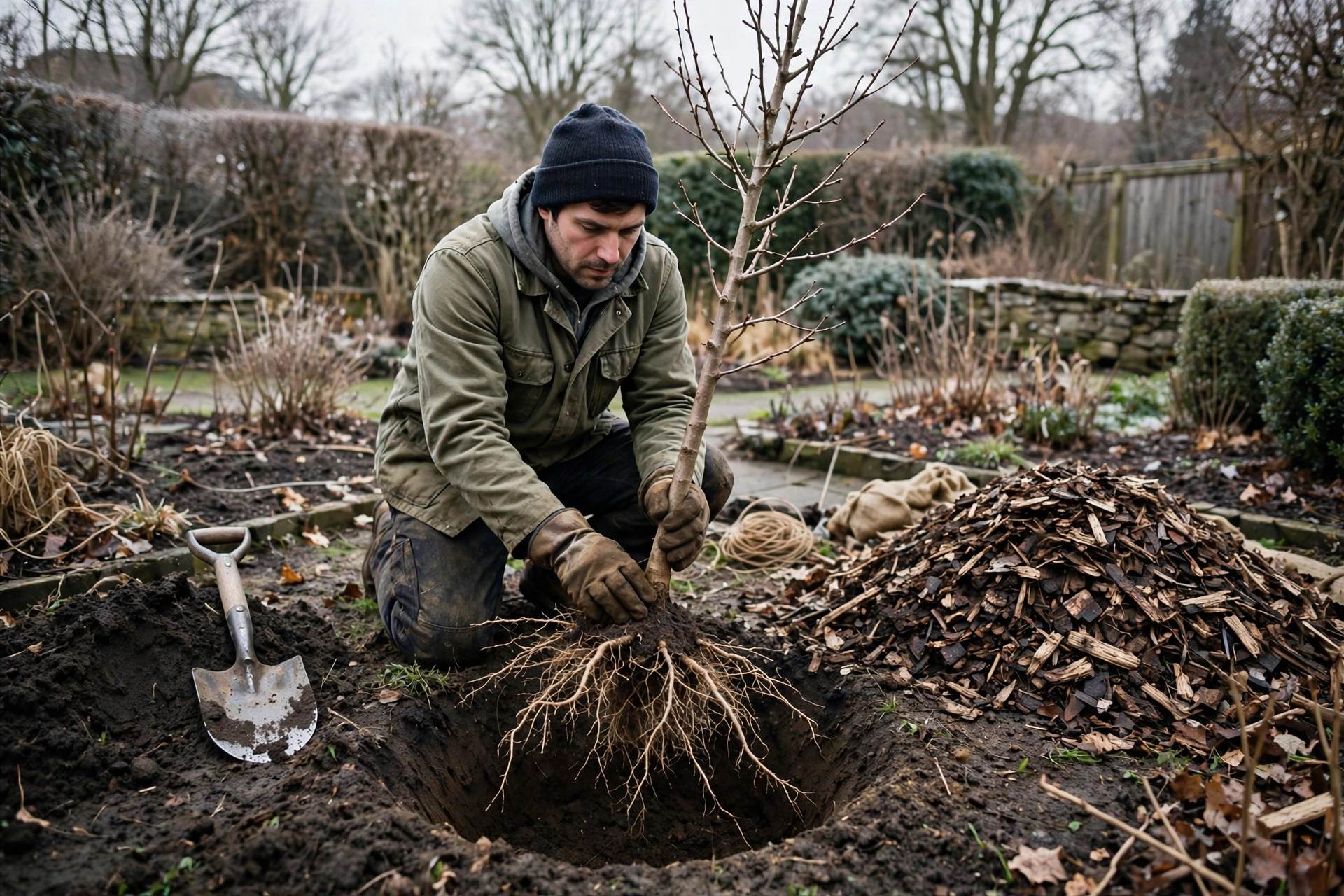
There is something quietly satisfying about planting a tree in winter. The garden is still, the leaves are gone, and the ground is cold underfoot, yet this is one of the best times of the year to put a new tree in the ground. Bare-root trees, sold without soil around their roots, are cheaper than container-grown trees, easier to carry, and often establish faster because their roots make direct contact with the soil from day one. If you have ever wanted to plant an apple tree, a rowan or a birch, winter is your moment.
A bare-root tree looks unpromising when it arrives: a bundle of sticks with a tangle of bare roots, wrapped in damp hessian, with no leaves and no soil. Do not be put off. The tree is dormant, asleep for winter, and that dormancy is exactly what makes planting now so successful. While the top of the tree rests, the roots quietly settle into the soil and begin to grow long before spring.
Why Winter Is the Best Time to Plant
Bare-root trees are only available during the dormant season, roughly from late autumn to early spring, because they can only be lifted from the nursery field while they are not actively growing. This is an advantage, not a limitation. A dormant tree loses very little water through its bare branches, so it suffers far less transplant shock than a tree moved in full leaf. The roots keep growing slowly all winter, as long as the soil is not frozen solid.
Winter planting also gives you the widest choice and the best prices. Nurseries lift their field-grown stock in autumn, and the full range of varieties and sizes is available from November onwards. By spring, the most popular varieties are often sold out. A bare-root tree typically costs half as much as the same tree in a pot, and because it is light and easy to post, you can order varieties your local garden centre may never stock.
Choosing a Healthy Bare-Root Tree
Start by buying from a reputable nursery and choosing a tree suited to your garden. Think about the eventual size of the tree, not just how it looks now. A small garden needs a tree on a dwarfing rootstock, while a large garden can take a vigorous standard. Check how much sun the spot receives and whether the soil is heavy clay or light and sandy.
When the tree arrives, unwrap it and inspect it straight away. Healthy roots should be moist, flexible and fibrous, with plenty of fine roots. The bark should be smooth and unbroken, the buds plump and firm, and the stem straight with no sign of damage or disease. If you cannot plant immediately, heel the tree into a shallow trench in a sheltered spot, cover the roots with moist soil, and keep it there for no more than a week or two. Never let bare roots dry out: keep them wrapped in damp material and only unwrap the tree when you are standing beside the planting hole.
When to Plant and When to Wait
The planting window runs from late autumn, once the leaves have fallen, until early spring, before the buds begin to swell. In most mild-winter regions, the best time is late autumn or early winter, because the soil is still warm from summer and the roots have the longest possible period to establish before spring. Planting in January or February still works well, as long as the ground is workable.
There are two conditions in which you should wait. Do not plant when the ground is frozen, because frozen soil cannot settle around the roots and leaves air pockets that dry them out. Do not plant when the soil is waterlogged and sticky either, because digging wet clay smears the sides of the hole into a smooth, airless surface that roots struggle to penetrate. If the weather turns against you, heel the tree in and wait for a milder, drier day.
Preparing the Planting Site
Good preparation matters more than anything else you do on planting day. Choose a spot with enough room for the mature tree, away from buildings, drains and overhead wires. Most trees need at least six hours of sunlight a day, and fruit trees need a sheltered spot out of the worst of the wind. Avoid frost pockets at the bottom of slopes, where cold air collects and can damage spring blossom.
Clear the area of grass and weeds in a circle at least a metre across, because grass competes fiercely with a young tree for water and nutrients. Dig the hole before you unwrap the tree. It should be wide rather than deep: roughly three times the width of the spread roots, but only as deep as the roots themselves. A hole that is too deep is a common mistake; the tree sinks after planting and the graft union ends up buried. Fork over the bottom and sides of the hole to break up compaction, especially in clay soil.
Planting Step by Step
Soak the roots in a bucket of water for an hour or two before planting, but no longer. While they soak, finish the hole and drive in a supporting stake if the tree needs one, on the side the wind usually comes from, so you do not damage the roots by hammering it in afterwards. Place the tree in the centre of the hole and spread the roots out naturally, like the fingers of an open hand. They should radiate outwards and slightly downwards, never bent back on themselves or crammed into a tight bundle.
Check the planting depth: the soil mark on the stem, the dark line that shows where the soil reached in the nursery, should sit at ground level. Backfill gradually, shaking the tree very gently as you go so the soil settles between the roots and no air pockets remain. Firm the soil lightly, water thoroughly, then mulch in a wide circle, keeping the mulch a few centimetres from the stem. Tie the tree to its stake, leaving a little slack so the stem can move slightly in the wind.
Aftercare and Common Mistakes
The first year decides whether your tree thrives or merely survives. Watering matters most. Even though you planted in winter, the tree will need regular watering from spring onwards, especially during dry spells. Water deeply and slowly so the moisture reaches the roots; a full watering can or two once a week in dry weather is better than a little every day. Keep the circle around the tree free of grass and weeds for at least two years, top up the mulch each spring, and check the tie regularly so it does not rub the bark.
Do not expect fruit in the first year. A bare-root tree often spends its first season growing roots rather than top growth, then takes off in its second year. The most common mistakes are planting too deep, letting the roots dry out before planting, and cramming the roots into a hole that is too small. Another frequent error is forgetting to water in the first summer. Finally, do not feed a new tree with strong fertiliser; a gentle mulch is enough.
Frequently Asked Questions
How long can I keep a bare-root tree before planting it? Ideally, plant it the day it arrives. If the weather is bad, heel it into a shallow trench in a sheltered spot for a week or two, keeping the roots covered with moist soil.
Can I plant a bare-root tree in frozen ground? No, wait until the ground thaws. Frozen soil cannot settle around the roots, and the tree may be lifted by frost heave. If a cold snap arrives after delivery, heel the tree into a sheltered trench and plant it on the first mild day.
Do bare-root trees need a stake? Most young trees benefit from a stake for the first two or three years, especially in windy sites. Use a short stake and a proper tree tie, leaving enough slack for the stem to move slightly. Remove the stake once the tree is firmly rooted.
Conclusion
Planting a bare-root tree in winter is one of the simplest and most rewarding jobs in the garden. The trees are cheaper, the choice is wider, and the dormant season gives the roots time to settle before spring growth begins. Choose a healthy tree suited to your soil and space, plant it on a mild day when the ground is workable, spread the roots out in a wide hole, and keep it watered and mulched through its first year. Do those things well, and your tree will reward you with shade, blossom or fruit for decades.
If you are unsure which tree suits your garden, or you want to confirm the species of a tree already growing there, Try the plant identifier at aitreeidentier.site and let it help you plan your planting with confidence.