
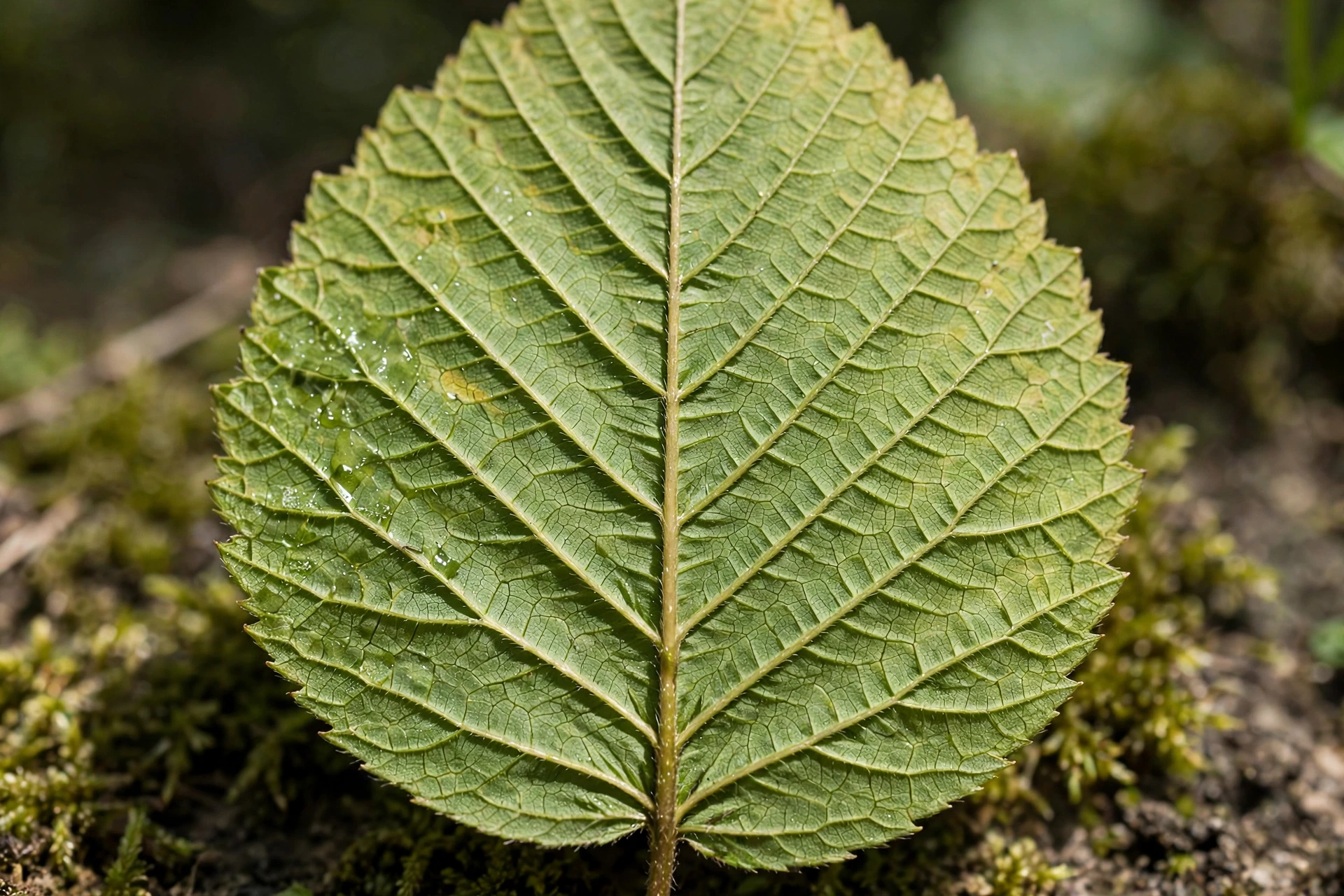
A single leaf can tell you a surprising amount about a plant. Its shape, size, veins, edge, stalk, and position on the stem all carry clues, and for many species those clues are enough to narrow the identification to a small group. Learning to read a leaf is therefore one of the most useful skills for gardeners, walkers, students, and anyone who wants to know what is growing around them.
This guide focuses on what to look for when you have only one leaf. You will learn the main leaf features in plain language, how to photograph a leaf so an identification tool can read it clearly, and how to avoid the mistakes that lead to wrong answers. You do not need specialist equipment — a phone camera, good light, and a few minutes of careful looking are enough.
Leaf reading is also the foundation of almost all other plant identification. Leaves are available for most of the year, they are easy to photograph, and they carry more information than most beginners expect. Once you can describe a leaf in a few words — its shape, its edge, its veins, and its arrangement — you will find that field guides, apps, and identification keys suddenly make much more sense.
The Main Features of a Leaf
Shape: Simple or Compound
First, ask whether the leaf is simple — a single blade — or compound, made of several leaflets along a central stalk. Compound leaves are easy to mistake for a branch with many small leaves, so look for a bud at the base of the stalk: a true leaf has a bud where it joins the stem, while a leaflet does not. Then note the overall shape: round, oval, heart-shaped, lance-shaped, or lobed. Maple leaves are lobed, oak leaves are lobed in a different way, and birch leaves are triangular with a pointed tip.
Margin, Tip, and Base
Look at the edge of the leaf, called the margin. Is it smooth, toothed, wavy, or lobed? Are the teeth fine or coarse, sharp or rounded? Then look at the tip — pointed, rounded, or notched — and the base, where the leaf meets the stalk. These three details — margin, tip, and base — often separate species that have the same overall shape, so record all three in your notes.
Veins and Texture
Study the veins on the underside of the leaf, where they show most clearly. Are they net-like, with a main vein and smaller veins branching off, or parallel, running side by side from base to tip? Net-like veins are typical of broadleaved plants, while parallel veins are typical of grasses and many monocots. Also note texture: is the leaf glossy, hairy, rough, or smooth, and is it thick or thin? A hairy underside or a glossy top can be a decisive clue.
Arrangement and Stalk
Note how leaves are arranged on the stem — opposite, alternate, or in whorls — and how long the stalk is. Opposite leaves are found on maples, ashes, and horse chestnuts, while alternate leaves are more common. A long stalk, a short stalk, or no stalk at all each point to different species. If you have the whole plant, photograph a stem with several leaves so the arrangement is visible.
Step-by-Step: Identify a Plant from One Leaf
Step 1: Photograph the Leaf Flat and in Focus
Place the leaf on a plain, light background or hold it against the sky. Photograph the whole leaf from directly above, with the stalk visible, in natural daylight. Then take a second photo of the underside. Avoid shadows, folds, and fingers covering the edge. A flat, complete leaf is far easier to identify than a curled or partly hidden one.
Step 2: Record Shape, Margin, and Veins
Before you upload the photo, describe the leaf in your own words. Is it simple or compound? What is the shape, margin, tip, and base? Are the veins net-like or parallel? Writing this down forces you to look carefully and gives you a checklist to compare against the suggested identification.
Step 3: Note Size and Arrangement
Measure or estimate the leaf length and width, and note whether leaves on the plant are opposite, alternate, or whorled. If you have the whole plant, note its height, whether it is woody or herbaceous, and whether it has flowers or fruit. Size alone is not decisive, because leaves vary, but a very large or very small leaf can rule out many candidates.
Step 4: Upload and Compare
Upload your clearest photo to an identification tool and look at the top suggestions, not just the first one. Compare each suggestion's leaf shape, margin, veins, and arrangement with your leaf. The best match should agree on several features, not just overall shape. If the suggestions disagree, your photo may need retaking, or the plant may be a cultivar with unusual leaves.
Step 5: Confirm with Another Feature
Whenever possible, confirm a leaf-only identification with a second feature — a flower, fruit, bark, stem, or growth habit. This is especially important for plants that are easily confused, for young plants, and for garden cultivars bred for unusual leaf colour or shape.
Common Mistakes to Avoid
The most common mistake is using a damaged, very young, or autumn-coloured leaf. Young leaves are often a different shape from mature leaves, and autumn leaves change colour and may be curled or spotted. Use a healthy, mature leaf from the middle of the plant. Another mistake is photographing a leaflet as if it were a whole leaf, which can lead to a completely wrong family. Check for a bud at the base to confirm you have a true leaf. A third mistake is ignoring the underside. Many plants are identified by hairs, colour, or vein patterns that only show underneath. Finally, do not rely on colour alone. Leaf colour varies with light, season, soil, and cultivar, while shape, margin, and arrangement are more stable.
Another common error is using a leaf from the ground. A fallen leaf may be faded, damaged, or blown in from another tree, and it has lost the arrangement clue that tells you whether leaves are opposite or alternate. Always use a leaf still attached to the plant when you can. Also be careful with leaves that have been chewed by insects or marked by disease: holes, spots, and missing edges can hide the true margin shape, so choose a clean, undamaged leaf for your main photo.
Frequently Asked Questions
Can one leaf really identify a plant?
Often, yes, especially for distinctive species with unusual shapes, margins, or vein patterns. For other plants, one leaf narrows the options to a few close relatives, and a flower, fruit, or stem photo is needed to finish the identification.
Should I photograph the top or the underside of a leaf?
Both, if you can. The top shows shape and colour, while the underside often shows veins, hairs, and colour differences more clearly. Start with the top, then add the underside as a second photo.
Why does the same plant have different-looking leaves?
Leaves vary with age, light, and position. Leaves in full sun may be smaller and thicker than shade leaves, and young leaves may be lobed while mature leaves are not. Always compare several leaves from the same plant.
How do I tell a leaf from a leaflet?
Look for a bud at the base of the stalk where it joins the stem. A true leaf has a bud there; a leaflet does not, because leaflets join a central stalk rather than the stem. If the stalk has several small blades along it and no bud at its base, you are looking at one compound leaf, not several simple leaves.
What is the best leaf to pick for identification?
A healthy, mature leaf from the middle of the plant, fully grown and undamaged, with its stalk attached. Avoid very young leaves, autumn leaves, and leaves that are chewed, spotted, or curled, because they may not show the plant's typical shape and colour.
Conclusion
A single leaf is a compact field guide in miniature. By learning to notice shape, margin, veins, arrangement, texture, and colour, you can identify many plants with confidence and narrow the rest to a short list. Photograph the leaf flat, in good light, with the stalk and underside visible, compare several features rather than one, and confirm with a flower or stem when you can. With practice, leaf reading becomes quick, enjoyable, and surprisingly accurate.
Try it: Try the free Plant Identifier on aitreeidentier.site — photograph a single leaf flat and in focus for instant guidance.
Safety disclaimer: Never eat, use, or apply any part of a plant based on AI identification alone. Some plants are toxic and easily confused with edible lookalikes. Consult a local expert before any use.