
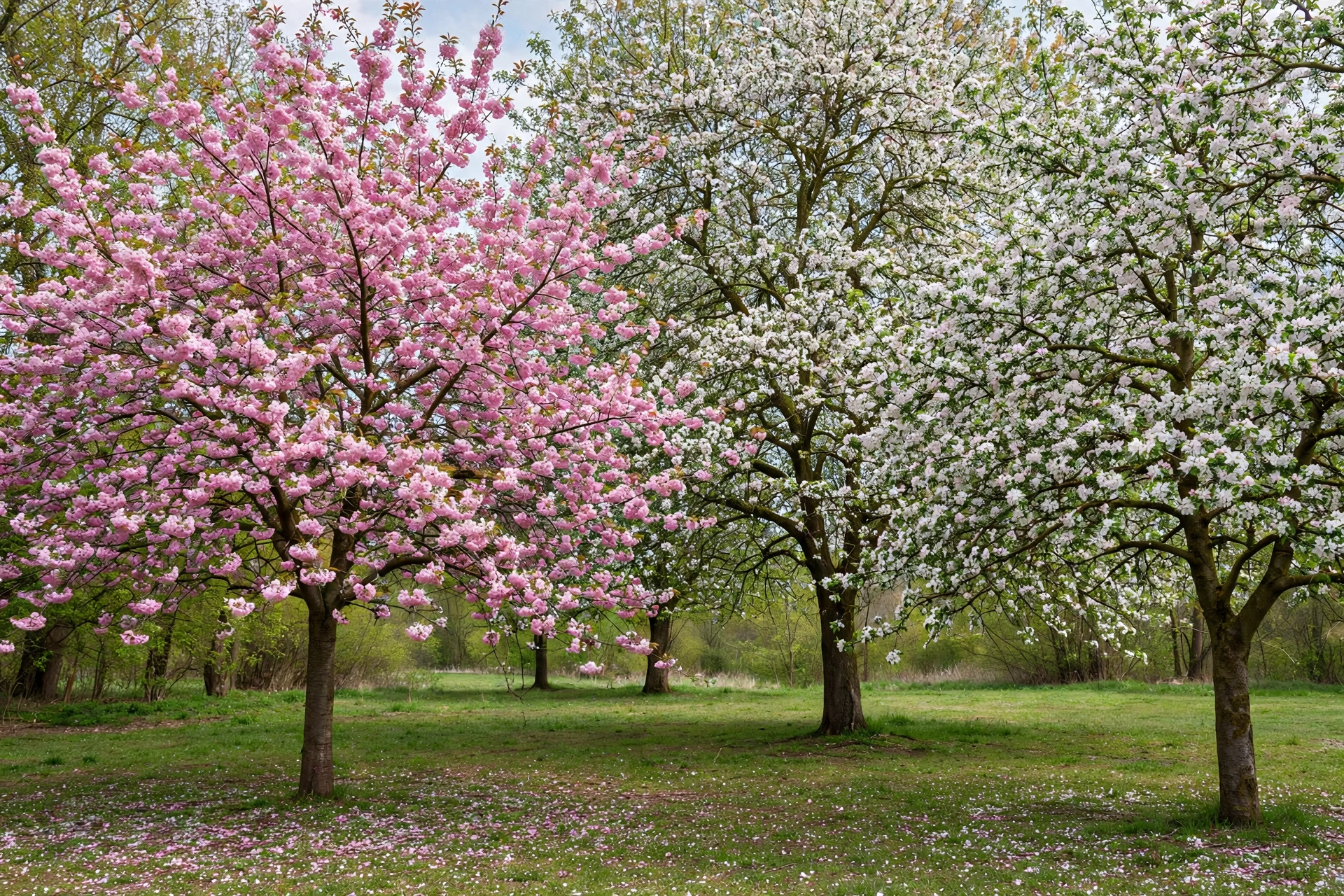
Spring blossom turns ordinary streets and gardens into a display of pink, white, and purple, yet many flowering trees look similar at a distance. Cherry, apple, plum, hawthorn, magnolia, and lilac can all produce clouds of blossom, and telling them apart matters if you want to know when fruit will follow, how large the tree will grow, or how to care for it.
This guide explains how to identify flowering trees by their blossoms, using colour, petal shape, flower arrangement, scent, leaves, bark, and timing. You will learn what to photograph, which details matter most, and how to avoid the mistakes that lead to confusing one blossom tree for another. With clear photos and a step-by-step check, spring identification becomes much easier.
Blossom identification is a seasonal skill, and timing is part of the clue. Some trees flower before their leaves open, some flower with their leaves, and some flower late in spring when others are already in leaf. A tree in full blossom in early March is a different candidate from one in full blossom in late May, even if the flowers look alike. Keep a note of the date with every blossom photo, and you will find the possibilities narrowing quickly.
What to Look for in Blossom
Petal Number and Flower Shape
Count the petals and study the shape of a single flower. Many blossom trees in the rose family have five petals, while magnolia flowers have larger, more pointed petals arranged in a different pattern, and lilac flowers are tiny four-petalled flowers packed into large clusters. Note whether the flower is flat, cup-shaped, or star-shaped, how many stamens are visible in the centre, and whether the centre is a different colour from the petals. These small structural details often separate trees whose blossom looks identical from a distance.
Flower Arrangement
Note how the flowers are arranged on the branch. Cherry blossom often grows in small clusters along the branch, apple blossom grows in clusters at the tips of short shoots, hawthorn blossom forms flat-topped clusters, and lilac blossom forms large, upright cones of tiny flowers. Arrangement is one of the most reliable blossom clues, so photograph a whole branch as well as a single flower, and note whether flowers grow along the branch or only at the tips.
Scent
Some blossom is strongly scented, some is lightly scented, and some has almost no scent. Scent can be a useful clue, especially for lilac, hawthorn, and some cherries, but it varies with weather, time of day, and your distance from the tree. Note scent only as a supporting clue, and do not pick blossom to test it if you are unsure what it is.
Leaves and Bark
Always photograph leaves and bark as well as blossom. Are leaves present when the tree flowers, or does blossom appear before leaves? Cherry and magnolia often flower before leaves fully open, while apple and hawthorn flower with leaves present. Leaf shape, bark colour, and overall tree shape help confirm the identification when blossom alone is ambiguous.
Step-by-Step: Identify a Flowering Tree by Blossom
Step 1: Photograph a Single Flower Close Up
Photograph one fresh, fully open flower from the front in natural light, filling the frame. Then take a side view showing petals, centre, and stalk. Count the petals and note the centre colour and stamens. Avoid flash, which can wash out delicate pink and white tones.
Step 2: Photograph a Whole Branch
Step back and photograph a branch with several flowers, buds, and leaves if present. This shows arrangement, spacing, and whether flowers grow along the branch or only at the tips. Include a second photo of the whole tree to show size and shape.
Step 3: Note Colour, Scent, Leaves, and Bark
Describe the blossom in your own words: colour, petal number, arrangement, scent, and whether leaves are present. Note bark colour and texture, and the tree's height and shape. These notes give you a checklist to compare against suggestions.
Step 4: Upload and Compare
Upload your clearest blossom photo and compare the top suggestions against petal number, arrangement, leaf timing, bark, and flowering date. The best match should agree on several features. If the tree is a garden cultivar, the suggestions may include several similar varieties, and leaf and bark photos can help narrow them down.
Step 5: Confirm with Fruit or Leaves Later
If you can, return later in the year and photograph leaves, fruit, or seed cases. Cherry, apple, plum, and hawthorn all produce distinctive fruit, and that fruit can confirm a spring blossom identification. Keep a note of the tree's location so you can find it again.
Common Mistakes to Avoid
The most common mistake is relying on colour alone. Many flowering trees share pink or white blossom, and colour varies with cultivar and light. Another mistake is photographing only one flower and ignoring arrangement, leaves, and bark, which are often more distinctive. A third mistake is using a faded or partly open flower, which may not show the true petal number or colour. Use fresh, fully open flowers in good light. Finally, do not assume a street tree is a wild species. Many street and garden trees are ornamental cultivars bred for blossom colour, petal number, or size, and they may not match wild forms exactly.
Another mistake is identifying blossom from a photo taken from directly underneath the tree, looking up into the canopy. From below, flowers are backlit and their colour and centre are hard to see, and the arrangement is difficult to judge. Instead, photograph a low branch at eye level, where you can see the front of the flower in natural light. If no low branch is within reach, look for fallen blossom on the ground and photograph a fresh flower there — but check that it came from the tree above you, and confirm the identification with a bark or leaf photo from the trunk.
Frequently Asked Questions
Can I identify a flowering tree by blossom alone?
Often, yes, for distinctive blossom such as magnolia, lilac, or hawthorn photographed clearly. For cherry, apple, and plum, blossom alone can be ambiguous, and leaves, bark, timing, and later fruit help confirm the identification.
What is the best photo for blossom identification?
A clear front view of a fresh flower, plus a branch photo showing flower arrangement and leaves, and a whole-tree photo for size and shape. Together, these give the most complete picture.
Why does blossom colour change as flowers age?
Many blossoms fade, deepen, or change colour as they open and age, and buds are often a different colour from open flowers. Photograph both buds and open flowers, and note the colour of each stage.
How do I tell cherry blossom from apple blossom?
Cherry flowers usually have a small notch at the tip of each petal, grow in clusters along the branch, and often appear before the leaves open. Apple blossom is usually pink in bud and white when open, grows in clusters at the tips of short shoots, and usually appears with young leaves. Check petal shape, arrangement, and leaf timing together.
When is the best time to identify a flowering tree?
When the blossom is fresh and fully open, in good daylight, and when you can also see the leaves and bark. Early morning or late afternoon light shows colour most truly. If you can, visit the tree twice — once in blossom and once later in the year when it has leaves and fruit — for a much more confident identification.
Conclusion
Flowering trees are easiest to identify when you look beyond colour. Count the petals, study flower arrangement, note scent and leaf timing, photograph bark and whole-tree shape, and use flowering date as a clue. With clear photos and a step-by-step check, you can identify many blossom trees in spring — and return later for leaves and fruit to confirm your answer.
Try it: Try the free Tree Identifier on aitreeidentier.site — photograph blossom and a branch for instant guidance.
Safety disclaimer: Never eat, use, or apply any part of a tree, plant, mushroom, or fruit based on AI identification alone. Some species are toxic or easily confused with lookalikes. Consult a local expert before any use.