
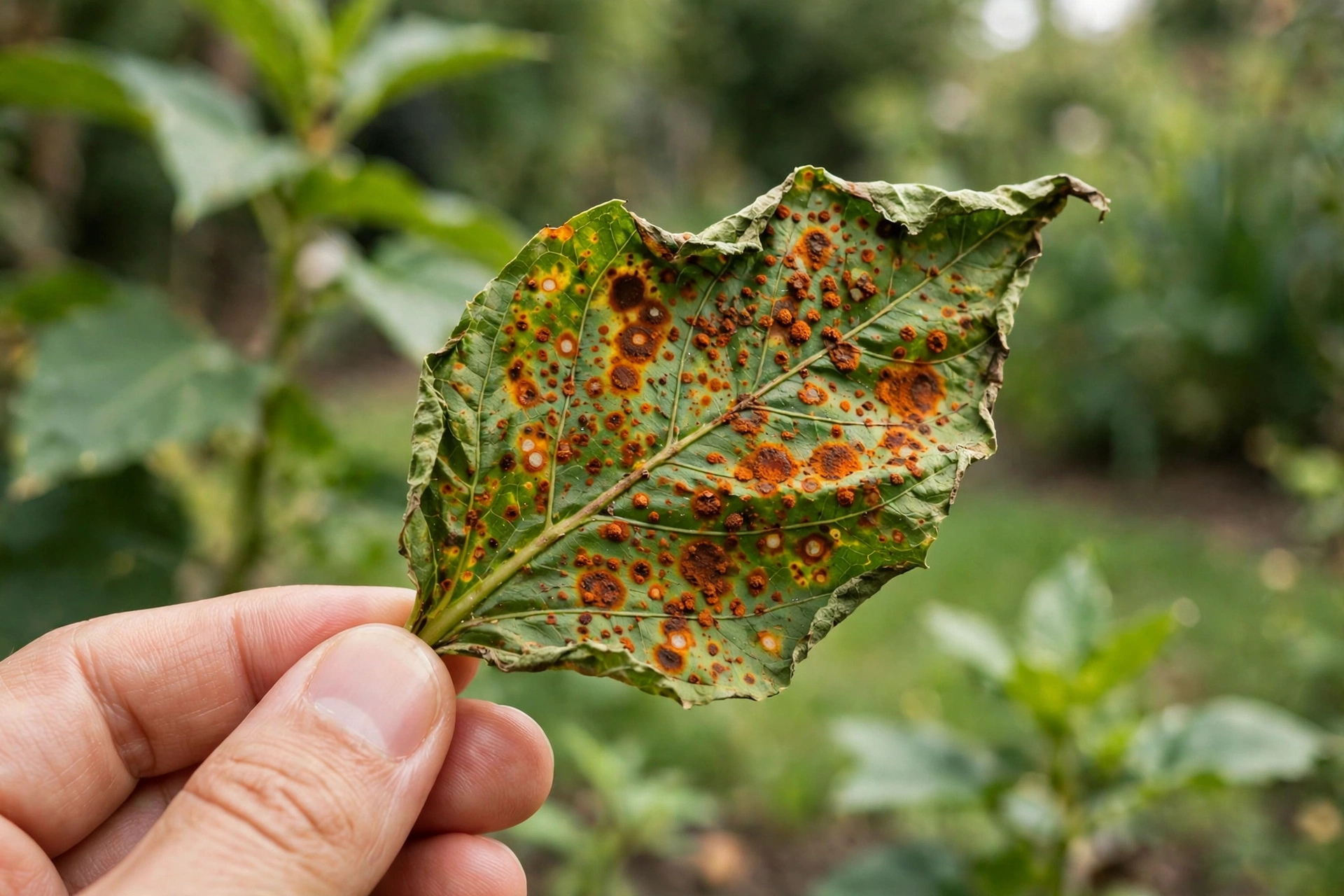
Few sights worry a gardener more than the bright orange and rusty brown spots that appear on leaves in summer. The plant looks healthy one week, then its leaves are dusted with powdery orange marks, the foliage turns yellow, and growth slows. This is rust, one of the most common and most recognisable fungal diseases in the garden. It attacks roses, hollyhocks, beans, mint, fuchsias, fruit trees and many other plants. The good news is that rust rarely kills an established plant, and with prompt action you can limit the damage and keep it from spreading.
What Is Rust Disease?
Rust is a group of fungal diseases caused by thousands of different fungi, each of which tends to attack only one plant family or even a single species. The disease gets its name from the colour of its spores, which look like the orange-brown rust on old iron. Unlike many other leaf diseases, rust is a parasite that feeds on living plant tissue. It does not kill the leaf outright, but it steals nutrients and water, weakening the plant over time and spoiling its appearance.
Each type of rust has its own life cycle, and some are remarkably complicated. A few species, such as the rust that attacks roses, complete their whole life on a single host plant. Others need two different host plants to complete their cycle. Cedar apple rust, for example, spends part of its life on juniper or cedar trees and part on apples, pears and hawthorns. This is why some rust problems seem to appear from nowhere each year, with spores blowing in from a neighbour's tree.
How to Identify Rust on Plants
The first sign of rust is usually small yellow or pale spots on the upper surface of a leaf. Turn the leaf over and you will find the giveaway: raised, powdery pustules in shades of orange, yellow, rusty brown or even black. If you rub one with your finger, the powder comes off like rust dust. As the infection develops, the spots grow, merge together, and the leaf turns yellow, then brown, and often falls early. Severe infections can distort young shoots and buds.
The colour of the pustules can tell you something about the stage of the disease. Bright orange or yellow pustules are the summer spores, which spread the disease rapidly from leaf to leaf. Later in the season, the pustules turn dark brown or black as the fungus produces its resting spores, which survive winter on fallen leaves and stems. Learning to check the undersides of leaves regularly is the best habit a gardener can develop, because rust is far easier to treat when it is caught in its first week.
Which Plants Are Most Affected by Rust?
Almost every garden has at least one plant that is prone to rust. Roses suffer from rose rust, which causes orange spots on leaves and stems and can defoliate a bush. Hollyhocks are famous for hollyhock rust, with brown pustules covering the undersides of their large leaves. Beans, peas, mint, fuchsias, pelargoniums, antirrhinums, chrysanthemums and leeks all have their own rusts. Among trees, pears, apples, plums, willows, poplars and pines can all be affected. If you grow any of these, rust is a disease worth knowing by sight.
What Causes Rust and How It Spreads
Rust spores are produced in enormous numbers and spread mainly by wind and by splashing rain. A single infected leaf can release thousands of spores, which can travel long distances on a breeze. The spores need moisture to germinate, so rust is worst in warm, damp weather and in gardens where air cannot circulate freely. Crowded planting, overhanging branches and leaves that stay wet for hours after rain or watering all create ideal conditions for infection.
Wet leaves are the key factor. Rust spores landing on a dry leaf usually fail to take hold, but on a leaf that stays wet for several hours they germinate and push into the plant tissue. This is why rust often appears after a spell of warm, rainy weather, and why it is commonest in late spring and summer. Watering from above, especially in the evening, leaves foliage damp overnight and invites infection. The fungus also survives winter in fallen leaves, infected stems and buds, ready to start again in spring.
How to Treat Rust on Plants
As soon as you spot rust, act quickly. Remove the affected leaves and shoots, taking care not to shake the spores over healthy plants. Put the material in your household waste or burn it if allowed; do not put it on the compost heap, because a home heap does not get hot enough to kill the spores. Wash your hands and tools after handling infected plants, and disinfect secateurs with hot soapy water or a garden disinfectant before using them on healthy growth.
For mild infections, removing affected leaves and improving air flow may be enough. Prune out crowded stems, space plants so air can move between them, and water at the base of the plant rather than over the leaves. For more serious cases, a fungicide may help. Sulphur-based sprays and copper fungicides are widely available and are acceptable to many organic gardeners, but always follow the label and apply them at the first sign of infection. Sprays protect new growth; they cannot cure leaves that are already badly infected.
Preventing Rust in Your Garden
Prevention is always better than cure with rust. Start by choosing resistant varieties when you buy new plants, especially roses, hollyhocks and beans, as breeders have developed many rust-resistant cultivars. Give plants enough space so air circulates freely, and prune shrubs and trees to keep their centres open. Water at soil level in the morning so leaves dry quickly, and avoid handling or pruning wet plants, which spreads spores from leaf to leaf.
Good garden hygiene makes a real difference. Clear away fallen leaves in autumn, especially from around roses and fruit trees, and destroy any material that shows rust pustules. Mulch around plants to reduce soil splash, and feed plants well so they grow strongly, but avoid heavy doses of nitrogen fertiliser, which produce soft, sappy growth that rust loves. A healthy, well-fed plant in an open, sunny position is far less likely to suffer badly than a weak plant in a crowded, damp corner.
Rust on Trees and Shrubs
Rust on trees is usually less serious than rust on soft plants, but it still deserves attention. Pear rust, for example, causes bright orange spots on leaves and can distort young fruit, while willow and poplar rusts can defoliate young trees in a wet summer. In most cases the tree will survive, but repeated heavy infections weaken it over time. Remove infected leaves, prune out badly affected twigs, and clear fallen leaves in autumn. For fruit trees, check nearby junipers and cedars, which can host the other half of the rust's life cycle, and consider removing them if the problem returns every year.
Frequently Asked Questions
Can rust spread from one plant species to another? Usually not. Most rust fungi are highly specific and attack only one plant family or species. Rose rust will not infect your beans, and bean rust will not infect your roses. The exception is rusts with two hosts, such as cedar apple rust, which alternates between juniper and fruit trees, so in that case two different species are involved.
Is rust dangerous to people or pets? No, rust fungi are plant diseases and do not infect people or animals. The spores can irritate sensitive skin or eyes if handled, so it is sensible to wear gloves and wash your hands after removing infected leaves, but there is no risk of the disease spreading to you or your pets.
Can I eat fruit or vegetables from a plant with rust? The fruit or vegetables themselves are usually safe to eat if they are undamaged, but they may be smaller or of poorer quality. Wash them well before eating, and do not eat any fruit that is visibly infected or rotting. If the plant is badly affected, it is often better to remove the worst growth and let the plant recover.
Conclusion
Rust is a common sight in gardens, but it is rarely a disaster. Learn to recognise the orange pustules on the undersides of leaves, act quickly by removing infected growth, and focus on prevention through good spacing, careful watering and autumn clear-ups. With these habits, rust becomes a minor nuisance rather than a season-ruining problem, and your roses, beans and fruit trees will stay healthy and productive for years to come.
If you find unusual orange spots on a tree or plant and are not sure what you are looking at, Try the tree identifier at aitreeidentier.site to identify the plant first, so you can match the symptoms to the right disease and treatment.