
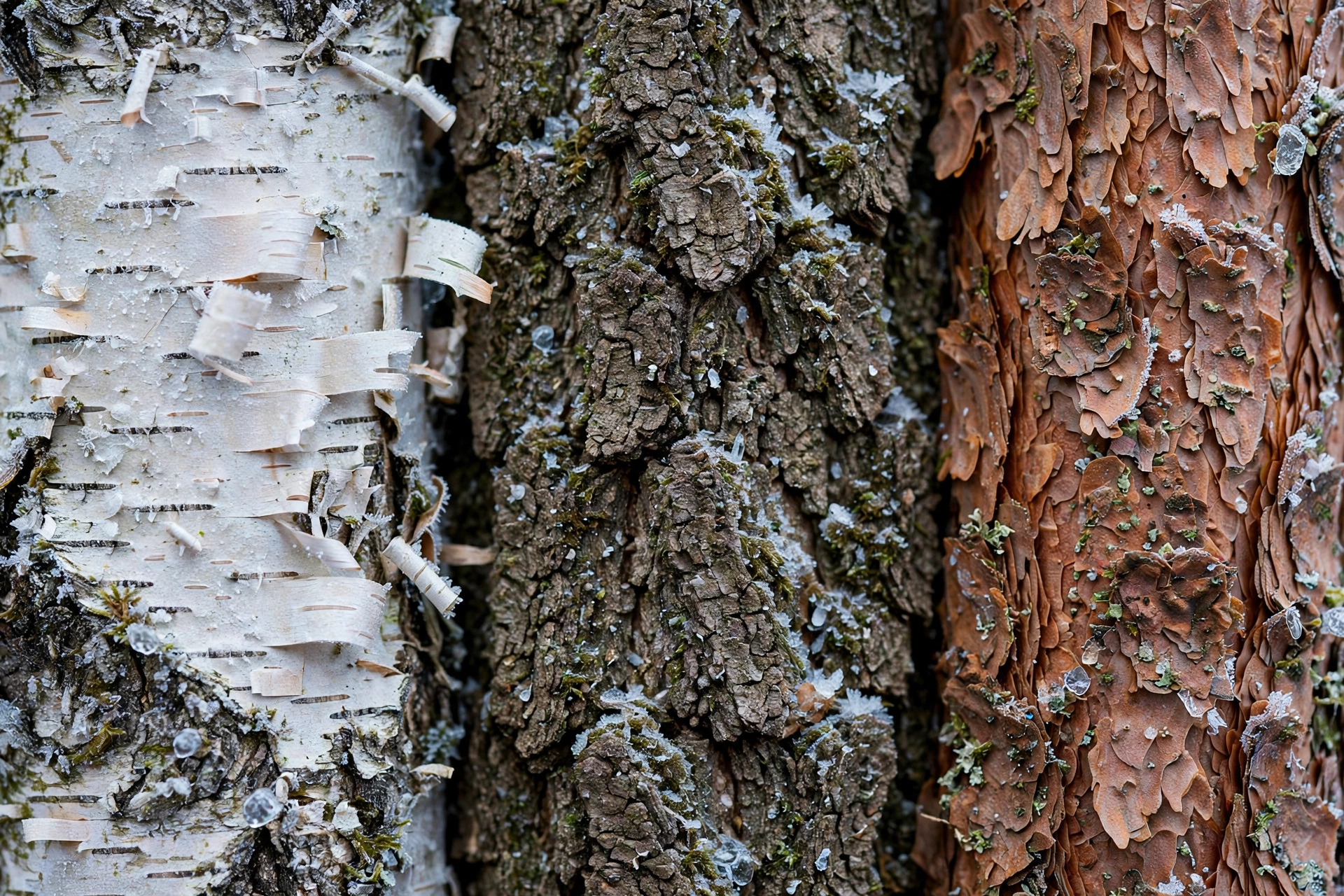
When leaves have fallen and flowers and fruit are gone, bark is often the only clue left. For many people, winter tree identification feels impossible, yet bark can be remarkably distinctive. Colour, texture, pattern, thickness, and how bark changes with age all carry information, and with practice you can identify many common trees from bark alone.
This guide explains how to read bark in a practical way. You will learn the main bark types, how age changes bark, how to photograph bark clearly, and how to combine bark with buds, twigs, shape, and habitat to reach a confident identification. Bark alone is not always enough, but it is a far stronger clue than most beginners expect.
Bark is worth learning because it is available all year round, unlike leaves and flowers. A tree you learn from its bark in winter is a tree you will recognise again in summer, and the skill transfers to every walk you take. Start with a few common species in your area — birch, beech, oak, and pine are good first trees — and add more as your confidence grows.
The Main Types of Bark
Smooth Bark
Some trees keep smooth bark for much of their lives. Beech is the classic example: its bark stays smooth and pale grey even on large, old trees, and it is often marked with small horizontal lines. Young trees of many species also have smooth bark, so always check the tree's size before deciding — smooth bark on a large trunk is a much stronger clue than smooth bark on a sapling.
Furrowed and Ridged Bark
Other trees develop deep furrows and ridges as they age. Oak bark becomes deeply ridged and rough, ash bark forms a diamond pattern of ridges, and sweet chestnut develops a spiral twist in its ridges. Note how deep the furrows are, whether they run vertically or twist, and what colour shows inside the furrows, because these details often separate species with otherwise similar bark.
Peeling and Flaking Bark
Some bark peels away in thin sheets, flakes, or strips. Silver birch peels in papery white sheets, plane trees shed patches of bark to reveal pale, mottled new bark underneath, and some pines shed thin flakes. Note how the bark peels — in sheets, patches, or strips — and what colour the fresh bark underneath is, since both are useful clues.
Scaly and Plated Bark
Other trees have bark that breaks into small scales or large plates. Scots pine has reddish, scaly bark on the upper trunk, while sweet chestnut develops a distinctive spiral pattern with age. Note the size and shape of scales or plates, their colour, and whether they lift easily or stay firmly attached.
How Age Changes Bark
Bark is not fixed. A young tree may have smooth bark that becomes rough, furrowed, or peeling as it matures, and bark on a young twig may look very different from bark on an old trunk. This is why you should photograph bark at chest height on the main trunk, and also photograph bark on a younger branch for comparison. Note the tree's approximate age and size, and be cautious about identifying a very young tree from bark alone. If you are unsure, add a photo of buds or twigs, which change less with age.
Step-by-Step: Identify a Tree by Bark
Step 1: Photograph Bark Straight On
Stand close to the trunk and photograph a section of bark straight on, filling the frame. Use natural daylight and avoid flash, which can flatten texture and distort colour. Take one photo from about a metre away to show pattern, and one close-up to show texture. Include a hand or coin for scale if the pattern is small.
Step 2: Note Colour, Texture, and Pattern
Describe the bark in your own words. What is the main colour, and are there other colours in furrows or peeling patches? Is the bark smooth, rough, furrowed, flaky, scaly, or peeling? Are there horizontal lines, diamond shapes, ridges, or plates? These notes help you compare suggestions and spot a mismatch.
Step 3: Check Buds, Twigs, and Shape
Bark alone is stronger when combined with other winter clues. Look at buds — their colour, size, shape, and whether they are opposite or alternate — and at twig colour and thickness. Note the tree's overall shape, branching pattern, and whether it is in a garden, park, street, or woodland. These clues can rule out species with similar bark but different buds or shape.
Step 4: Photograph Bark on a Younger Branch
Find a younger branch within reach and photograph its bark for comparison with the trunk. Note how the bark differs — it is often smoother and paler — and record both in your notes. This comparison helps you understand how the species changes with age, and it gives an identification tool a second bark sample to work with. If the branch bark and trunk bark look completely unrelated, double-check that you are photographing the same tree.
Step 5: Confirm in Another Season
If you can, return in spring or summer and photograph leaves, flowers, or fruit. A bark identification confirmed by leaves is far more reliable than bark alone. Keep a note of the tree's location so you can find it again and complete the identification later in the year.
Common Mistakes to Avoid
The most common mistake is identifying a young tree from bark that has not yet developed its mature pattern. Young bark is often smooth and pale, even on species that become rough with age. Another mistake is photographing bark in poor light or with flash, which hides texture and changes colour. A third mistake is relying on colour alone, because bark colour varies with wetness, light, algae, and lichen. Wet bark looks darker than dry bark, so photograph in dry conditions when you can. Finally, do not assume bark is the same all over the tree. Bark on the trunk, branches, and twigs can differ, so photograph the trunk at chest height for the most typical pattern.
One more mistake is forgetting that lichen and moss can cover bark and change how it looks. A trunk thick with grey-green lichen may look like a different species entirely, so look for a patch of bare bark, or gently brush away loose moss before photographing. Similarly, bark damaged by animals, fungi, or pruning can look unusual, so choose a healthy, undamaged section of trunk for your main photo.
Frequently Asked Questions
Can you really identify a tree by bark alone?
Often, yes, for distinctive species such as silver birch, plane, beech, oak, and sweet chestnut. For other species, bark narrows the options to a few candidates, and buds, twigs, shape, or leaves are needed to finish the identification.
What is the best photo for bark identification?
A straight-on photo of trunk bark at chest height in natural daylight, filling the frame, plus a close-up of texture. Avoid flash, shadows, and angled photos that distort the pattern.
Why does bark look different when wet?
Wet bark absorbs water and looks darker, and texture can appear smoother. Lichen and algae also change colour when wet. Photograph bark when dry if possible, and note whether it was wet when you took the photo.
Which trees are easiest to identify by bark?
Silver birch, with its white peeling bark, and beech, with its smooth grey bark, are good first species. Plane trees are also easy, with their patchy, mottled bark, and sweet chestnut is distinctive once its spiral ridges develop. Start with these and add oak and pine as you gain confidence.
Can bark identification work for young trees?
It is harder, because young bark is often smooth and pale on species that become rough with age. For young trees, rely more on buds, twig arrangement, and leaf scars, and use bark as a supporting clue. Return in later years to see how the bark develops.
Conclusion
Bark is a powerful identification tool, especially in winter when leaves, flowers, and fruit are gone. By learning to notice colour, texture, pattern, and how bark changes with age, and by photographing bark clearly and combining it with buds, twigs, and shape, you can identify many trees with confidence. Treat bark as a strong starting point, confirm with another feature when you can, and return in leaf to complete the picture.
Try it: Try the free Tree Identifier on aitreeidentier.site — photograph bark at chest height for instant guidance.
Safety disclaimer: Never eat, use, or apply any part of a tree, plant, mushroom, or fruit based on AI identification alone. Some species are toxic or easily confused with lookalikes. Consult a local expert before any use.